









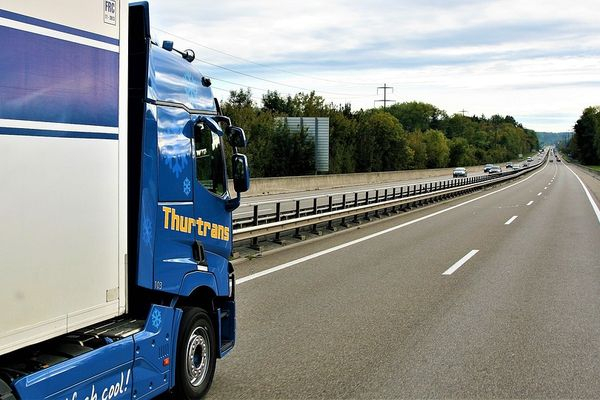
By 2022, the shortage of drivers in Polish transport companies will reach 200,000 jobs1. Experts estimate that the value of goods transported by 2050 will reach 68.5 trillion dollars2. The “empty mile” rate is 16 percent in road transport for European freight forwarding companies. In the event of the Mobility Package being introduced, forecasts suggest a 5 percent increase3.
Bittersweet forecasts for the industry
According to UN data, by 2050 the world’s population will grow from the current 7.7 billion to 9.7 billion people.4 Consequently, demand for both products and services will increase, and the movement of people and goods will intensify. An upward trend is already visible worldwide; in 2017, 10.7 billion tons of goods were shipped; this is 1.5 billion tons more than in 2012. Analysts predict that the amount of goods shipped will quadruple by 2050, and the value of goods transported by 2050 will reach 68.5 trillion dollars. These figures also translate into national macroeconomic indicators that stimulate the local economy. In Poland, the TSL (Transport, Shipping, Logistics) industry is assessed by analysts as one of the most important foundations building the domestic GDP. At the beginning of 2019, Statistics Poland (GUS) estimated that the gross value added in the area of transport and warehousing in 2018 increased by 9.2% compared to the previous year, against a 7.2% increase in 2017.5
On the other hand, forecasts indicate that the problems the transport industry is already struggling with will deepen further. The estimated level of driver shortages by 2022 will reach 200,000 vacancies if the current supply gap is maintained.6 Since the 1980s, there has been a shortage of workers in the trucking industry, which is largely due to low wages, an aging workforce, and the impact of long-haul driving on general health. According to estimates by the American Trucking Association (ATA), 890,000 new drivers will be needed by 2025.7
– Entrepreneurs in the transport industry must fight for their employees by providing them with increasingly better conditions. Staff shortages involve additional expenses. The cost of a one-day truck downtime can reach as much as 650 EUR, which is why transport companies are forecasting an increase in prices for services provided. Industry representatives claim that the forecasted factors will lead to an increase in burdens in the sector in the range of 7 to 15% by the end of 2020 compared to 2018, so the growth dynamics are high – comments Alexander Beresford, CMO of Finiata.pl.
According to experts, the Polish trucking industry is currently at the peak of its growth phase. Estimates suggest that the tonnage it handles will increase from approximately 1.17 billion tons in 2018 to approximately 1.44 billion tons in 2022, which will translate into an average annual growth of 5.3%.8
Threatened expansion of Polish companies
The Mobility Package, also known as the “Macron Package,” introduces new rules for posted drivers, including: higher minimum wages and regulations for their stay in hotels (instead of the popular sleeping in the truck cabin). These changes will have a significant impact on the operating costs of carriers, especially when the functioning of transport companies is unstable. Unplanned expenses can appear at the least expected moment. An alternative to one-off loans is the introduction of the FlexKapitał revolving capital line, from which an entrepreneur can freely withdraw money for the company for 6 months. When they need funds, they order a withdrawal of funds with one click, after which they reach the account within 10 minutes.
The most controversial issue of the Mobility Package is forcing empty trucks to return to their country of origin once every four weeks. This would prevent transport companies from Central and Eastern Europe from providing services in the West, i.e., so-called “cabotage”9. Two-thirds of all cross-border cargo is transported through the most industrialized and economically mature EU countries, including Germany, France, Belgium, the Netherlands, Luxembourg, Italy, and the UK. At the same time, transport is carried out by companies and drivers from peripheral European countries: Poland, the Baltic states, the Czech Republic, Slovakia, Slovenia, Bulgaria, Romania, Portugal, and Spain.10 Proposed provisions requiring drivers to return to base at short intervals will add long, inefficient journeys for thousands of trucks from places needing transport to Eastern European countries. The current “empty mile” rate is 16 percent in road transport across Europe. Forecasts suggest an increase of at least 5 percent if the Mobility Package is introduced11; and experts are already speculating that it could be significantly higher. Each additional percentage point of the “empty mile” rate requires about 6,000 more trucks, increasing highway congestion and environmental burden.
– International truck operators from Eastern and Central European countries will be forced to move their operational centers to the west. Meanwhile, drivers will undertake economic emigration from economically less developed countries, where income and jobs in the TSL industry constitute a significant part of the GDP – comments Alexander Beresford.
In the near future, analysts expect a significant shift in demand towards domestic services. Currently, it is estimated that as much as 64 percent of the total logistics work of Polish carriers consists of foreign transport – the currently proposed provisions of the Mobility Package will significantly affect companies providing international services.
How to stop the changes?
The Mobility Package had been frozen for the last few months, but in the August vote, Polish MEPs failed to block the project from continuing work. Besides Poland, Bulgaria, Romania, Hungary, Latvia, and Lithuania expressed their opposition to some of the changes. To everyone’s surprise, the European Commission opened a discussion between representatives of member states – trilogue negotiations will begin on November 1 and will be led by the new EC. Polish MEPs declare that they will strive primarily to remove from the final shape of the regulations those that speak of the need to apply to the employee the regulations of the country where they perform most of their duties.
1 PWC, Transport of the future – development prospects for road transport in Poland 2020-2030
2 Deloitte Review, issue 22
3 TLP, Mobility Package I, Impact on the European Road Transport System
4 UN, World Population Prospects 2019
5 GUS, Gross domestic product in 2018 – preliminary estimate
6 PWC, Transport of the future – development prospects for road transport in Poland 2020-2030
7 Deloitte Review, issue 22
8 PWC, Transport of the future – development prospects for road transport in Poland 2020-2030
9 Cabotage – provision of transport services outside the company’s home country.
10 TLP, Mobility Package I, Impact on the European Road Transport System
11 TLP, Mobility Package I, Impact on the European Road Transport System
12 PWC, Transport of the future – development prospects for road transport in Poland 2020-2030