









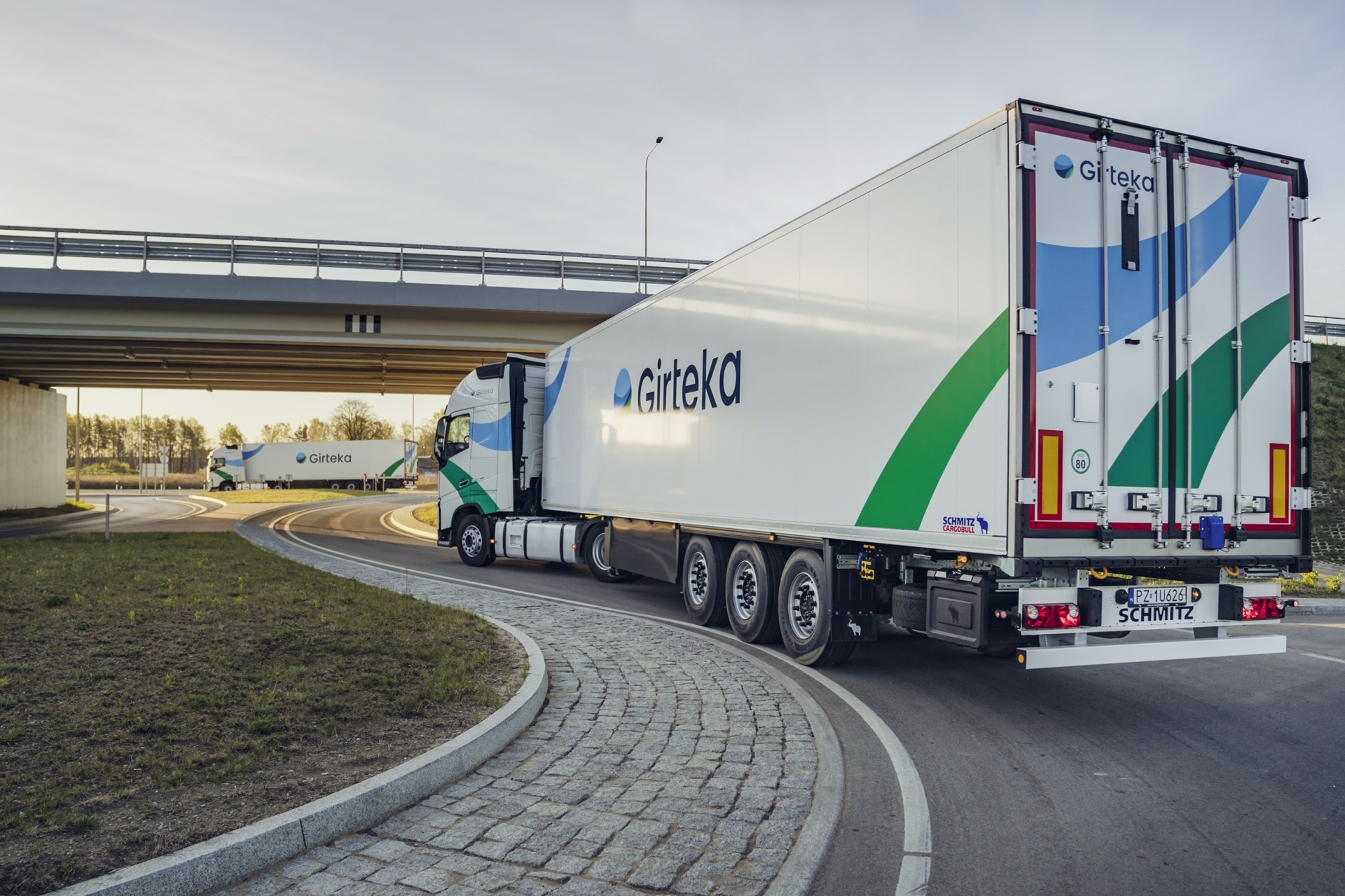
The consistent pursuit of Vision Zero – the EU’s ambitious goal to reduce the number of fatalities and serious injuries on European roads to zero by 2050 – is focusing greater attention on the issue of road safety. While infrastructure and driver training play a key role, increasing emphasis is being placed on the standardization of safety technology in new vehicles. This is reflected in the EU’s General Safety Regulation (GSR), a comprehensive regulatory framework aimed at introducing mandatory and advanced safety features.
However, for an industry focused on efficiency and costs, the key question is: do these regulations translate into tangible results in practice, or do they amount to a bureaucratic obligation? For Girteka, Europe’s largest asset-based transport company, the answer is clear: yes, they bring real benefits, and operational data confirms this.
General Safety Regulation – from concept to implementation
The introduction of the General Safety Regulation (GSR) is intended to reduce the risk of human error, which accounts for 90% of road accidents. The goal is to raise the level of vehicle safety to ensure better protection for their users and vulnerable road users (VRU), such as pedestrians and cyclists. Implementation phases:
|
Phase |
|
Vehicle type |
Deadline |
Key requirements |
|
Phase 1 |
New vehicle types |
July 2022 |
Basic set of advanced systems (e.g., specific AEB levels) |
|
|
Phase 2 |
All new vehicle registrations |
July 2024 |
Comprehensive set of eight mandatory ADAS features |
Particularly important for the logistics industry is the obligation introduced in July 2024 to equip all new trucks and buses with a set of Advanced Driver Assistance Systems (ADAS). Currently mandatory are:
- blind spot detection
- advanced emergency braking systems (AEB)
- lane keeping assist
- intelligent speed assistance
- driver fatigue and attention monitoring
These regulations are the foundation for future safety innovations, laying the groundwork for subsequent EU initiatives, with a focus on improving Direct Vision Standard (DVS) and developing ADAS systems toward increasingly higher levels of automation.
Safety of new trucks and the market situation
According to Eurostat data, over 4 million trucks were registered in the EU in 2024, 1% more than the previous year. At the same time, vehicles with a gross vehicle weight exceeding 30 tons accounted for 83.1% of total EU freight transport, measured in tonne-kilometers (tkm).
One of the key pillars of the road safety reform, introduced in the Mobility Package, is the obligation to equip new trucks with new safety features. The good news, as Eurostat data shows, is that trucks less than 2 years old accounted for 20.2% of total transport work in the EU, with an increase in tonne-kilometers of 6.2% year-on-year. Vehicles aged 2 to 5 years had the highest market share at 39.8%, with a decrease of 2.8% year-on-year.
The role of manufacturers – innovation through collaboration
The effectiveness of the GSR is confirmed by the innovative approach of leading OEMs (Original Equipment Manufacturers). Partners such as Volvo, Scania, Mercedes-Benz, DAF, and MAN have risen to the challenge, implementing complex and required systems in the latest vehicle platforms.
The GSR has accelerated the implementation of technologies previously considered optional, such as advanced automatic emergency braking systems (AEB) capable of detecting pedestrians and cyclists, or more advanced lane-keeping systems. Manufacturers are not only meeting regulatory requirements, but many are exceeding them. Safety innovations have become a strategic differentiator for them.
For example, Scania emphasizes that although the EU mandated compliance of new trucks with the GSR from July 2024, its vehicles were already equipped with “most of the required safety-assisting technologies” beforehand. DAF has committed to ensuring that every model in its truck range will comply with the first phase of the GSR, covering active and passive safety systems. The former category includes advanced driver assistance systems (ADAS), such as Forward Collision Warning and Lane Departure Warning System, Emergency Brake Lights, DAF Side & Turn Assist, or the advanced DAF Advanced Emergency Braking System.
As Volvo points out, new safety regulations contribute to saving lives. Anna Wrige Berling, Traffic and Product Safety Director at Volvo Trucks, predicts that in the near future, we can expect further solutions in the field of active safety systems. “Looking ahead, trucks will become smarter and more proactive in terms of safety, with more features that intervene rather than just inform.” Berling also emphasized the need to maintain a balance between technologies and a “well-trained driver,” who “remains the most important safety system in a truck.”
The EU GSR is a strong market signal that shifts safety technologies from a premium add-on to a universal standard. Collaboration between fleet owners, such as Girteka, who provide data and create demand, and manufacturers, who provide the engineering, makes Vision Zero achievable.
– says Dainius Augutis, Manager of the Transport Function & Support Department at Girteka.
From regulation to results – the Girteka example
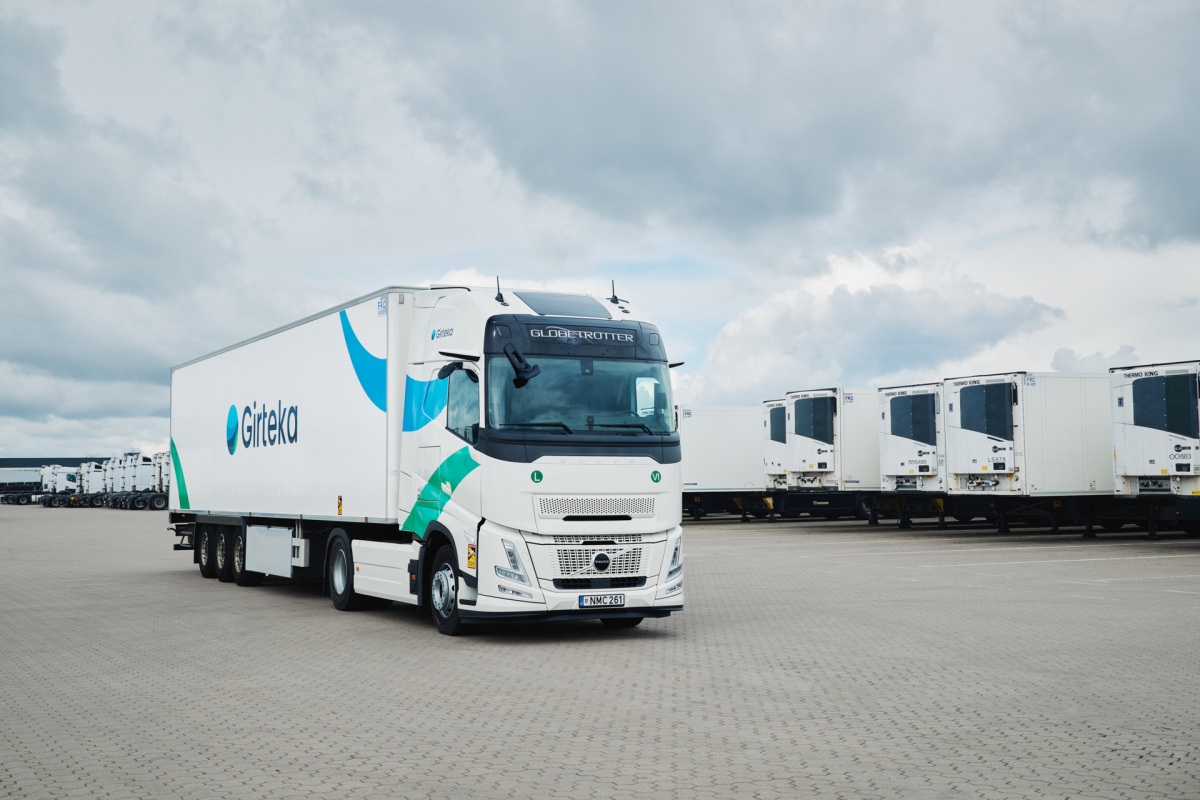
The real test for regulations is their impact on practice. For Girteka, which manages an extensive and modern fleet, the rapid implementation of vehicles compliant with GSR requirements has already brought measurable benefits in the area of safety.
Girteka is modernizing its fleet, expanding it by over 2,400 new trucks meeting GSR requirements since July 2024. Continuing this approach, the company plans to invest in the purchase of 8,000 trucks and trailers between 2025 and 2026, which will strengthen its position as a leader in the industry’s transformation toward safety-by-design standards.
The effects of fleet modernization are visible in the data. Girteka’s internal fleet and accident statistics for 2023–2025 confirm a decline – the number of accidents involving new trucks decreased by 10% over the year.
This measurable improvement in safety is focused precisely on the areas where the new systems operate. The greatest impact was noted in:
- low-speed maneuvers,
- collisions during minimal movements,
- incidents related to blind spots.
This is where advanced safety technologies apply, such as the Blind Spot Information System (BSIS) and the Moving Off Information System (MOIS), required by the GSR. They were designed to increase the safety of vulnerable road users in urban environments and maneuvering yards.
The improvement in safety results from a combination of several key factors:
- a modern fleet equipped with advanced systems,
- driver training based on data and real behavioral patterns,
- continuous monitoring and analysis of incident scenarios,
- a high level of new vehicle implementation compared to the industry average.
Although Advanced Driver Assistance Systems (ADAS) play a key role in preventing accidents, the industry agrees on one thing: the driver is, and will remain, the most important element of the safety system in a truck. Large European transport companies, such as Girteka, emphasize the importance of driver training: not only basic training for those starting their careers but also specialized and in-depth training modules for experienced professionals.
The Girteka Driver Academy implements programs including eco-driving techniques and safe driving. During annual periodic training, drivers participate in programs dedicated to safety, including first aid exercises, so that they are confident they can also take care of other road users.
As Dainius Augutis emphasizes, the first results show that safety improvement is not just a theoretical assumption – its effects are visible in daily operations. “What we see today is a measurable change, driven by trucks already on the road. The required technologies have reduced the number of accidents in our operations by 10%, which proves that they work not only at the regulatory and production level but also in daily transport operations.”
Impact on people
Beyond hard data and increased efficiency, the most important impact concerns people. Drivers are exposed to a lower risk of accidents and related injuries, which translates into their better well-being and safer working conditions. Local communities are also less exposed to the risks resulting from heavy vehicle traffic, thereby contributing to improving overall road safety. Customers also benefit from reduced operational disruptions. This strengthens Girteka’s position as a safe and reliable logistics partner.
Broader impact and next steps
The introduction of ADAS technology under the GSR brings significant social benefits, reducing the number of accidents and limiting the associated social costs, including those related to emergency services, healthcare, and traffic congestion. Moreover, by reducing vehicle downtime and increasing operational predictability, the Girteka example shows that the highest safety standards go hand in hand with operational excellence. For companies and their customers, proactive investments in technology translate into more reliable supply chains and business continuity.
The Girteka example also shows that well-designed regulations, supported by consistent investments in a modern fleet, are the most effective driver of innovation in the area of road safety. Looking to the future, the industry must leverage the wide range of data generated by new ADAS systems so that technology and regulations together create a safer and more advanced future for logistics.
Source: Girteka Group