









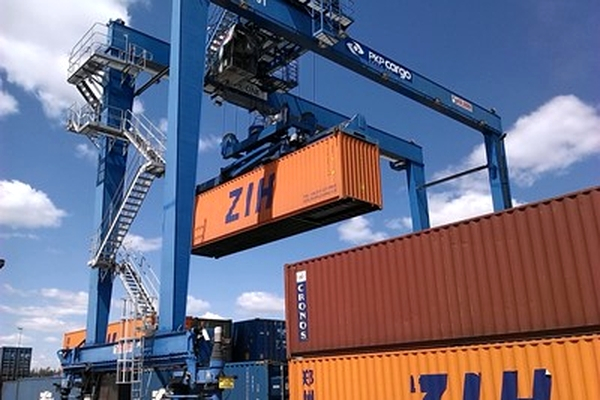
Food from Poland will be delivered to China by rail transport through Russia. PKP CARGO CONNECT has managed to organize shipments in such a way as not to violate Russian restrictions regarding the embargo on food imports from Poland and other EU countries.
Russia introduced an embargo on the transport and sale of food from Poland in 2014. The government of the Russian Federation also prohibited the transit of Polish food through its territory to other countries. Despite China’s interest in Polish food, Polish producers had trouble selling their products. The Chinese market was accessible to them only through cheap but time-consuming sea transport or fast but expensive air transport. Now this situation is changing – an opportunity has emerged to use fast and affordable rail transport.
Thanks to the PKP CARGO Group’s network of terminals, food transport can start anywhere in Poland. Cargo will be transported to Małaszewicze, which is the most important European rail gateway on the New Silk Road. From Małaszewicze, food will be transported by rail to Xi’an in central China within 14 days. This is much shorter than using sea transport, which took about 1.5 – 2 months.
Russia has agreed to the transit of Polish food through its territory on the condition of implementing controls. While the train passes through Russia, special seals from the Russian Glonass satellite system will be placed on food containers, which will allow Russian sanitary supervision authorities to monitor the transit.
– Transporting food by rail from Poland to China through Belarus, Russia, and Kazakhstan is the fastest and most efficient land route, which is why we were keen for the PKP CARGO Group to launch this connection – emphasizes Czesław Warsewicz, CEO of PKP CARGO SA. – Polish exporters will be able to quickly and in large quantities deliver food to the receptive Chinese market, where our food products enjoy a reputation for their high quality.
According to the CEO of PKP CARGO, opening a new export channel is important for the entire Polish economy, also due to mitigating the effects of the coronavirus epidemic.
The solution is in the development phase. Currently, it is only possible to transport products that do not require refrigeration and are not sensitive to temperature changes. This is because there is a lack of available refrigerated containers.
Source: PKP CARGO