









The market for solutions supporting logistics and supply chain management using RFID (Radio Frequency Identification) technology is in a phase of dynamic growth. RFID is a technology that is still evolving and providing new opportunities in the field of automatic data collection, i.e., ADC (Automatic Data Capture), including supply chain management. The goal of RFID is to provide access to data encoded in tags and to read them at the time and place required by the organizational solutions adopted in a company within the logistics area. A typical implementation of an RFID system is a set of antennas connected to a controller and mounted on a structure adapted to user requirements, called an “RFID gate.” The problem analysis conducted by the authors shows that currently, most RFID gates have a limitation consisting of operating in a non-selective manner. This means that in the identification process, not only the tags passing through the gate aperture can be read, but also those located next to or even behind it.
This results in incorrect object identification[14]. This is confirmed by studies of the subject literature. In Polish literature, the issues of using gates based on RFID technology in production logistics are addressed by few authors [4, 9, 10, 11, 12, 13, 14], as is the case in foreign publications [1, 2, 3, 5, 6, 7, 8, 15].
Research conducted by DataConsult Sp. z o.o., Kraków, Poland, which is a company operating in the area of so-called high technologies, specializing in the production of integrated IT systems for warehouse logistics management, systems connecting industrial automation with systems supporting the management of logistics processes, sales of peripheral devices used for the proper operation of enterprises in the field of warehouse management, and implementations of logistics solutions for enterprises – shows that the greatest needs in this area are in manufacturing companies that need solutions enabling the optimization of logistics processes that are resistant to electromagnetic interference. It is widely known that on a global scale, there is a growing trend of optimizing the costs of logistics processes using innovative systems – using automation (gates, readers), mobile solutions (terminals, data collectors), and software (database management, optimization). The requirements placed on the systems are primarily reliability of operation in difficult production conditions and integration for the purpose of automatic data exchange, so that each participant in the logistics process works on real data.
The main goal of the article is to present the concept of a prototype titled “Integrated system of measurement points at production stations, using a selective RFID gate resistant to electromagnetic interference,” which will be created as a result of work carried out by DataConsult in cooperation with the Institute of Logistics and Warehousing. Such a system will enable the management of logistics processes (internal supply chain) in an integrated manner in enterprises where the implementation of such systems is currently impossible (due to electromagnetic interference). The system will be resistant to the aforementioned interference and will operate based on selective RFID gate technology, enabling unambiguous identification of parts. The research problem determined the structure of the article, which consists of two main parts: the presentation of the results of own research, which enabled the identification of problems and needs related to improving data transmission in the production logistics zone, and the presentation of the concept of the prototype of an integrated system of measurement points at production stations, using a selective RFID gate resistant to electromagnetic interference, which will be created as a result of R&D work.
Research in connection with problems and limitations of production line operation caused by electromagnetic field interference
1. Research methodology
In the first stage of the research, the territorial area was defined, which was limited to the territory of Poland. The number of potential customers was examined based on the size of the business conducted. Based on the own experience of the members of the DataConsult Ltd. management board and generally available information, the assumption was made for the analysis that such solutions are most often used by small, medium, or large enterprises. The size of the potential target group based on the size of the enterprise was determined based on GUS (Statistics Poland) data from January 2011, according to which there were 91,893 business entities belonging to the group of small, medium, and large enterprises registered on the domestic market, of which: small entities (from 10 to 49 employees) – 73,675, medium-sized companies (from 50 to 249 employees) – 15,032, large enterprises (employing at least 250 employees) – 3,040. According to GUS data presented in the report in January 2011 [16], there were 29,090 enterprises defined as “manufacturing” operating on the domestic market. Companies from this sector are systematically expanding their operations, also on foreign markets, which is a good prognosis for the future from the point of view of the designed solution.
In the second stage, DataConsult Sp. z o.o. conducted research between May and August 2011 on a group of 90 randomly selected companies from the industrial sector from all over Poland, among which 10% were small enterprises, 71.2% were medium-sized companies, and 18.8% were large enterprises. The survey covered decision-makers at the technical, production, and management levels. These were people holding the following positions: President of the Management Board – 33 people (36.7%), Production Manager – 45 people (50.0%), Technical Director – 12 people (13.3%).
2. Presentation of research results
The results of the conducted research showed that as many as 53.3% of manufacturing companies use devices on their production floors that interfere with data transmission. In 22.2% of cases, it was not possible to carry out successful implementations of IT systems solely due to excessive electromagnetic interference (Figure 1).
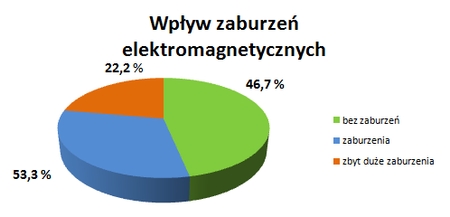
Fig. 1. Influence of electromagnetic interference on data transmission
During the research, the respondents (69%) pointed to the problem that the use of technologies other than RFID for product identification in their production plants, such as barcodes, is often not possible due to difficult working conditions. The most common limitations are:
• potential high degree of dustiness,
• possibility of code contamination causing great difficulties in optical identification,
• high temperature resulting in the destruction of the label,
• irregular or small shapes of elements preventing the attachment of a barcode.
The respondents also stated that the use of RFID technology in the case of their production activities is hindered due to the possibility of electromagnetic interference (81%).
The most frequently indicated expectations of the respondents were:
• increasing the reliability of unambiguous identification of goods, (80%)
• increased resistance to electromagnetic interference, (81%)
• possibility of arbitrary density of measurement points within the production line, (57%)
• possibility of reducing the distance between production lines without the risk of reading an element from an adjacent line, (65%)
• possibility of integration with external IT systems and industrial automation devices (77%)
• possibility of adaptation to solutions already existing in the production plant (79%)
• scalability of the solution. (71%).
In response to the identified problems, DataConsult Ltd. decided to create a solution – a system of measurement points at production stations, resistant to electromagnetic interference, using selective RFID gate technology. This system will be a completely innovative solution in the area of material management and will support the company’s logistics processes, enabling full automation of processes.
Concept of the prototype of a system of measurement points at production stations, resistant to electromagnetic interference, using selective RFID gate technology.
The designed prototype will be intended for use in production halls characterized by a high coefficient of electromagnetic interference. Its main functions will be:
• Identification of parts based on RFID radio frequency identification technology,
• Determination of physical parameters of the object,
• Production accounting,
• Ensuring the ability to track the flow of raw materials and products (Traceability),
• Modeling of business processes in terms of determining the correct flow of raw materials and products,
• Signaling errors based on collected data,
• Data collection, processing, and advanced reporting services,
• Creating analyses.
The main part of the prototype will be a measurement station and a selective RFID gate ensuring the ability to identify specific items of raw materials, semi-finished products, or finished products along with the ability to track them (Traceability). Management, collection, processing, and presentation of information from the aforementioned modules will be carried out using the measurement point management system.
RFID technology was chosen for the unambiguous identification of specific product items. This choice is dictated by the insensitivity of this technology to difficult external conditions often occurring on the production floor, such as: high temperatures, high dustiness coefficient, presence of highly reactive chemical agents, irregular shapes, or small dimensions of products preventing the use of barcodes. The prototype, in addition to reading, will also have the ability to write data to RFID transponders in the EPC Gen2 standard. Thanks to this, the system will gain the functionality of marking new products, damaged elements, those transferred for re-inspection, and others, configurable by the user.
The prototype will consist of the following elements:
1. A selective RFID gate – a device reading information from RFID tags passing only through the gate aperture (the space inside the device),
2. A measurement station (presence detection, color measurement, weight) – a set of industrial sensors. Ultimately, it will be possible to use any measurement devices. As part of the prototype, sensors for element presence, color measurement, and object weight will be used.
3. An industrial computer with a touch screen and mobile control points brought out to data collectors – devices used for operating the prototype by the operator,
4. An RFID programmer – a device used for writing data to RFID transponders,
5. Electromagnetic screens – absorbing electromagnetic waves emitted by production devices,
6. A system for operating the measurement point at the production station – an IT system enabling the management of measurement points and modeling of business processes related to production stations,
7. Network infrastructure ensuring connectivity between system modules.
The necessity of using selective RFID gate technology (tag reading is possible only in the gate aperture) results from the need to ensure the error-free operation of the system. Thanks to this, it is impossible to register an element moved next to the gate. The design of the selective RFID gate developed by the Institute of Logistics and Warehousing [19] is currently the subject of a patent application.
Additional advantages of the selective RFID gate will be:
• High resistance to electromagnetic interference,
• Possibility of arbitrary density of measurement points without increasing the risk of reading redundant tags,
• Scalability (possibility of adjusting the gate dimensions to the implementation needs).
In addition to the selective RFID gate, each of the measurement stations will be able to be equipped with a number of industrial meters reading information about the physical characteristics of the element being processed at the production station. Data read by the meters will be linked to the product identifier and saved in the database for use in later analyses and as input data for the alert system. The use of wireless terminals as mobile management and control points will be possible thanks to the shielding of production devices (limiting the impact of electromagnetic interference on IT networks). Their use will result in a reduction of the implementation cost – one terminal will be able to work throughout the hall, and not just at one production station. This will give the possibility of introducing mobile quality control mechanisms. Thanks to constant access to the wireless computer network, the terminals will be able to work online (be constantly connected to the network). This results in the data on which the operator works being up-to-date at all times. In addition to the benefit of undoubtedly having access to current data, this will solve the problems of conflicts when two users refer to the same resources. Data terminals will have the ability to work in the latest wireless communication standards WiFi (including IEEE 802.11g and IEEE 802.11n standards) and communication using Bluetooth technology (IEEE 802.15.1 standard) with peripheral devices (e.g., mobile label printers).
The system will also be equipped with the ability to model business processes. It will be implemented by defining paths in the system that raw materials/semi-finished products will be able to follow until the final product is realized. The system will suggest to the operator the next processing point for a given element. In the event of it reaching a measurement station other than the assumed one, the system will inform the user with an appropriate message. The operator will also have the ability to check the history of the element (the points where it has been processed so far). The designed measurement point management system is intended to be a fully scalable solution. Such a solution will allow for the cooperation of many measurement points in a wide range – from ensuring comprehensive product tracking on the production floor (Traceability), as well as within the production line, through the possibility of communication between points and signaling incorrect actions with alerts, to analyses of the work of all measurement points.
Example analyses may concern:
• Efficiency of individual measurement points and entire production lines,
• Actual working time of operators,
• Efficiency of operators,
• Determination of bottlenecks in element processing (optimization analyses),
• Determination of the error rate (percentage of damaged pieces),
• Others, defined by the user.
The exact minimum system and hardware requirements for the measurement point management system will be able to be determined after the prototype is realized. At the moment, it can already be predicted that these requirements will be linearly dependent on the number of simultaneously working operators and measurement points.
A characteristic feature of the prototype will be open communication interfaces. This will allow for integration with practically any industrial automation devices, sensors, meters, etc. The measurement point management system will also have interfaces for communication with external IT systems, enabling data exchange.
Summary
Research conducted by DataConsult Ltd. showed that so far there is no company that has an integrated system of measurement points dedicated to production stations in its offer. The use of selective RFID gates on production lines is an innovation on a global scale[17].
The designed prototype will have the following advantages compared to similar solutions on a global scale:
• It will use selective RFID gates (pioneering solution), which will allow for: increasing the reliability of unambiguous identification of goods – only goods moved through the gate aperture will be registered; goods that move next to the gate will not be read, which is a major advantage in relation to classic RFID gates, increased resistance to electromagnetic interference, possibility of arbitrary density of measurement points within the production line, possibility of reducing the distance between production lines without the risk of reading an element from an adjacent line;
• It will have the ability to automatically write information to RFID tags with support from the measurement point management system level.
• It will be significantly resistant to electromagnetic interference generated by some industrial automation tools.
• It will be equipped with open communication interfaces, which will allow for its integration with external IT systems and industrial automation devices.
• The system will give the possibility of flexible adaptation to existing solutions (does not require designing the production line for the system).
• Thanks to the integration of modules into one product, which is a measurement point, a coherent solution will be created, which will imply the following assets: reduction of implementation cost and time, possibility of handling the system implementation by partners.
• It will be equipped with business process modeling and quality control mechanisms.
• It will have the ability to output user interfaces to mobile terminals.
• It will be fully scalable (possibility of expanding the implementation by any number of measurement points).
Bibliography
BOOKS:
[1] S.Ahson, M.Ilyas, RFID Handbook: applications, technology, security and privacy, CRC Press, 2008.
[2] K. Finkenzeller, RFID Handbook, 2nd ed., John Wiley &Sons, Chichester 2003
[3] B.Glover, H.Bhatt, RFID essentials, Shroff Publishers&Distributors, 2006.
[4] M. Grabia, J. Majewski, G. Sokołowski, P. Hołubowicz, EPC/RFID Technology in Logistics, Wyższa Szkoła Logistyki, Poznań, 2011.
[5] L. Hemming, Architectural Electromagnetic Shielding Handbook, IEEE Press, 1992.
[6] K. Slattery, H. Skinner, Platform Interference In Wireless Systems, Newnes, 2008.
[7] W.L. Stutzman, G.A. Thiele, Antenna Theory and Design, John Wiley &Sons, New York 1998
[8] G.R.T. White, G. Gardiner, G. Prabhakar, A.A. Razak, A Comparison of Barcoding and RFID Technologies in Practice, vol. 2, Bristol Business School, University of the West of England, , 2007
[9] W. Zieniutycz, Antennas. Field basics, Wydawnictwo Komunikacji i Łączności, Warszawa 2001
ARTICLES:
[10] M. Grabia, J. Majewski, ”Marking packaging products with RFID codes”, Opakowanie, No 8/2007
[11] M. Grabia, J. Majewski, G. Sokołowski, P. Hołubowicz, ”First innovative implementation of the EPC/RFID system on the Polish market”, Logistyka, No. 6/2009, pp. 42-46
[12] M. Grabia, ”Internet of Products in 2030”, Logistyka, No. 3/2010, pp. 55-57
[13] M. Grabia, What is the “Internet of Products? Part I, Transport Wewnętrzny i Magazynowanie, No 1/2012
[14] A. Maćkowiak, K. Sieczkarek, M. Łobaziewicz, ”Possibilities of using EMC absorbing materials to eliminate interference in the operation of radio communication systems”, Przegląd Elektrotechniczny, No 8/2014, pp. 57-60.
[15] P.Harrop, G. Holland, Das R.: Real Time Locating Systems 2012-2022, IDTechEx, York 2012
[16] Central Statistical Office, Statistical Yearbook of the Republic of Poland, 2011
[17] The opinion on the innovativeness of the prototype was confirmed by the AGH University of Science and Technology in Kraków, Faculty of Electrical Engineering, Automatics, Computer Science and Electronics
www:
[18] www.epcglobalinc.org
[19] www.gs1.org
[20] www.ilim.poznan.pl
[21] www.rfidjournal.com
[22] www.portalrfid.pl