









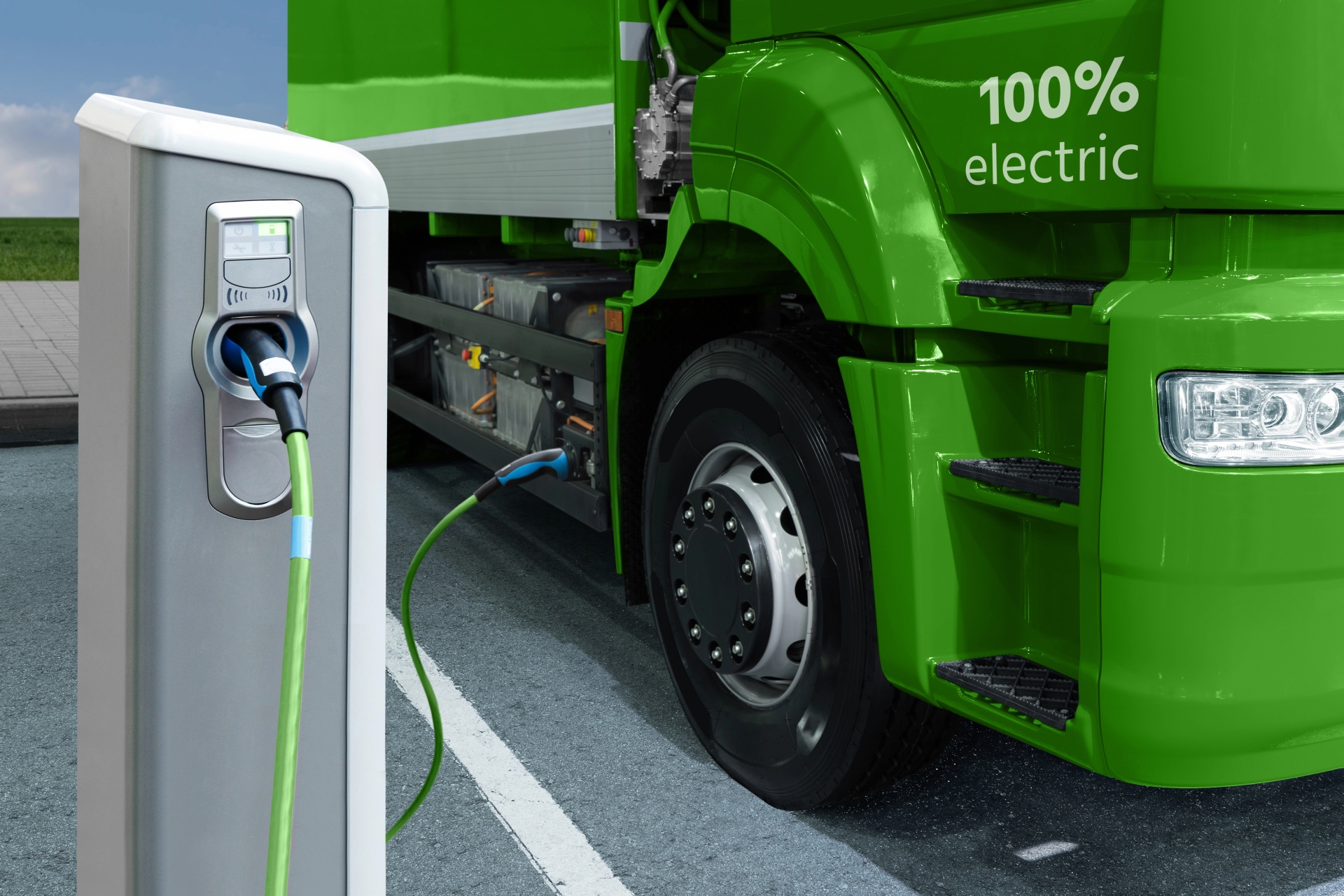
After the first quarter of 2026, registrations of electric delivery vans in Poland recorded an impressive 54 percent year-on-year increase, although the volume result remains low at 563 units. The heavy-duty segment remains at an even earlier stage of e-development. Since the beginning of the year, only 49 electric trucks have been registered (an increase of +82% y/y). Experts from Truck Care, part of the EFL Group, point out that this is exactly when companies should separate two scenarios: in local distribution, electromobility is increasingly starting to defend itself economically, while in heavy transport, the market scale still depends on the launch of real financial incentives.
Today, the conversation about electric vehicles in a fleet is less and less about ecology or company image, and more and more about cost predictability and business resilience to fuel price fluctuations. In operations based on fixed routes, with regular returns to base and the possibility of charging, an electric vehicle ceases to be an experiment and becomes a rational work tool. It is also worth remembering that modern models already offer a range sufficient for many repetitive tasks, and fast charging times increasingly coincide with mandatory driver breaks. This does not mean that electromobility is a universal solution for every fleet today, but it certainly means that more and more companies should analyze it in specific operational and cost scenarios.
– says Ilona Kącka, Market and Product Development Manager at Truck Care.
Delivery vans are already building a business case
Market data shows that it is the light commercial transport segment that is adapting to electromobility the fastest. After the first quarter of 2026, the number of registrations of electric delivery vans in Poland increased by 54 percent y/y to 563 units. Although a decline of 11 percent and 134 registrations was recorded in March alone, the quarterly market remains clearly in the positive. This is a signal that for some companies, especially in urban logistics, local distribution, and so-called last-mile delivery, electric propulsion is starting to be a real alternative to diesel.
In practice, it is not fashion that decides here, but the nature of the operations. Where a vehicle returns to base every day, covers predictable distances, and can be charged in a planned manner, it is easier to control the cost per kilometer and limit the impact of external fuel shocks on fleet profitability. That is why, in many companies, the e-van will be the first stage of a broader transport transformation.
Heavy transport: potential exists, but the scale remains symbolic
The situation in heavy transport looks much more cautious. Data from the Polish Automotive Industry Association (PZPM) shows that 10 electric trucks were registered in Poland in March, compared to 13 the year before, and only 5 registrations were recorded in the N3 category. The industry organization itself emphasizes that vehicles over 16 tons, in particular, remain at a very low level of registrations.
The direction of change is already clearly visible at the European level. According to ACEA, across the entire EU in 2025, diesel engines still accounted for 93.2 percent of new registrations of medium and heavy trucks, while electric vehicles had a 4.2 percent market share. Change is therefore progressing, but from the perspective of heavy fleets, it is still more of an early implementation phase than a mass replacement of the fleet. On the other hand, formal support frameworks in Poland already exist: the National Fund for Environmental Protection and Water Management (NFOŚiGW) program for N2 and N3 vehicles has a budget of up to PLN 2 billion, and maximum support can reach PLN 750,000 per N3 category vehicle.
Electromobility as a direction
From a company’s point of view, this means that electromobility in a fleet should not be analyzed today as one common project for all types of vehicles. In the delivery segment, it is increasingly starting to make sense operationally and cost-wise. In the heavy segment, however, three elements are needed simultaneously: subsidies, infrastructure, and patiently built operational experience. Therefore, the question is no longer whether electrification will enter corporate fleets, but in which parts of the business it will become profitable the fastest.
The key is not just entering electromobility, but the way it is done. In many cases, a pilot program and a flexible financing model will be more reasonable than purchasing an entire fleet, as it will allow testing the technology in real operational conditions without freezing capital and without fully assuming the risks associated with service, the battery, or residual value. Because in the current market, the biggest cost is increasingly not the electric vehicle itself, but delaying the decision to test it for too long.
– says Ilona Kącka, Market and Product Development Manager at Truck Care.
Source: Truck Care / Credit Agricole