No one needs to be convinced of the great importance that urban logistics has gained in recent years. This is largely due to the dynamic development of e-commerce, which has quite naturally placed the last mile, i.e., the final stage of parcel delivery, in urban areas. The growing group of online store customers expects fast and efficient delivery of ordered packages to their home or another indicated location from which they can pick them up.
Both recipient addresses and parcel collection points (e.g., parcel lockers) are often located in cities. Not only e-commerce customers, but also retail outlets are invariably very often located in cities. This, in turn, creates the need to organize supply deliveries to numerous shops, as well as restaurants or service points, often located in city centers. Moreover, cities themselves are subject to the so-called urban sprawl phenomenon year after year, which increases the territorial scope of the necessary logistics operations, while simultaneously intensifying their scale and level of complexity. At the same time, city declarations related to being eco-friendly are becoming louder, and actions promoting low-emission solutions in urban logistics or activities supporting the development of urban spaces friendly to both citizens and the environment are becoming more common. All the mentioned factors and phenomena, while being only an example of challenges in the area of urban mobility, prove at the same time the enormous importance of this area. The high potential for the development of urban logistics, as well as the multitude of challenges in this area, were noticed several years ago by the Łukasiewicz – Institute of Logistics and Warehousing. The result of this is numerous projects co-financed by the European Commission, which the Łukasiewicz – ILiM co-implemented as part of European partnerships.
Examples include projects such as:
– POLITE – Exchange of good practices in the field of infomobile systems in public transport; the project’s goal was to improve local, regional, and national policies in the field of “infomobility” through the exchange of experience between project partners and through the transfer of good practices. Countries in the project: Italy, Belgium, United Kingdom, Czech Republic, Lithuania, Poland.
– SULPITER – Sustainable Logistics for Urban and Regional Planning – the project’s goal was to improve the efficiency and competitiveness of transport in functional urban areas by shaping and improving urban strategies and transport policies (taking into account the regional context). Participating cities: Bologna, Budapest, Poznań, Brescia, Stuttgart, Maribor, and Rijeka.
– SPROUT – Sustainable Policy RespOnse to Urban Mobility Transition, the overarching goal of the project is to examine the impact of innovative solutions on urban transport, examine the demand and supply for passenger and freight transport in cities, and develop or adapt existing Sustainable Urban Mobility Plans. Łukasiewicz – ILiM, together with the City of Kalisz and the Kalisz Business Incubator, conducted a pilot project regarding freight transport management in the city based on IoT infrastructure (sensor network).
The practical importance of urban mobility topics has been recognized in recent years by an organization called EIT. EIT stands for European Institute of Innovation and Technology, an organization based in Budapest, which is a body of the European Union established in 2008 to strengthen Europe’s innovation capacity. The EIT is an integral part of the Horizon 2020 framework program, thus creating a space for creating scientific research and innovation. The EIT brings together leading business entities as well as educational and research organizations, creating dynamic international partnerships based on the so-called “knowledge triangle” [Fig. 1]. These partnerships have taken the form of Knowledge and Innovation Communities, which, operating in various sectors of the economy, develop innovative products and services, start new companies, and train a new generation of entrepreneurs.
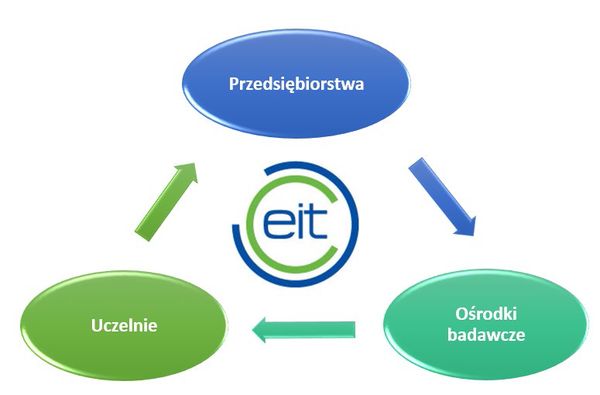
Fig. 1. Visualization of the so-called “knowledge triangle” of the EIT.
The overarching goal is to find effective solutions to global problems and ensure opportunities for sustainable economic growth for Europe. The aforementioned area of urban mobility has become the leitmotif of one of the Knowledge and Innovation Communities within the EIT. This is how EIT Urban Mobility (EIT UM) was created [Fig. 2]. The EIT Urban Mobility community has been operating for a relatively short time, only since January 2019.
Since then, it has been strengthening the innovation capacity of European cities and undertaking and supporting numerous initiatives involving various entities and social groups aimed at the development of green and sustainable urban logistics. The EIT UM organization operates within five innovation hubs located throughout Europe. The division is based on geographical allocation: Central, East, West, North, South. Poland, due to its location in Europe, has been assigned to the Innovation Hub East with its main headquarters in Prague. The Eastern hub includes, in addition to Poland, countries such as: Czech Republic, Germany, Hungary, Israel, Romania, Serbia, and Slovakia.
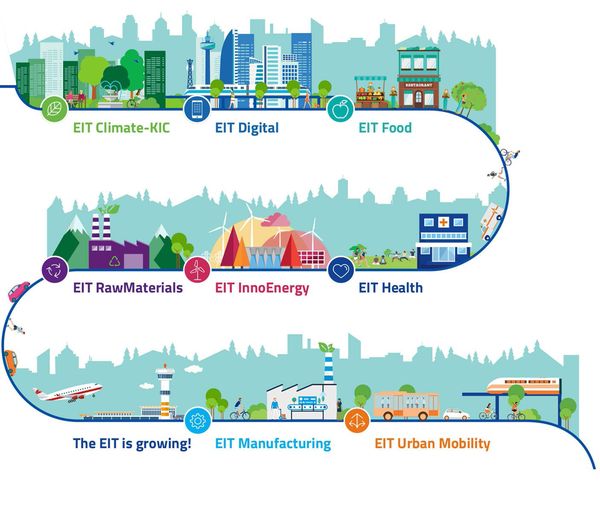
Fig. 2. Knowledge and Innovation Communities of the EIT.
– Urban topics are becoming very important for Europe; the establishment of EIT Urban Mobility, which is ultimately intended to be the largest and most dynamic branch of the EIT, is a confirmation of the importance of this area. Over 70% of Europe’s inhabitants live in urban areas, generating 85% of the (European) gross domestic product, while consuming 60-80% of energy – says Przemysław Zawodny, Deputy Director for Research at the Łukasiewicz – Institute of Logistics and Warehousing. – You cannot achieve the goals related to a zero-emission economy without focusing on cities. Cities are increasingly becoming the apple of the European Union’s eye, and our institute immediately joined this trend with enthusiasm.
The EIT UM organization provides for various levels of partnership, determining the scope of rights and obligations of individual entities. The highest level of participation is represented by the so-called Core Partners of level 1 and 2 (Tier 1 and Tier 2). Łukasiewicz – ILiM, taking into account the profile of its activities, previous experience, and the need for the development of urban logistics initiatives noticed for years, submitted an application for admission as an EIT UM partner in 2020. Finally, the General Assembly of EIT Urban Mobility on December 14, 2020, made the decision to include Łukasiewicz – ILiM in its community, as a result of which the Institute obtained the status of a first-category partner (Tier 1). In total, only five entities from Europe were included in the group of partners with us, including only 3 as first-category partners.
Despite the relatively short time that the cooperation between Łukasiewicz – ILiM and EIT UM covers, we already have two projects to our credit, the goal of which was to promote the idea of urban mobility development and create innovative solutions in this area. The first of the mentioned projects initiated the functioning of Łukasiewicz – ILiM in the role of Hub Poland, i.e., an organization cooperating with the EIT UM community, which aims to raise awareness about EIT UM among representatives of business, academia, and cities in Poland. The project was implemented by organizing many meetings, webinars, and workshops, as well as by generating information via social media and the hub’s created website. The second of the mentioned projects was implemented in a consortium with the City of Poznań and the University of Maribor. The project concerned smart reloading bays (IoT enabled urban logistics smart reloading bays IoTBAYS). Its main goal was to test the technology of communicating the status of reloading bays and the possibility of booking them in real conditions in the form of a “living lab”. The developed and implemented concept of a smart reloading bay solves the problem of low traffic capacity in the city, enabling the elimination of unnecessary routes for trucks and thus avoiding the negative impact of transport on the environment and safety in the city. Currently, the EIT UM community is working on creating new projects supporting the development of urban mobility. On March 19, 2021, a call for projects was announced in the thematic areas: Academy, Business Creation, Citizen Engagement, Innovation, Regional Innovation Scheme (RIS), Public Realm. As part of the call for proposals regarding innovation (Innovation area) in 2022, four challenge areas in the field of urban mobility will be directly supported: Active Mobility, Sustainable City Logistics, Future Mobility, and Mobility and Energy. The call for projects lasts until May 18, and the applicants can be international consortia bringing together entities from the academic, research, and industrial sectors, as well as European cities, which will ultimately create space for pilot implementations of project results. Łukasiewicz – ILiM has already taken steps aimed at creating innovative projects together with our business partners that will lead to the development of urban spaces and allow us to use our experience in the field of urban logistics. We invite you to contact us and actively support project initiatives in the field of Urban Mobility.

The article comes from the magazine LOGISTYKA 2/2021.
The e-edition of the magazine is available in our offer!
Stay up to date, subscribe to the LOGISTYKA magazine!