








At Holcim, logistics is more than just delivering materials on time. It is conscious process management where every trip, every ton of raw material, and every transport decision matters. The company strives to build an operational model that simultaneously supports sales and actively contributes to reducing its impact on the natural environment. Sustainable logistics is becoming a key element of Holcim’s strategy, addressing both customer needs and climate challenges.
Combining transports limits unnecessary trips and reduces emissions
One of the most important tools in reducing CO₂ emissions in Holcim’s logistics is the optimization of transport combinations. This involves planning deliveries so that vehicles do not return empty, but instead carry loads on the return route or arrive at plants after completing a previous trip. Thanks to this strategy, in 2024, as many as 82 percent of raw material deliveries to Holcim plants were carried out in combination with other transport. This is a significant increase compared to 73 percent in 2023, showing a consistent development of an approach based on efficiency and responsibility.
Importantly, 61 percent of these combinations are the result of the direct work of the Holcim logistics team. Achieving this effect was possible thanks to daily analyses of the transport market and vehicle availability, as well as flexible responses to changing conditions. Even artificial intelligence cannot replace the knowledge, experience, and ability to make quick decisions by Holcim specialists. The remaining 39 percent is the use of return trips by their own vehicles after completing deliveries.
The highest intensity of deliveries occurs in the months from March to November, when the entire bulk construction materials industry operates with the greatest intensity. In the first four months of 2025, the average level of combinations was 80 percent, and in March and April, impressive rates of 93 and 96 percent were achieved. These data show that Holcim effectively translates strategy into daily practice, building logistics that are more climate-friendly.
The ability to organize transport based on combinations is not just about optimizing costs and processes. These are concrete actions that realistically reduce the carbon footprint. Operational logistics at Holcim proves every day that it can be a force supporting both sales and environmental protection.
– emphasizes Artur Stańczyk, Logistics Manager, Cement Holcim Poland.
Modern fleet reduces exhaust emissions
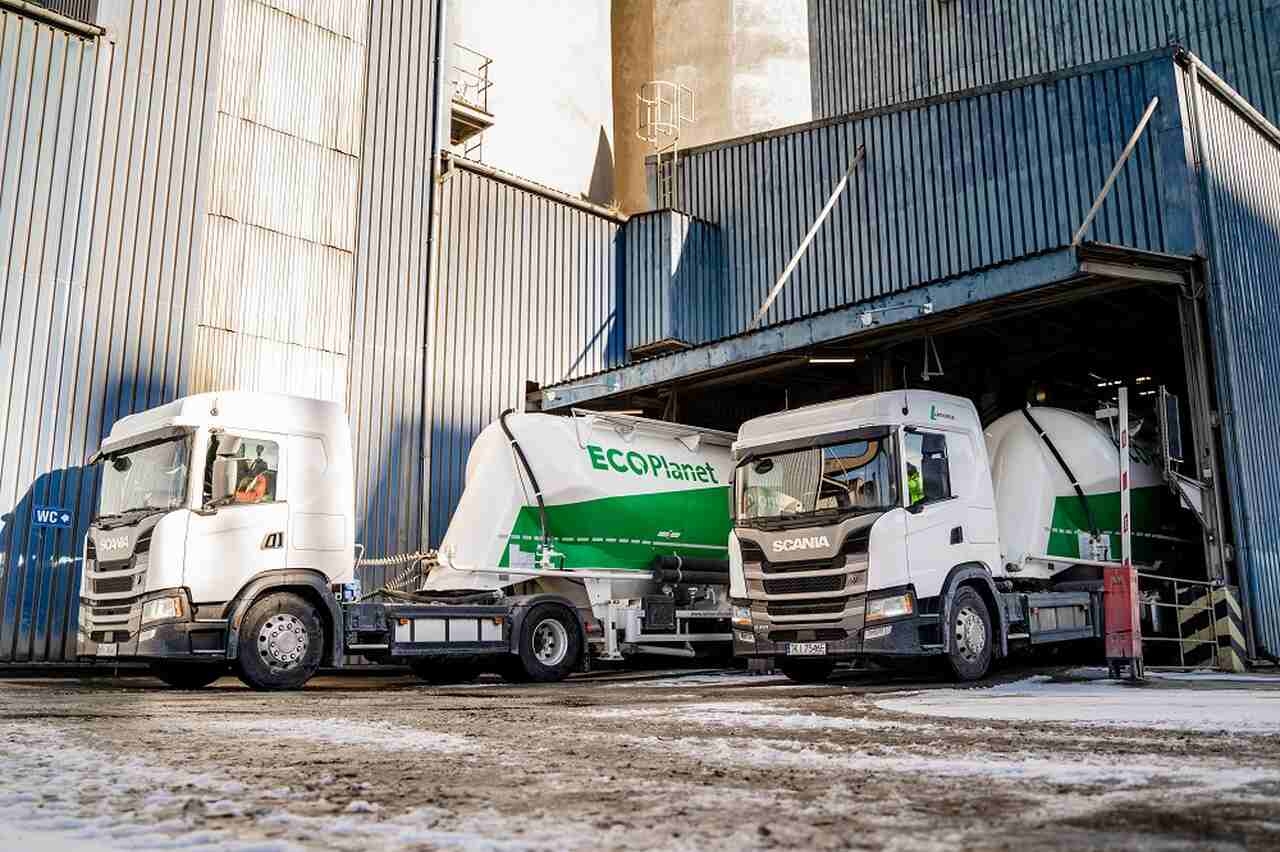
The second pillar of efforts to reduce environmental impact is a consistent policy of selecting the transport fleet. Although Holcim does not own its own trucks, it actively cooperates with carriers, both in an exclusivity model and open cooperation. The priority is to use vehicles with the lowest possible exhaust emissions.
Already today, 64 percent of the vehicles used meet the requirements of the EURO 6 emission standard, the most rigorous standard in Europe, which significantly limits the emission of nitrogen oxides and particulate matter. Achieving this standard means that transport carried out for Holcim is less burdensome for the environment and better adapted to growing regulatory requirements. The company is consistently aiming to reach the level of 100 percent of vehicles meeting the EURO 6 standard in the coming years.
Such actions not only reduce the impact of transport on air quality but also increase operational efficiency thanks to modern, more economical technologies used in low-emission trucks.
Utilizing full load capacity without overloading
At Holcim, every trip is carefully planned not only in terms of routes but also in terms of utilizing load potential. The average weight of the transported load is currently 27.06 tons, however, thanks to the optimization of loading processes and the use of lighter cement tankers, many carriers achieve results exceeding 28 tons, even up to 28.26 tons.
Holcim’s goal is to maximize the loading potential of vehicles without exceeding permissible standards. Avoiding overloading is crucial both from the point of view of transport safety and vehicle operating costs as well as road infrastructure wear. Proper adjustment of silo filling levels and the use of modern weighing solutions allow for full utilization of available capabilities within the limits of applicable regulations.
This way of managing transport translates not only into a reduction in CO₂ emissions but also into an increase in the efficiency and competitiveness of Holcim’s offer.
Night deliveries reduce emissions and increase operational fluidity
Holcim also focuses on the development of night deliveries where possible. Transport carried out at night allows for avoiding traffic jams and smoothly executing shipments with lower fuel consumption. Vehicles that do not waste time in urban congestion generate fewer emissions and complete orders faster.
Night deliveries are also a benefit for Holcim plants. Thanks to their implementation, it is possible to more effectively distribute the load of loading terminals throughout the day, reduce queues, and avoid congestion during peak hours. Where production plants are located at a greater distance from residential areas, night work is fully possible and fits into Holcim’s strategy, which aims to increase flexibility and operational efficiency.
The company is also involved in adapting the network of concrete plants to a model where it is possible to receive night deliveries. This is another step on the way to reducing emissions in logistics and improving the quality of customer service.
Operational logistics in the service of the environment
Holcim does not view logistics solely as an element supporting sales. For the company, operational logistics is an area where daily decisions can realistically influence the reduction of the carbon footprint and the building of a more sustainable world. Minimizing empty runs, investments in a low-emission fleet, load optimization, and the development of night deliveries are elements that fit into the company’s long-term climate strategy.
At Holcim, we build a future every day where operational logistics is a tool for real change in favor of environmental protection. Conscious decisions made today are of great importance for future generations and for the quality of life on our planet.
– adds Artur Stańczyk.
Holcim consistently combines business development with environmental responsibility, showing that every change – even in daily logistics – has an impact on the future.
Source: Holcim Poland