








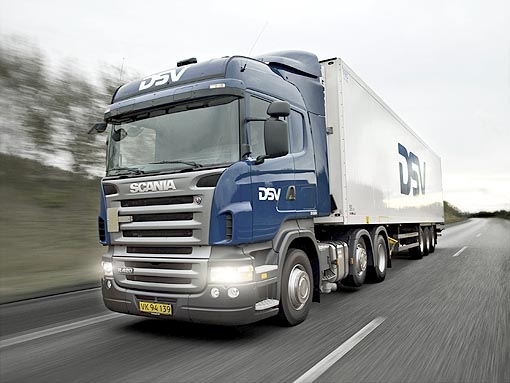
The topic of eco-friendly HGVs appeared in Poland along with the systematically implemented European Union standards regarding fuel consumption and exhaust emissions. However, the decisive stimulus for investing in increasingly modern fleets was the introduction of the e-toll system (viaToll in Poland), which has been enforcing road charges since July of last year.
A system linking the level of road charges to vehicle standards began operating in other European countries earlier. The rate for traveling a kilometer of public road is directly dependent on the vehicle’s ecological parameters, and the higher the standard, e.g., for exhaust emissions, the cheaper the journey. For comparison, the difference in emission reduction between vehicles with Euro 3 and Euro 5 standards can reach as much as 80 percent.
– Currently, the lowest fees are charged for tractors meeting the Euro 5 standard – 27 groszy per kilometer. For comparison, vehicles with standards below Euro 3 will pay nearly twice as much, i.e., 53 groszy per kilometer. This difference is even greater in the case of journeys made in Western countries – says Tomasz Lipski, Carrier Contracting Manager at DSV Road Sp. z o. o. – To illustrate the cost difference for a carrier on an annual scale, we can compare two vehicles – one with the Euro 5 standard and one with the Euro 2 standard. Assuming they cover distances of 100,000 km, the cost difference can reach as much as 25,000 PLN. If we assume that there are 5 vehicles in the fleet, this difference can exceed 100,000 PLN per year. Additionally, if we take into account the price difference between a Euro 4 and Euro 5 tractor, which on average (differences between various brands) is approx. 40,000 PLN, then thanks to much lower road charges, it can pay for itself within 1.5 years.
Another issue worth remembering is the applicable lower limit for vehicle registration. Currently, it is no longer possible to register a tractor with a standard below Euro 3. Additionally, from September 1, 2014, the Euro 6 standard will apply to type-approval, and from June 1, 2015, to the registration and placing on the market of new vehicles. Then, in turn, we can expect that Euro 6 tractors will receive an even more favorable road charge rate or will take the place of the current rate for Euro 5, pushing vehicles with lower standards to higher rates.
– In the case of transport and logistics operators who do not own their own vehicles and use the services of subcontractors, the level of modernity of the tractors is also of great importance, even though fuel costs are not on their side. This is mainly due to the lower failure rate of new vehicles, and consequently, greater operational efficiency of the fleet and, as a result, higher quality of forwarding services. In the case of DSV, this means contracting carriers with a focus on promoting vehicles with the Euro 5 standard, among other things, through actions such as reimbursing road charges to the carriers employed. Such a policy works – currently, about 95 percent of the DSV fleet in Western countries meets the EURO 5 standard; in Poland, the number of DSV fleet vehicles with the Euro 5 standard increased by over 50% in 2011 compared to 2010. – summarizes Tomasz Lipski.