









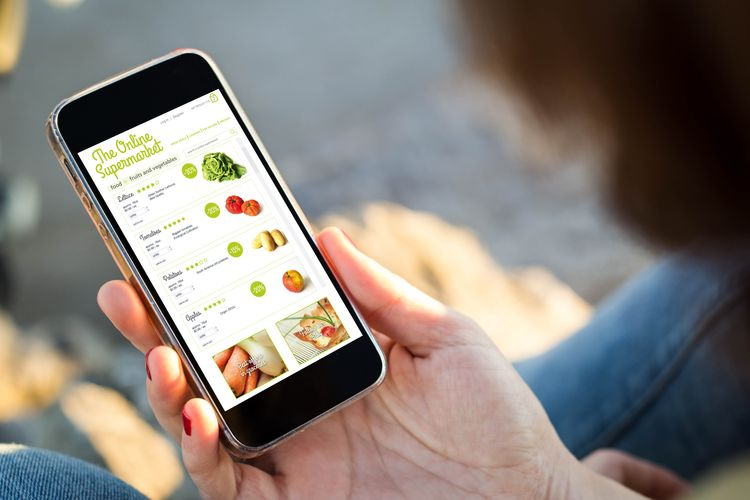
Online grocery sales in Poland are becoming increasingly popular. However, this process requires the integration of many entities and processes. Without solutions that improve standardization, there is no talk of efficiency in the e-grocery sector.
Back in 2019, the level of online grocery sales in Poland was estimated at less than 1% of total FMCG sales, mainly in large cities. Today, e-grocery has become a much more common phenomenon. The latest report E-grocery globally and in Poland. Are consumers ready for online grocery shopping? prepared by the Łukasiewicz Research Network – Institute of Logistics and Warehousing on behalf of GS1 Poland is an in-depth analysis of the e-grocery market in Poland and its development potential. The publication discusses the specifics of the e-grocery market in Poland and all sales service models in this sector.
The e-grocery market is growing rapidly
According to the GS1 Poland report, in 2020, 28% of Polish internet users made online grocery purchases, which translates into a 65% increase in the number of e-consumers in this sector. In turn, PwC forecasts indicate a significant increase in the value of e-grocery in the years 2022-2026.
Estimates show that online grocery sales will grow the fastest, on average by up to 40% per year. The authors of the report cite an analysis conducted by PwC, which shows that in 2026, the gross value of the Polish e-grocery market will reach 18 billion PLN, accounting for over 11% of the total gross value of online sales.
Standardization needed immediately
E-grocery integrates many entities – not only sellers and buyers, but also companies involved in delivery. It also includes various processes, including the preparation and appropriate presentation of the product offer, picking of diverse orders, their packaging, distribution of orders to recipients with the need to ensure specific delivery conditions, or handling returns. The authors of the E-grocery globally and in Poland report point out that the use of GS1 identification and communication standards seems essential for increasing the operational efficiency of the e-grocery sector.
– In the process of identifying and labeling goods, shipments, and locations, standard barcodes are mostly used. Shipments sent to customers have a logistics label compliant with the standard of CEP operators carrying out distribution commissioned via web interfaces. However, new food suppliers on the market do not currently use the GS1 standard – their activation should be considered a direction for development and optimization – emphasizes Magdalena Krasoń-Wałęsiak, e-commerce Manager at GS1 Poland.
The barcode is just the beginning
According to the authors of the report, at the end of 2020, there were almost 30,000 companies participating in the GS1 System in Poland – the largest group consisted of manufacturers. Among them, the most strongly represented industry was food production (almost 4,500 companies). Some of them build their own online stores or sell on online trading platforms. Research conducted by the Łukasiewicz Research Network – Institute of Logistics and Warehousing indicates that at the current stage of e-grocery development, GS1 standards are not yet widely used.
– Standardization may become an important catalyst for e-grocery development in the future. The most promising area for implementing GS1 standards within e-grocery is the implementation of product data models that will provide e-grocery sellers and suppliers with the ability to comprehensively and unambiguously identify product data, and ultimately ensure safe and efficient sales processes – comments Dr. hab. Arkadiusz Kawa, Director of the Łukasiewicz Research Network – Institute of Logistics and Warehousing.
The full report is available below in PDF format.
The report comes from the website: https://cutt.ly/fYnaXRP