








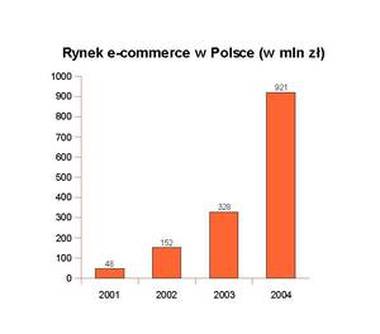
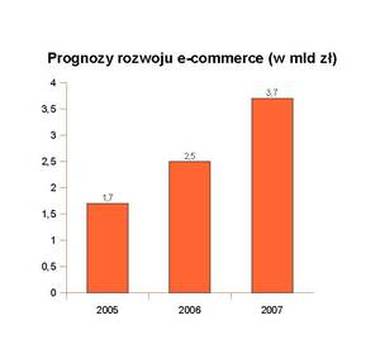
There are approximately 900 Polish online stores on the Internet, whose turnover last year amounted to over 900 million PLN. Analyzing the dynamics of the average values of this market from previous years, it can be assumed that the total revenue from e-commerce by the end of December of the current year will exceed 1.5 billion PLN. However, the Polish e-customer rarely buys a product “on the spot”. They usually need three to seven days to think it over. They choose online shopping because of the lower price and home delivery.
For several years, we have been observing a steady growth of the e-commerce sector in Poland; moreover, one can still make good money in online trade if one skillfully finds a niche. Two years ago, the nascent e-store market generated 328 million PLN in turnover, while last year, online sellers closed with a figure of 900 million PLN.
Industry specialists estimate that e-commerce market revenues in Poland will amount to over 1.5 billion PLN in the current year. The average annual growth in value in our country is 171%, which puts us at the forefront of the most dynamically developing European markets.
Source: eCard 2005
Source: IAB Poland
High market turnover
Polish e-stores are mostly small companies that employ up to five people and usually do not have a physical counterpart. There are about 900-1000 of them in total, which is a number that is only seemingly constant, as every month roughly the same number of new stores are created as are liquidated. More than half of the stores currently existing on the web have been operating for only a year.
– We operated on the local market for over 7 months – says Piotr Tusiński, owner of a now-defunct store offering computer parts. – While initially we recorded satisfactory turnover, it quickly turned out that it was not enough to stay on the market. We were finished off by high competition.
Research conducted by the Gemius company mentions only 9.5% of stores that have been present on the web for more than five years. Such a huge scale of turnover is certainly the result of poor preparation for conducting business on the Internet, a small amount of funds, and high competition. Almost half of the store owners claim that their sales results so far are unsatisfactory. Only those who found a market niche for themselves, had an original idea, and possessed great marketing knowledge achieved success.
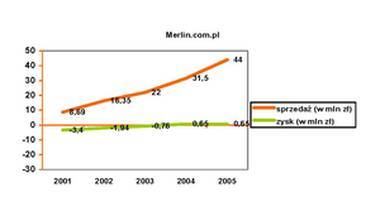
The best example of such success is the online bookstore Merlin.pl. Since last year, Merlin has ceased to be just a media success. It generated its first net profits (about 0.65 million PLN). Merlin.pl also opened its first traditional bookstore near the Złote Tarasy in Warsaw.
Source: Forbes
The awareness of virtual store customers is constantly growing, as are their requirements. Therefore, in the future, online stores will have to focus on lowering prices, because price advantage, apart from user convenience, is one of the basic advantages of the electronic form of trade. However, high pressure on price in the face of high competition may cause a decrease in margins, and consequently, the collapse of the weakest entities.
– Stores, in addition to caring for an affordable price, must take care of increasing customer trust to convince people who have been skeptical about this form of trade so far, and change their attitude towards deliveries: a good solution would be deliveries at minimal prices or free of charge – explains Dariusz Zaremba, head of the e-commerce department of the Wirtualna Polska portal. – It will become important to find the right niche or an attractive product group, which will allow for an increase in the level of margins and at the same time an increase in revenue. It is also time to think about an attractive partner.
– Stores, in addition to caring for an affordable price, must take care of increasing customer trust to convince people who have been skeptical about this form of trade so far, and change their attitude towards deliveries: a good solution would be deliveries at minimal prices or free of charge – explains Dariusz Zaremba, head of the e-commerce department of the Wirtualna Polska portal. – It will become important to find the right niche or an attractive product group, which will allow for an increase in the level of margins and at the same time an increase in revenue. It is also time to think about an attractive partner.