








Logistics operator Dachser anticipates the impact of one of the biggest trends of recent years, the growth of the e-commerce industry, on changing the way purchases are made in the DIY sector. Omnichannel, progressive digitalization, and the increasing role of logistics operators are just some of the factors accompanying the evolution of trade in the construction and renovation industry.
These trends are confirmed by, among other things, market research on the largest DIY market in Europe – Germany. According to the research firm Klaus Peter Teipel Research & Consulting, the German DIY sector generated nearly 2.77 billion euros in revenue from online sales alone last year, which is 14% more than in the previous year. This is also visible in the example of online platforms such as Amazon, which has about a million DIY items in its portfolio, ten times more than a standard brick-and-mortar store.
However, the growing importance of e-commerce does not have to mean the end of traditional stores. Many customers prefer a mixed model – they check products online to compare offers and then go to the store to see the item “live” and make the purchase in the physical store. This behavior, known as “channel hopping,” poses a serious challenge for companies, requiring perfection in every sales channel – online and offline. Sellers must anticipate what the customer expects and direct the order to the appropriate logistics paths. Operators such as Dachser, which delivers over 4 million shipments to 18,000 European DIY stores every year, accompany them in this process.
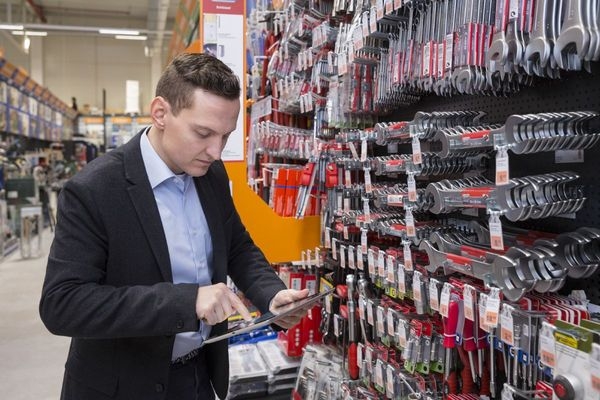
Digitalization is undoubtedly an extremely promising tool in shaping logistics processes, but it also has the potential to be used in business models themselves. Companies in the DIY sector are increasingly realizing that a large store area with a wide range of products on offer is no longer the sole recipe for sales success. An example is the German chain of stores Hornbach, which came up with an interesting idea – in selected locations, customers receive a tablet at the entrance, with which they can scan both physically available products and photos of other items. In this way, they have immediate access to all product information – after analyzing them, they can redirect purchases to the “basket.” Then the products are prepared and wait for customers at the exit or are delivered to their home at a time specified by the customer. However, regardless of where the purchase is made – in-store or online, logistics is always part of the entire process. Ultimately, the goods must still be physically stored and transported to the customer. Therefore, close cooperation between the supplier and the logistics operator and having appropriate systems for data exchange is extremely important. Operators, including Dachser, are increasingly standardizing and digitizing their processes, which leads to an interaction between the physical movement of goods and intelligent IT systems.
The era of advancing technology and the constant transformation in trade associated with it will continue to have a significant impact on logistics. That is why Dachser is constantly working on introducing the fullest possible digitalization of logistics processes for efficient handling of omnichannel purchases.