








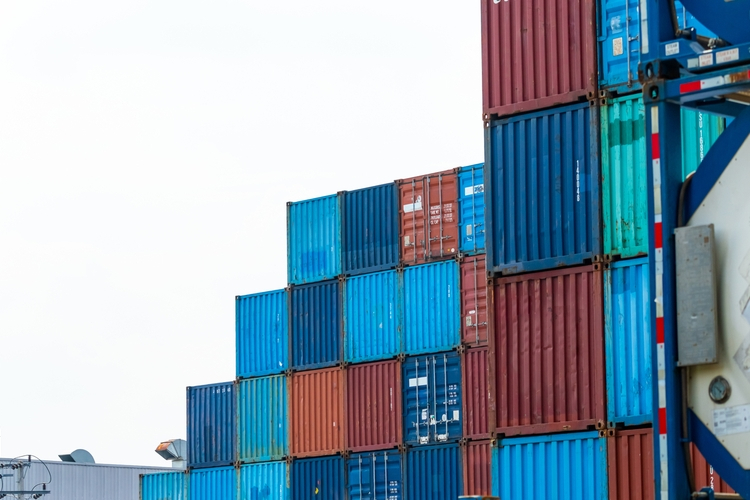
International trade involves a wide variety of goods. It should therefore come as no surprise that diverse vehicles and containers are used for their transport. The safety of goods depends to a large extent on the proper selection of means of transport and the containers in which products are packed during their journey. Let us take a closer look at the various branches of international transport and the means of transport used in them.
Foreign freight forwarding – definition
Freight forwarding is the totality of activities related to the transport of goods and cargo. A complete forwarding process includes:
- Preparation of transport documents and necessary contracts;
- Organization of the necessary means of transport;
- Preparation of cargo for transport;
- Cargo insurance;
- Collection of shipments.
These are the basic activities of so-called pure or proper forwarding. If, in addition to these tasks, forwarders handle additional services (e.g., delivery of goods to warehouses, warehousing, loading/unloading, or even sales or collection of payments for delivered goods), we are dealing with so-called mixed forwarding.
Foreign freight forwarding takes place if the flow of goods occurs between at least two countries. International transport can take place both between directly neighboring countries and through numerous countries located on different continents. Everything depends on the chosen target market and the transport method we decide on.
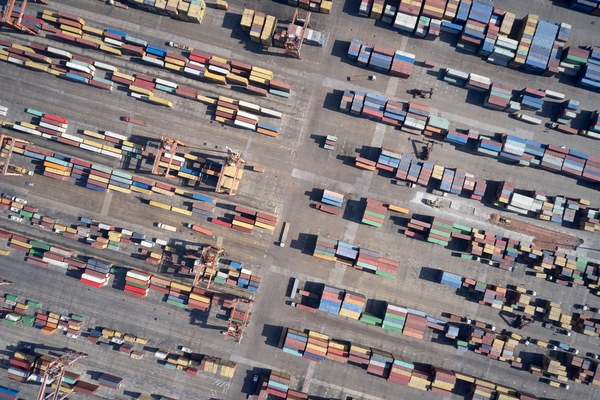
Means of transport used in international freight forwarding
International transport can be divided into 4 main branches, which use specific means of transport:
Sea transport
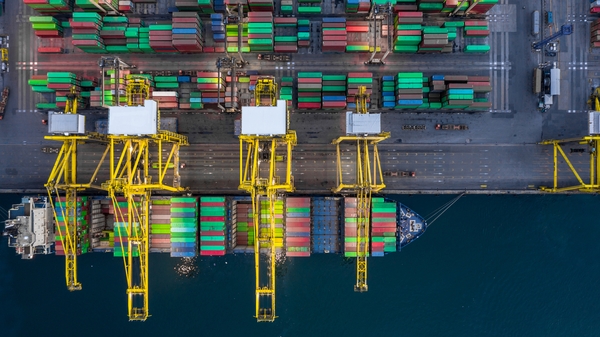
Sea transport primarily uses large container ships, which allow for the transport of huge quantities of goods of various types at once: from general cargo, through full-container loads, to large-size structural elements and entire machines. Less-than-container load (LCL) transport can also take place using smaller vessels that operate on shorter routes.
Sea transport services are characterized by the best distance-to-transport-price ratio: transport on routes exceeding 500 km will be the most cost-effective. Sea transport is currently the most frequently used branch of forwarding on a global scale. However, it should be remembered that it takes more time than air or rail transport.
Rail transport
As is easy to guess, it takes place via trains. Rolling stock can have various lengths, depending on transport needs. Railway wagons allow for both partial/general cargo and full-container transport. Importantly, more can be loaded onto a single wagon than onto a truck trailer.
Rail transport plays a particularly important role in land trade with China. It is via this route that the most goods are sent from the Middle Kingdom, and the railway lines leading to/from it from/to Europe are called the New Silk Road. Transporting goods by rail is most cost-effective for long routes (over 1000 km) and is relatively fast. It is positioned exactly in the middle between cheap and slow sea transport and fast but expensive air transport.
Air transport
Air transport is carried out using specially adapted cargo planes loaded from the front. The biggest advantage here is the speed of execution. Air transport allows you to get from one end of the world to the other practically within a single day. It should therefore not be surprising that it is called express delivery.
However, one must be aware that such shipment involves strict restrictions on cargo tonnage and high costs. Therefore, it is usually used in specific cases, e.g., for products with low durability.
Road transport
This is nothing more than the transport of goods on roads and highways using trucks. Road transport is by far the most popular option in international transport among Polish entrepreneurs. As much as 80% of transport is organized this way. Truck transport also plays an important role throughout the European Union: these are by far the most popular forwarding services for short distances.
These short distances are very important here. Costs associated with international truck transport are cost-effective for distances not exceeding 1000 km. For longer routes, costs increase significantly. As for the speed of execution, road transport is ahead of international rail forwarding.
What is international transport of goods carried out in?
Means of transport alone are not everything that a transport company should pay attention to. Equally important is the proper selection of containers for the individual needs of the client. Fortunately, thanks to international regulations regarding trade and transport of goods, all containers used are subject to standardization. Thanks to this, there is no need to reload products into other containers when changing the means of transport. This significantly improves intermodal transport. Here are some frequently used types of containers:
Tank containers
As in the case of ordinary tank trailers, containers of this type are tanks mounted on a standard container frame. They are designed specifically for the transport of liquid materials of various types. They are divided into 3 categories, depending on the cargo that can be transported in a given tank container.
Universal containers
A standard type of container intended for the transport of general cargo or heavy materials that cannot be transported in large quantities. They come in four size versions – 20′ DV, 40′ DV, 40′ HC, and 45′ HC PW. The latter is used in European ports, and its dimensions are adapted to the transport of products on Euro-pallets.
Open Top containers
These are special containers without a roof. This allows for top loading of products that would not fit through the doors or could not be loaded in any other way. Instead of a roof, special waterproof tarpaulins are used. They are available in 20′ and 40′ sizes.
Flat Rack containers
Containers without longer sides and a roof, designed specifically for the transport of heavy equipment and shipments that do not fit into a universal container. Importantly, some of them also allow for folding the remaining walls, which further facilitates loading. Here, too, you can choose between 20′ and 40′ versions.
Platform containers
A platform container has no walls at all. It was created for large-size shipments that would not fit into any other container. It can be 20′ or 40′ in size.
Reefers
These are nothing more than refrigerated containers that allow for maintaining a specific temperature inside. Although they are called cold stores, they can also heat. The temperature range in which they can operate is quite impressive: the minimum is -65°C, and the maximum is +40°C. Reefers are also available in the same two size variants.
International freight forwarding and means of transport – summary
A properly selected means of transport has a huge impact on the timeliness of deliveries and the costs associated with the transport of goods. However, it must be remembered that international freight forwarding is a complex process, and choosing the right means of transport is only one of its elements. If you want to be sure that your goods will reach their destination in the shortest possible time at optimal costs, choose a company that has many years of experience in the industry and has an extensive network of contacts.