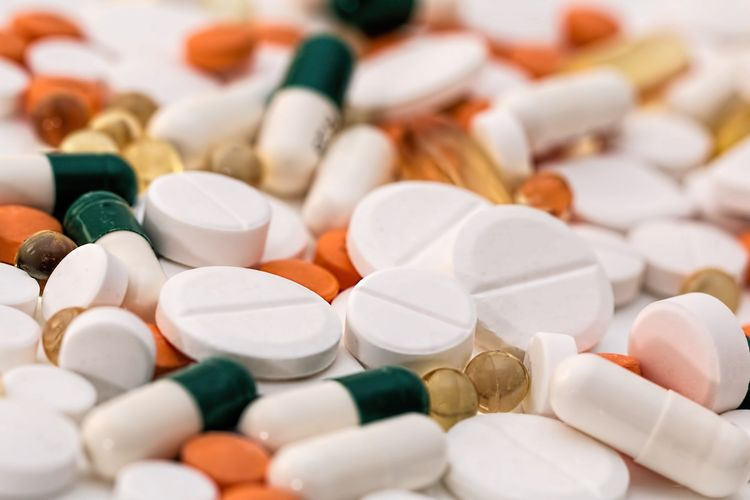
Ensuring the safety of products is primarily reflected in the care to provide patients with medicines of the highest possible quality. Therefore, great emphasis is placed on introducing mechanisms that seal the legal distribution chain, allow for the monitoring of medicine expiration dates, and ensure proper storage and transport conditions. An important issue related to the management of medicine flows is the question of disposing of expired products in accordance with applicable legal requirements.
Patients should remember that manufacturers guarantee the quality, safety, and efficacy of medicines until their expiration date, provided they are stored according to the instructions. After this period, there is no guarantee that the medicine will work as intended. Unfortunately, consumers of medicines are not always aware of how to proceed with expired medicines from their home medicine cabinet. Additionally, studies conducted in Poland and around the world show that knowledge about the negative effects of medicine decomposition when improperly stored in the environment is still insufficient. Meanwhile, a single painkiller tablet can contain 500 mg of paracetamol. If there is one expired package of this medicine in a home medicine cabinet, containing 50 tablets, we must dispose of nearly 25 g of the active substance. This is an amount that, on a larger scale, can have a real negative impact on the environment. Studies of water samples from rivers near Madrid, Spain, showed the presence of paracetamol in concentrations of 188÷2813 ng/dm3.
Medicines thrown into regular municipal waste have a negative impact on the environment because they can be absorbed by the soil and end up in water reservoirs. As a result, they will affect crops, and indirectly the food industry, living organisms in the water, and drinking water. Research results show that many medicinal substances, including painkillers, anti-inflammatory drugs, antibiotics, hormones, and antiepileptic drugs, can often be detected in surface waters. These substances can also have a negative impact on all plant species. That is why the proper disposal of expired medicines is so important, which is encouraged by, among others, the Ministry of Health.
What is the proper way to handle expired medicines from a home medicine cabinet? Since 2007, it has been possible to dispose of expired medicines free of charge in special containers, known as collection bins. They are designed in such a way as to prevent potential leakage, as well as access to their contents by unauthorized persons. Such containers are available, among other places, in some pharmacies, municipal offices, clinics, or hospitals. It is worth noting, however, that pharmacies are not obliged to collect and transfer for disposal medicines that were not purchased from them. If a pharmacy or pharmacy outlet wants to conduct a collection of expired medicines, it reports this to the municipal office. It is the municipalities that are responsible for activities related to municipal waste and sign agreements with pharmacies and clinics, where space for collection bins is provided free of charge.
Information about collection points for expired medicines is available on the websites of municipal offices. Special containers are collected from these points by specialized companies and then transported to a place where they are safely disposed of. The emptying of collection bins and the subsequent disposal of medicines are carried out by a specific, specialized company. A company with a permit for waste collection can temporarily store it and then collectively transfer it to a disposal (processing, incineration) site. The municipality bears the costs associated with the disposal of this waste. It is worth noting that waste delivered by patients to collection bins cannot be added to waste generated by the pharmacy, as it is subject to a separate process of collection and transfer for disposal. Expired medicines handed over to pharmacies should be properly prepared and sorted. Before throwing them into the collection bin, the medicine should be removed from its cardboard packaging. The container should contain blister packs with tablets, syrups in bottles, ointments and creams in tubes, aerosols in intact packaging, and injections in ampoules. The containers are used to collect all healthcare products: prescription medicines, over-the-counter medicines, as well as dietary supplements and medical devices. Remember not to place items such as paper packaging or used dressing materials in the containers. The latter are medical waste, which is covered by separate regulations and handling procedures.
In most European countries, special rules for the disposal of medicines are in force, which prevent medicines from entering the environment. Most European countries have introduced legal regulations that require the return of expired medicines from home medicine cabinets to public pharmacies. In many cases, the pharmacy is obliged to accept such products. Regarding other medical waste, the rules vary depending on the EU country. Moreover, a campaign called #medsdisposal is being conducted in Europe. It aims to raise awareness and disseminate knowledge about the proper disposal of unused or expired medicines in Europe, providing information on current disposal rules in European countries. This initiative brings together many healthcare, industry, and scientific organizations, such as EFPIA (representing pharmaceutical manufacturers), GIRP (representing pharmaceutical wholesalers), or PGEU (composed of representatives of public pharmacies). Interestingly, in the United States, the American Food and Drug Administration (FDA) has defined procedures for cases where it is not possible to return expired medicines. According to these rules, it is recommended, among other things, to place medicine packaging in a hermetically sealed bag, metal can, or other sealable container, which is intended to prevent the leakage of liquid medicinal products. Additionally, it is not recommended to crush tablets or open and pour out the contents of capsules. Tablets packed in blisters should be wrapped with opaque adhesive tape to minimize the risk of damage. From the point of view of a patient who regularly takes a large number of various medicines, a beneficial solution may be to use mobile applications that, among other things, remind the user of the need to take a specific medicine and also monitor the expiration date. It is ideal when the application allows for automatic data entry regarding the medicines being taken, by scanning barcodes from the medicines. This saves time for the patient and reduces errors. In this way, we can contribute to reducing the number of expired medicines. The disposal of expired medicines from a home medicine cabinet is a multifaceted issue. Precise legal regulations define the logistical aspects of this undertaking, and on the other hand, they support environmental protection efforts. Each of us should take care of the proper disposal of these dangerous wastes, which are medicines, dietary supplements, or medical devices.
Bibliography:
– http://biuletynfarmacji.wum.edu.pl/0904Jawecki/Jawecki.pdf
– Anna Staniszewska et al., Selected aspects related to expired medicines, Probl. Hig. Epidemiol., 2015, 96 (3), pp. 697-703
– Anna Szymonik, Joanna Lach, Threat to the Aquatic Environment by the Presence of Pharmaceutical Agents; Engineering and Environmental Protection, 2012, Vol. 15, No. 3, pp. 249-263
– http://medsdisposal.eu/
– https://www.gov.pl/web/zdrowie/przechowywanie-i-utylizacja-lekow
– Waste Act – Act of December 14, 2012
– Guidelines of March 7, 2013 on Good Distribution Practice for medicinal products for human use (2013/C 68/01).
The article comes from the magazine LOGISTYKA 4/2021.
The e-edition of the magazine is available in our offer!
Stay up to date, subscribe to the LOGISTYKA magazine!