









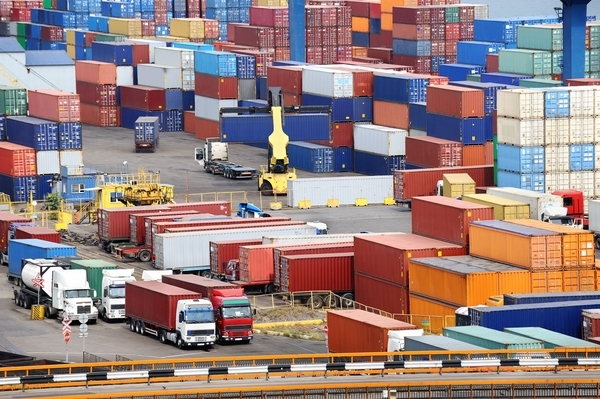
In the era of digitization, the flow of data and information currently generates more economic value than the global trade in physical goods. A major challenge still lies ahead for companies in the logistics sector, which must respond to the demands of digital consumers, just as online retailers do. Between 2010 and 2017, they made more than three times as many investments as the 10 leading logistics companies and more than seven times as many as the 10 key transport companies.
Forecasted global trade growth of 3.2% in 2018
The global economy has shown signs of a stable recovery after significant uncertainty in 2016. As CPB statistics indicate, trade grew by approximately 2.5% up to October 2017. Meanwhile, in September 2017, the World Trade Organization forecast trade growth of 3.6% as a result of a sharp acceleration in global trade in the first half of the year. Due to ongoing geopolitical tensions in 2018, the risk of protectionism, and natural disasters, the World Trade Organization warns against overly optimistic forecasts for this year, expecting global trade growth of 3.2%.
The shipping sector must be more efficient
Global maritime trade grew by 2.6% in 2016. With the development of the industry, a compound annual growth rate of 3.2% is forecast for the years 2017-2022. However, strong demand is balanced by a constantly growing carrying capacity, which reached 1.86 billion DWT (dead-weight tons) in 2017. A steady decline in the number of orders for new ships and positive market growth forecasts should, however, force a gradual reduction in excess capacity and improve its utilization. Consumer goods manufacturers and oil companies are putting pressure on their suppliers – including transport service providers – to ensure higher service levels and reduce costs. To achieve this, it is worth being a larger organization and having the ability to serve customers in multiple locations.
– The market expects the shipping sector to become more efficient. Limiting the construction of new ships and increasing the scale of scrapping the old fleet, the so-called Shared Economy, mergers and acquisitions, or establishing strategic alliances seem to be solutions to the problems of the shipping market. To remain competitive, a company must focus on improving asset utilization, as well as reducing costs and improving margins. Consolidation seems to be the way a company can achieve both of these goals. A very interesting initiative to improve the efficiency of maritime asset utilization in Poland is the proposal to create a Maritime Investment Fund, bringing together the entire value chain of assets involved in the maritime industry in Poland (ports, shipyards, shipowners). This will allow for more effective planning, as well as counteracting business cycles – says Wojciech Drzymała, Partner in the General Audit Department, Head of the Advisory Team for the Transport, Shipping and Logistics Sector at KPMG in Poland.
The aviation market facing changes
The European market is currently facing major changes, including regulatory ones, in connection with ongoing negotiations regarding the UK’s withdrawal from the EU, the possible introduction of regulatory changes regarding carriers from third countries, and an increasingly competitive European airline market, which has forced many carriers to sell or caused the sudden disappearance of many airlines from the market. The pace of technology development provides the industry with opportunities to further improve service offerings and operations. This, in turn, should allow travelers from all over the world to move with greater comfort and at a lower cost. The pressure felt by European airlines has been compounded by competition from low-cost carriers, which have become very popular, accounting for a 48% share of passenger traffic in the European Union market in 2015.
– Highly competitive airlines in the Middle East and Asia continue to challenge European carriers and airports. This is due to certain advantages that these carriers have, for example, the dynamic growth of emerging markets and related traffic. These factors have been supported by significant investments in infrastructure and a fleet of modern aircraft – claims Wojciech Drzymała.
Convenience in the delivery process
Growing customer requirements related to receiving shipments mean that logistics companies must meet high standards in response to the ever-increasing demands of their customers. From the perspective of retailers, delivery speed remains crucial, as consumers may abandon a purchase if delivery takes too long. This leads to the development of new delivery options and business process models. However, it should be remembered that consumers still prefer low-cost delivery models with the possibility of hassle-free returns of purchased goods.
The power of breakthrough technologies
The Hyperloop concept has gained incredible momentum over the past four years. Currently, there are many start-ups working on bringing breakthrough innovations to life. It is likely that in the near future, interactions with transport will change as a result of autonomous vehicles (AV), technology-enabled infrastructure, and the increasingly widespread use of the Internet of Things (IoT).
– Many companies, both new and established, are making rapid progress towards the production of autonomous vehicles. It can be said that we are currently on the verge of their widespread use. The Hyperloop concept clearly fits into this paradigm shift, and it seems that the timing of its development may be right – says Wojciech Drzymała.
The full version of the report in electronic format can be downloaded from the website kpmg.pl