








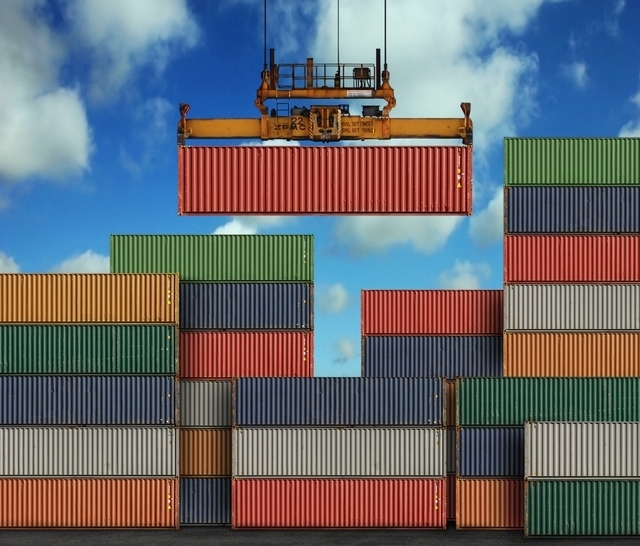
Globalization, European integration, and the liberalization of international trade in goods and services have caused strong and unprecedented growth in container movement throughout the logistics chain. In order to secure the development of containerization, container terminals began to seek the most favorable solutions for container dispatching.
New technical, technological, and organizational solutions for the container movement process have created an impetus for the development of intermodal cargo unit handling by maritime terminals. The handling of intermodal cargo units aims to increase the throughput of the container terminal’s logistics infrastructure. Consequently, the construction and/or expansion of existing railway infrastructure and superstructure in maritime container terminals began. Undoubtedly, the maritime container terminal, through the construction of intermodal transport infrastructure and superstructure, has created operational conditions for intermodal transport operators. To illustrate the state of intermodal infrastructure in container terminals, a diagnosis of its development was conducted based on the Baltic Container Terminal.
Diagnosis of the intermodal infrastructure of a maritime container terminal
The railway infrastructure of a maritime container terminal constitutes an inseparable part of the entire infrastructure necessary for the technological process of moving containers in an intermodal transport system. The railway terminal for handling intermodal cargo units is located in the northern part of the BCT. The Baltic Container Terminal has the Helskie I transshipment quay, 800 m long, with a maximum depth of 13 m (design depth 13.5 m), with five berths for handling container ships in the lo-lo system (including one enabling ro-ro system handling). Another element is a hydraulically controlled tilting ramp for handling ships with deployed ro-ro stern ramps. In turn, the railway terminal consists of three tracks, 300 m long, adapted for the simultaneous handling of 45 container wagons. The railway siding with delivery-receipt tracks (6 tracks, each 1,000 m long) is adapted for forming container trains.
The article contains 15,280 characters.
Source: Logistyka Magazine