








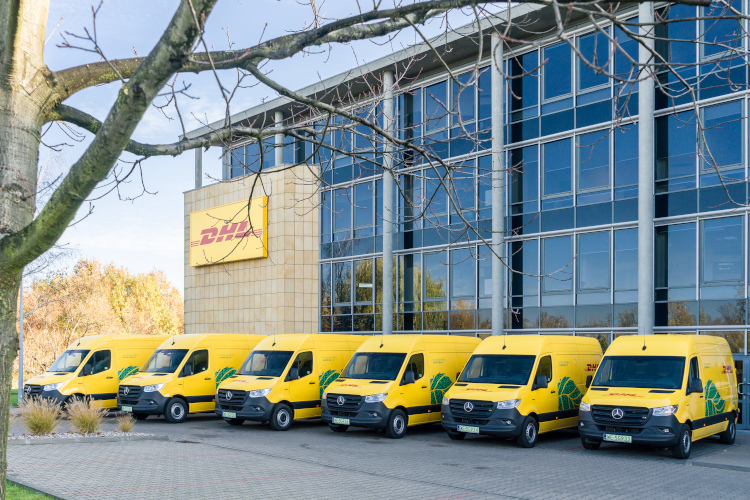
For e-commerce customers, it is increasingly not just about on-time delivery, but also about the effective implementation of pro-ecological activities by companies in the logistics industry. Earth Day, which falls on April 22, is a good opportunity to remind everyone how important it is for the business sector to take action to protect the environment. DHL Parcel, not just on this one day, but throughout the year, as part of its GoGreen strategy, implements solutions that lead to an overall reduction in CO2 emissions. The International Logistics Center, the largest DHL facility in Poland, which is being built near Poznań, will be equipped with innovative and environmentally friendly technologies.
Customers are focusing on ecology. Among consumers, there is a growing awareness of the impact of business, including the logistics industry, on the environment. According to “The DHL Online Shopper Report 2022”, as many as 58% of consumers across Europe prefer to wait longer for a more eco-friendly delivery. Importantly, this conclusion contradicts the common opinion that the time of receiving a shipment is the most important criterion for choosing a supplier.
Responding to the needs of the environment and customers, the main goal of the GoGreen strategy implemented by DHL Parcel is to reduce to zero the emissions of pollutants resulting from logistics operations. To achieve this, the company is taking a number of initiatives, including investing in green transport, sustainable supply chain management, and modern and environmentally safe infrastructure solutions. These will also be present in the International Logistics Center being built near Poznań.
International Logistics Center on a green course
The International Logistics Center will be the largest DHL facility in Poland and one of the largest in Europe. The facility will have an area of 32,000 sq m and will be equipped with a high-performance 3-level sorter. Although thousands of operations will be performed there every day, DHL has ensured that it is an environmentally friendly place.
– A comprehensive approach to optimizing processes that affect the natural environment is crucial for DHL Parcel. Our GoGreen idea consists of concrete actions that we effectively implement both globally and in local markets. One of our most important challenges is the pursuit of zero CO2 emissions. That is why we are constantly investing in renewable energy sources. We have our own photovoltaic farms, thanks to which we produce green solar energy. The electricity obtained in this way powers not only electric courier vehicles but also sorting centers. Subsequent photovoltaic installations will be built at every new facility, including the International Logistics Center. Already today, thanks to the use of solar power plants, DHL Parcel saves over 330,000 kWh of energy per year, which means that nearly 80 tons of CO2 do not enter the atmosphere – comments Jerzy Staszelis, Vice President of Finance and Administration at DHL Parcel Poland.
The solar panels that will soon appear at the International Logistics Center will have a capacity of 1 mWp (megawatt peak) at peak production. They will meet 1/3 of the facility’s energy needs. The rest of the energy will be drawn from purchased green energy, i.e., energy for which no fossil fuels were used or their share was minimal. In the future, DHL also plans to install a small wind power plant.
It will also be green on the roofs of the International Logistics Center. Vegetation that absorbs carbon dioxide will be used in the roofing. The plants will also reduce the emission of noise from devices placed on the roof and reduce the heating of the interior or the penetration of cold. This friendly solution, which is popular in Europe, has a positive effect on rainwater accumulation, thereby reducing the phenomenon of drying out urban areas. Rainwater will also be collected and used, for example, for watering plants. Additionally, a so-called grey water system will be installed in the facility, allowing for the reuse of water used for hand washing, e.g., for flushing toilets.
The unit will be equipped with heat pumps for heating the entire area and cooling the office space. BMS automation will also be used, which allows for the management of lighting and air conditioning, supported by media consumption analysis, weather automation, and detection of abnormal consumption and failures. An additional solution, used during periods of extremely low temperatures, will be a system of gas boilers. It does not require the construction of a gas network connected to a distant public network, thus reducing the impact on the natural environment. Importantly, the boilers will be able to run on biological heating oil, which is an ecological fuel. A solution that contributes to reducing energy consumption in summer will be windows with a UV filter, which prevent the office rooms from heating up, and thus minimize the use of air conditioning and reduce energy consumption.
A sustainable hall cooling system will also be implemented, consisting of ventilating the interior using the gravitational movement of cool night air, without the use of air conditioning or electric fan drives.
The International Logistics Center will also feature environmentally friendly transport solutions. The facility will be equipped with electric terminal tractors. These are vehicles that transport trailers and containers. They do not cause exhaust emissions and, above all, engine noise. There will also be approximately 40 charging points for passenger cars, vans, and trucks at the ILC, as well as 4 entry and exit lanes each with transport management automation, which will shorten the vehicle waiting time at the gates, which will contribute to reducing the amount of noise and exhaust fumes.