








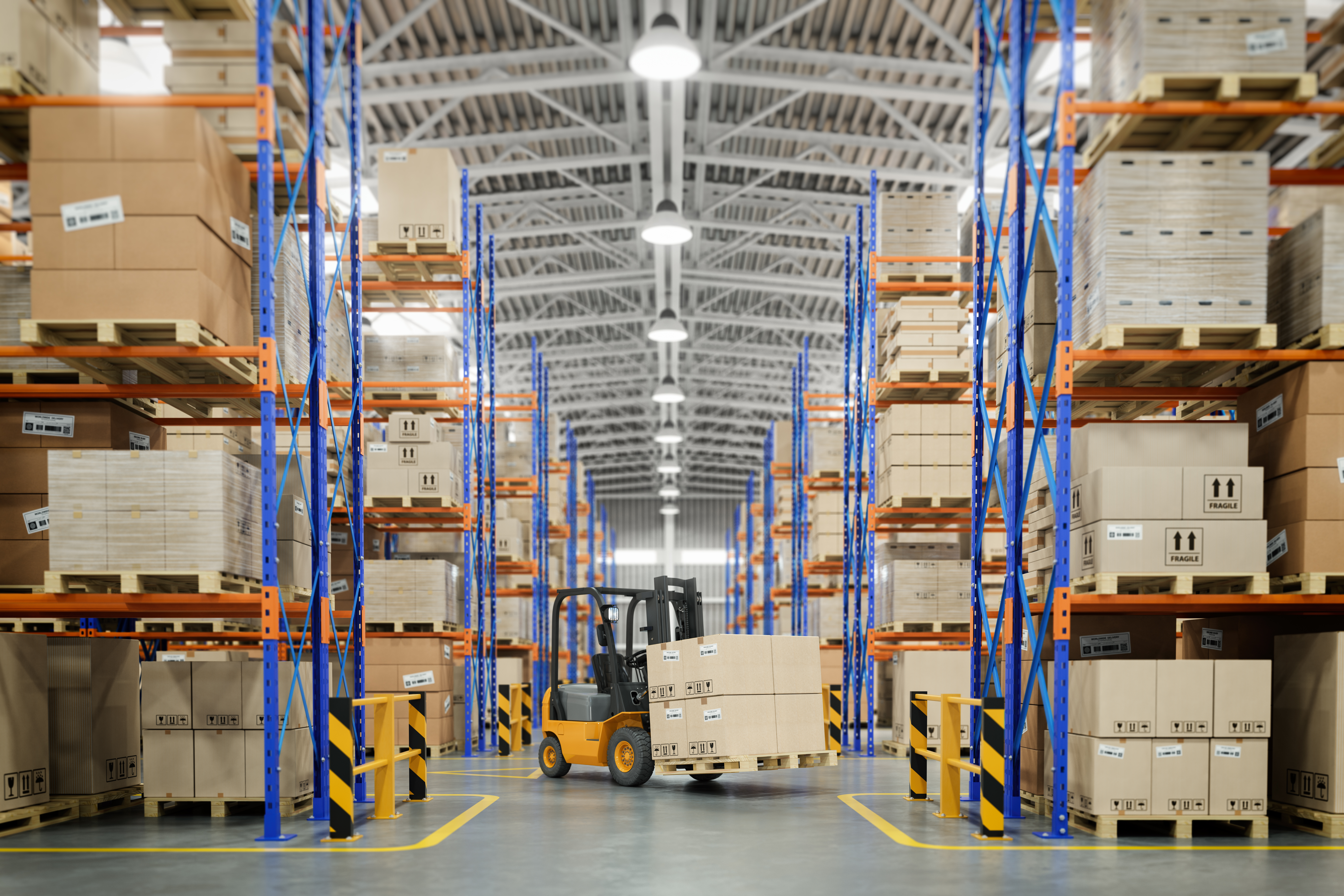
The free movement of goods and people, as well as access to new markets following Poland’s accession to the EU, were the driving force behind the dynamic development of the warehouse sector in Poland. Modern logistics centers quickly became a key element of our economic infrastructure. Thanks to still relatively low labor costs and attractive financial incentives, Poland is now recognized as a strategic logistics and warehousing hub for the entire region.
The beginnings of expansion
Immediately after 2004, several large companies entered the Polish market, marking the beginning of an intensive expansion of warehouse developers in Poland. Before this period, only a few developers were present on the Polish market, and their share was marginal. Warsaw played a key role in the initial phase of market development, as it naturally attracted the largest investments due to its proximity to decision-making centers. After Poland joined the European Union, the warehouse market also developed rapidly in other regions. Developers such as Segro or MLP began to see potential in various parts of the country.
Market evolution and diversification
In the early 2000s, warehouse investments were often carried out to order for large corporations, such as Coca-Cola. Over time, the market matured and more speculative projects began to appear, implemented without a specific tenant but with future demand in mind. The development of the warehouse market was also linked to the evolution of various types of properties, such as SBU (small business units) or BTS (build-to-suit), which met the diverse needs of tenants. Over the years, warehouses and logistics centers have also gained importance in investment portfolios. At the beginning of the 21st century, warehouse properties accounted for only a small percentage of capital investments in the commercial real estate sector. By the end of Q1 2024, this figure was almost 40%.
Record growth in recent years
In 2004, warehouse space in Poland amounted to approximately 1.3 million sqm. Currently, it exceeds 32 million sqm, with the most impressive increase, as much as 15 million sqm, occurring after 2018. The development of the warehouse market was further accelerated by the COVID-19 pandemic, as the increased demand for e-commerce services required modern and efficient logistics centers used for storing goods, but also for handling returns and processing orders.
Roads and highways crucial for logistics
The development of road and maritime infrastructure has also significantly contributed to the growth of this market in Poland. Over the last 20 years, the construction of modern roads and highways has significantly improved the accessibility of various regions. Initially, foreign investments were concentrated mainly in the western and southern parts of the country, such as Poznań, Wrocław, or Silesia. However, the development of road infrastructure enabled the opening of eastern regions of Poland to new investments, which allowed for more balanced development of individual regions. Currently, the dynamic expansion of seaports, such as DCT Gdańsk (now Baltic Hub Container Terminal), carried out in recent years, has a comparable impact on the further development of the logistics market in Poland. Polish ports are already acting as key delivery points for goods from Asia, which encourages local investors to locate their operations here due to the ease of access to the entire European market.
Polish employees attract investors
One of the most important changes we have observed in Poland over the last 20 years is the evolution of the society’s mentality. Currently, employees are better educated and more open to the needs of investors. Knowledge of English has become widespread, which facilitates communication and cooperation with foreign companies. A huge advantage is also the availability of qualified staff who can adapt to dynamically changing market conditions. The willingness of employees to retrain and their ease of adapting to new technologies and work methods meet the growing demand from manufacturing and technology companies.
Wage growth, but also competence growth
Despite dynamic development, Poland is facing challenges related to rising labor costs. Rapidly rising wages may currently reduce Poland’s attractiveness for investors looking for cheap labor in favor of other countries, e.g., Hungary, which offer more attractive financial incentives. At the beginning of the transformation of the Polish market after joining the European Union, low labor costs were one of the main advantages attracting investors to Poland, and the jobs they created mainly concerned manual workers. Over time, the competencies of Polish employees began to develop, but for many years, more technologically advanced tasks, such as research and development (R&D), were carried out mainly by Western European countries.
Now, with the growing skills and education of Polish employees, Poland is naturally, albeit slowly, becoming a beneficiary of the technology sector. The number of companies requiring many employees for simple tasks is decreasing, while the number of investments expecting more advanced competencies is growing. This is also influenced by the development of academic centers and the appropriate alignment of educational offerings with market needs. Technology companies are looking for employees with skills in fields such as engineering, IT, or biotechnology, which requires government support in the form of appropriate educational programs and policies stimulating the development of these sectors.
Not just positives
Despite the dynamic development of the warehouse and production market in Poland, there have been challenges and mistakes that have had a negative impact on this sector. One of the main problems was the lack of a coherent spatial policy. The rapid influx of investment and dynamic development were not always well-coordinated with local spatial development plans. As a result, many production plants and logistics centers were built in places that were not properly prepared in terms of infrastructure and environmental protection. Improper location of investments affected the aesthetics of the landscape and the quality of life of residents in these areas. Many industrial and logistics investments were built without proper control and restrictions related to environmental impact, which led to the degradation of natural ecosystems and their pollution. Increased industrial activity also affected the quality of air, water, and soil.
Another challenge was the approach of local governments to investments – often too enthusiastic and poorly thought out. During the period of intense investment inflow, local authorities and developers focused mainly on attracting as many new projects as possible, not always taking into account their long-term consequences. The lack of a strategic approach and vision for development resulted in the chaotic placement of industrial and logistics facilities, which negatively affected urban cohesion and landscape harmony.
In response to changing trends
20 years ago, standard warehouse facilities had an area of about 10,000 sqm. Today, facilities with an area of 200,000 sqm have become the norm. Along with the increase in warehouse space, capital expenditures (CAPEX) related to investments have also increased. Modern warehouses are becoming more advanced in terms of technology, and modern solutions such as automated storage and retrieval systems (AS/RS), robotics, and advanced warehouse management systems (WMS) are already standard in new investments. Companies are investing in advanced technologies to increase operational efficiency and reduce dependence on labor costs. As a result, although the warehouse area does not always have to be larger, the number of operations performed inside these facilities has increased significantly.
Potential still huge
The growing importance of warehouse real estate is a global trend and does not apply only to Poland. However, EU membership has significantly accelerated this process, facilitating our access to European markets and attracting foreign investors. Poland, thanks to its strategic location, developed infrastructure, and growing employee competencies, has become a key point on the logistics map of Europe. Despite dynamic growth, the Polish warehouse market still has significant development potential. This is indicated by global standards of warehouse space saturation per capita. In Western European countries, it ranges from 1.25 to 1.5 sqm per inhabitant, while in Poland this indicator is much lower. Current data shows that Poland has over 32 million sqm of warehouse space, but the actual demand may be even twice as high.
Source: Colliers