








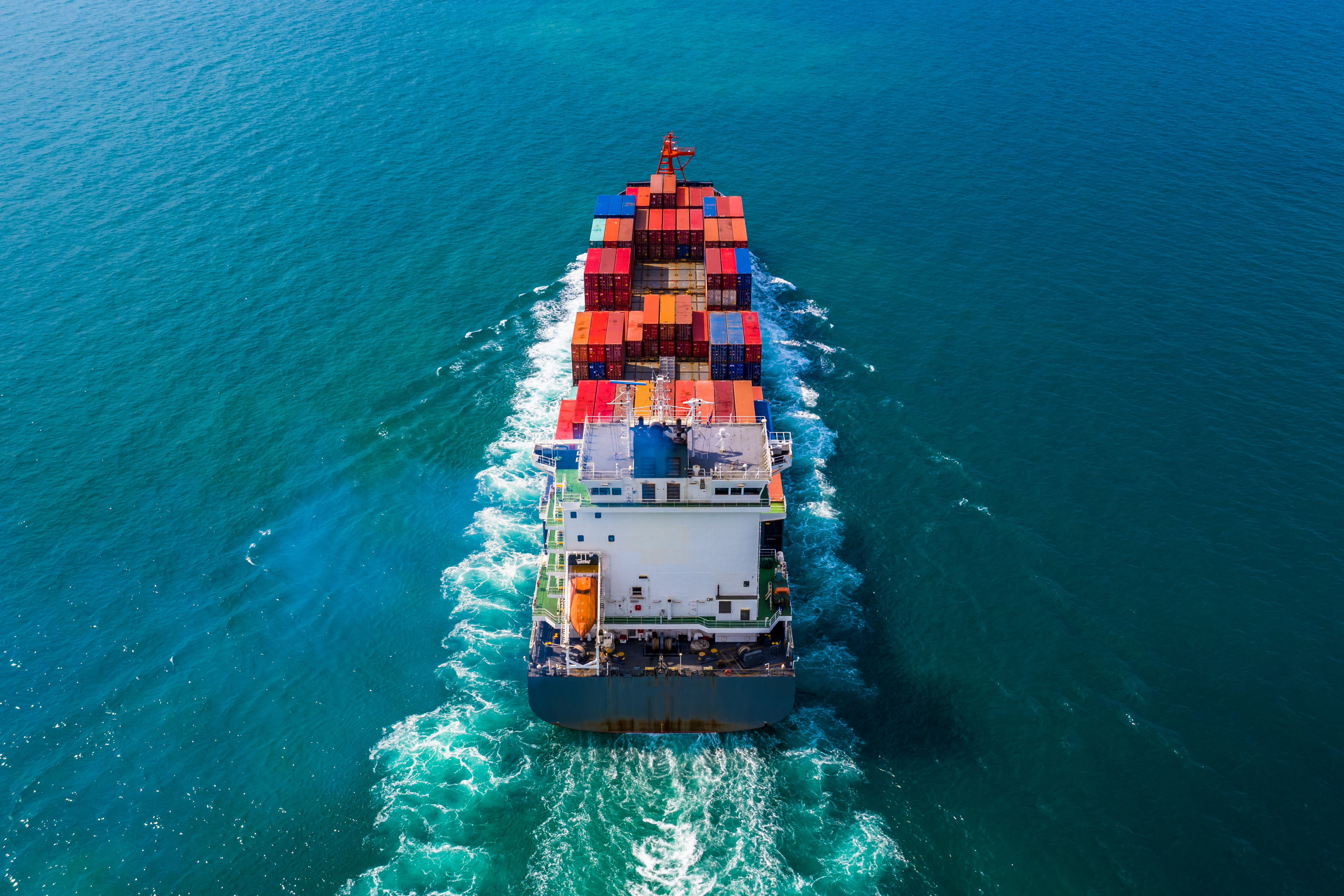
The shipping industry is the backbone of the global economy, accounting for approximately 80–90 percent of goods transport. Despite this scale, maritime transport is efficient in terms of CO2 emissions, as the industry is responsible for only 3 percent of global greenhouse gas emissions. However, the high dependence on fossil fuels remains a problem, which is why work on new types of propulsion and fuels is necessary. New technologies are also helping in the decarbonization of the maritime industry.
– The number of ships sailing the seas and oceans is between 50,000 and 70,000. That is a lot, but maritime transport is responsible for only 3 percent of environmental pollution. The biggest problem today is exhaust emissions – until recently, we talked about protecting ocean waters, cleaning ballast water, and limiting the sulfur content in fuel, but now everyone is generally focusing on exhaust emissions. This is the primary problem of modern shipping – says Andrzej Smoleński, Sales Director of the Marine Division at Alfa Laval Polska, to the Newseria Biznes agency.
The World Economic Forum (WEF) states that global shipping accounts for 80–90 percent of world trade and 3–4 percent of greenhouse gas emissions. Low-quality fuel used by cargo ships contains up to 2,000 times more sulfur than diesel fuel used in cars. IDTechEx One calculates that a large ship emits as much CO2 as 70,000 cars, as much nitrogen oxide as 2 million cars, and as much fine particulate matter and carcinogenic particles as 2.5 million cars.
– The European Union has become very heavily involved in the problem of cleaning up the industry and reducing exhaust emissions from sea-going vessels, while at the same time causing a lot of confusion in the market. Business and most trade routes reach out to Asia, where the largest volumes of goods flow from. The fact that the European Union introduced its own separate regulations compared to those introduced by the International Maritime Organization has caused a lot of confusion. Of course, everyone has the good of this world and the overriding goal, i.e., cleaning up the environment, in mind, but the emission monitoring and verification systems are different, and this has caused a lot of confusion in the market – assesses the manager of the Marine Division at Alfa Laval Polska.
New regulations
As part of the Fit for 55 package, the European Union has adopted the FuelEU Maritime regulation, which is intended to promote the use of renewable and low-carbon fuels in maritime transport. Its goal is to reduce greenhouse gas emissions from fuels used in maritime transport by 80 percent by 2050. The strategy of the International Maritime Organization assumes that by 2050, maritime transport is to be climate-neutral. Last year, intermediate targets were also set, assuming a reduction in total annual greenhouse gas emissions from international shipping by 30 percent (or at least 20 percent) by 2030 and by 80 percent (or at least 70 percent) by 2040 compared to 2008 levels.
The shipping industry is striving to limit temperature increases to 1.5 degrees Celsius in accordance with the Paris Agreement. This requires that by 2030, 5 percent of the fuels used in international shipping be zero-emission fuels.
– The most urgent area to improve in maritime transport is the reduction of greenhouse gas emissions, what we popularly call decarbonization, and the reduction of petroleum fuel combustion. Therefore, many technologies are moving towards finding new fuels and new solutions; there is talk here of methanol, ammonia, hydrogen, and even nuclear energy – lists Andrzej Smoleński.
More and more shipyards are deciding to build vessels powered by methanol, which can reduce carbon dioxide emissions by 60–95 percent compared to traditional fuels. However, methanol, like hydrogen, ammonia, or biofuels, is still rarely used in maritime shipping. The DNV “Maritime Forecast to 2050” report indicates that although methanol or ammonia have great potential, they do not achieve the excellent operational properties of fossil fuels and are associated with lower energy density, safety limitations, and higher costs.
– To eliminate emissions to zero, the world needs new fuels. And what we have so far does not meet the needs. These fuels are not widely available, and besides, they are expensive. It is difficult for shipowners to make a decision on what kind of ship to build at this moment, with what kind of propulsion, because it is not entirely clear whether this fuel will be available. There is talk of nuclear energy being the future of the shipbuilding of the future. At the moment, as far as short-term solutions are concerned, the most common talk is of methanol and ammonia – explains the representative of Alfa Laval Polska.
IDTechEx One emphasizes that electric and hybrid ships, although they have been developed for many decades, still account for a small part of the market, about 1–2 percent. Currently, such propulsion systems in maritime shipping have appeared mainly in recreational boats, ferries, and short-distance ships. In the case of larger deep-sea vessels, interest in them is much lower.
New technologies
However, new technologies are emerging that can accelerate the decarbonization of the maritime sector. The “Maritime Forecast to 2050” report points to, among others, technologies related to solid oxide fuel cells, liquefied hydrogen, wind-assisted propulsion, air lubrication systems, onboard carbon capture, or nuclear propulsion.
– We try to help shipowners reduce ship operating costs as much as possible and optimize their operation. Therefore, we offer many supporting technologies that will help shipowners reduce emissions in the short term. I am referring to air lubrication of the hull and methanol ship power supply systems – lists Andrzej Smoleński.
Alfa Laval is expanding its range of solutions for both existing and emerging alternative fuels, including LNG, LPG, biofuels, and methanol. It is also developing solutions for ammonia. In turn, the OceanGlide air lubrication system aims to further improve the efficiency of tankers and save energy. This patented system uses oscillators to generate an even layer of microbubbles across the entire flat bottom of the ship, reducing drag between the hull and the water, thereby reducing friction and resistance. Air lubrication of the hull thus serves to reduce energy consumption, emission levels, and noise.
– We are also introducing a new offer of sail-wings, i.e., powerful devices mounted on ship decks that will help the propulsion system use the wind. The first such device will be installed next year – emphasizes Andrzej Smoleński. – In turn, our company StormGeo is working on optimizing ship routes to avoid stops in ports, somewhat along the lines of aviation. The difference here is that a plane cannot wait in the air before landing, whereas a ship can. But the longer a ship stands, the more the shipowner and the recipients lose.
The company is also working on solutions that help manage cargo for tankers. The E-PowerPack system, in turn, enables the generation of electricity from any heat source on board, and AQUA Blue E2 enables the production of fresh water on the ship.
As the expert emphasizes, new technologies and innovative solutions are proposals that can improve the situation in maritime transport quite quickly in the short term, while new fuels are the long-term solution.
Source: Newseria