








SAF powers air transport from Germany to China. This record purchase allows for a significant reduction in CO2e emissions. This collaboration accelerates the development of low-emission logistics.
A new record: Mercedes-Benz has placed the largest single order for Sustainable Aviation Fuel (SAF) in history among all DB Schenker customers. Thanks to the purchase of approximately 13,000 tons of SAF, the global automotive group will reduce CO2e emissions by 40,000 tons. The biofuel will be allocated to export air shipments from Frankfurt to Beijing and Shanghai.
Achieving carbon neutrality is a long-term process. Our new biofuel agreement with a trusted partner like Mercedes-Benz sets a new standard for sustainability commitments. By working together, we are actively and immediately reducing emissions in global supply chains. This is one of the largest SAF agreements in the entire automotive and logistics industry worldwide. I hope that more customers will join us soon.
Thorsten Meincke, Global Board Member for Air & Ocean Freight, DB Schenker
As part of our ‘Ambition 2039’ strategy for Mercedes-Benz Cars, we aim to reduce CO2 emissions in logistics by 60% compared to 2021. Our sustainability strategy focuses on avoiding and reducing emissions across all modes of transport, both in inbound and outbound traffic. Using sustainable aviation fuel in air transport allows us to reduce emissions. Together with DB Schenker, we have reached another significant milestone on the road to more sustainable logistics.
Elke Pusskeiler, Head of Supply Chain Management, Mercedes-Benz AG
Strategic action
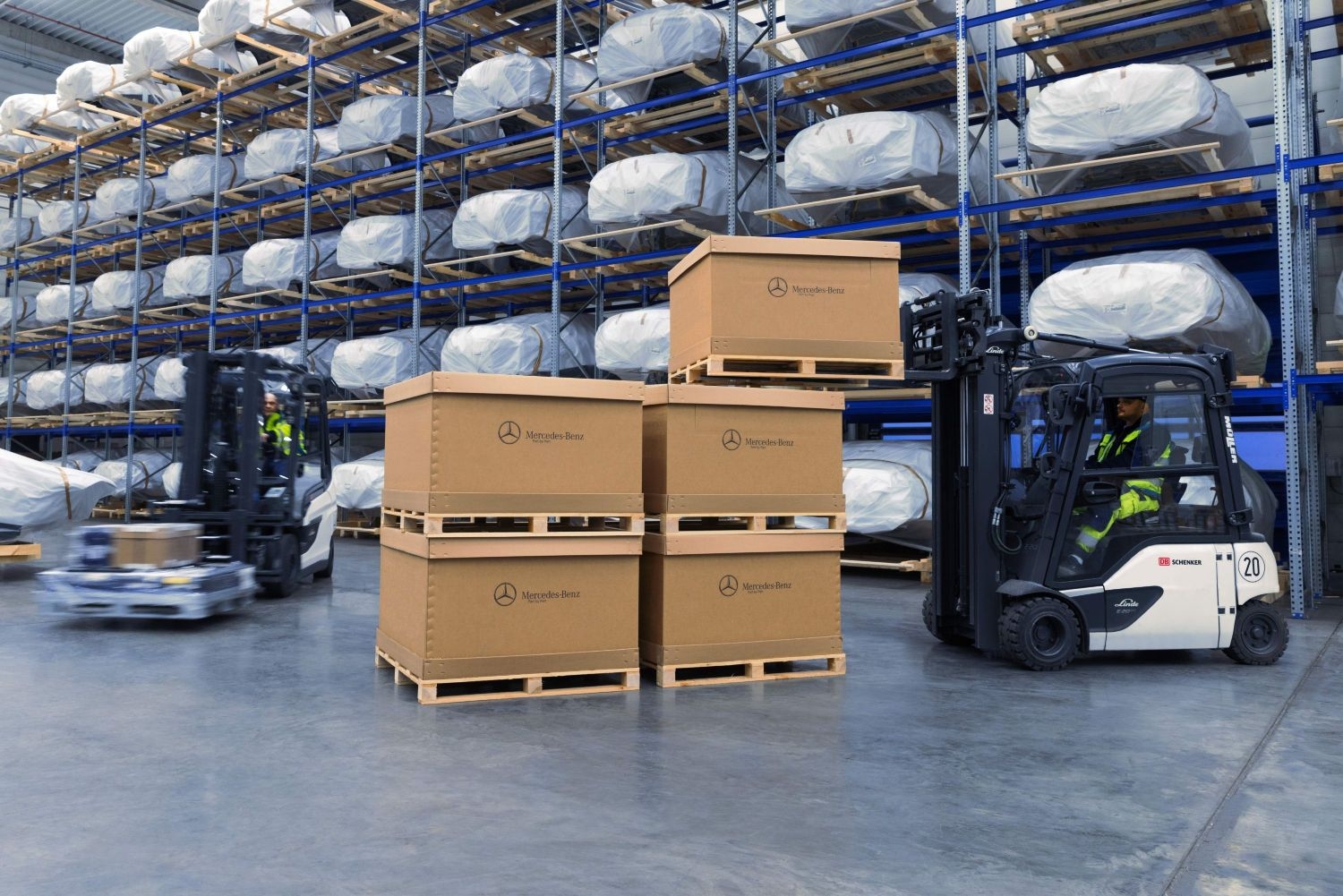
DB Schenker and Mercedes-Benz have been working together for many decades. This cooperation covers various modes of transport – land, air, and ocean, as well as warehouse management. When DB Schenker launched the world’s first regular cargo flights powered by SAF in 2021, Mercedes-Benz was one of the first customers of this initiative.
Although the use of SAF alone does not completely eliminate emissions associated with air transport, it represents a real alternative and a concrete step towards reducing the environmental impact of aviation. SAF is a proven alternative to traditional aviation fuel, produced, among other things, from waste such as used cooking oil. Compared to fossil fuels, it allows for an average reduction of greenhouse gas emissions by 80% over its entire life cycle.
Source: DB Schenker