








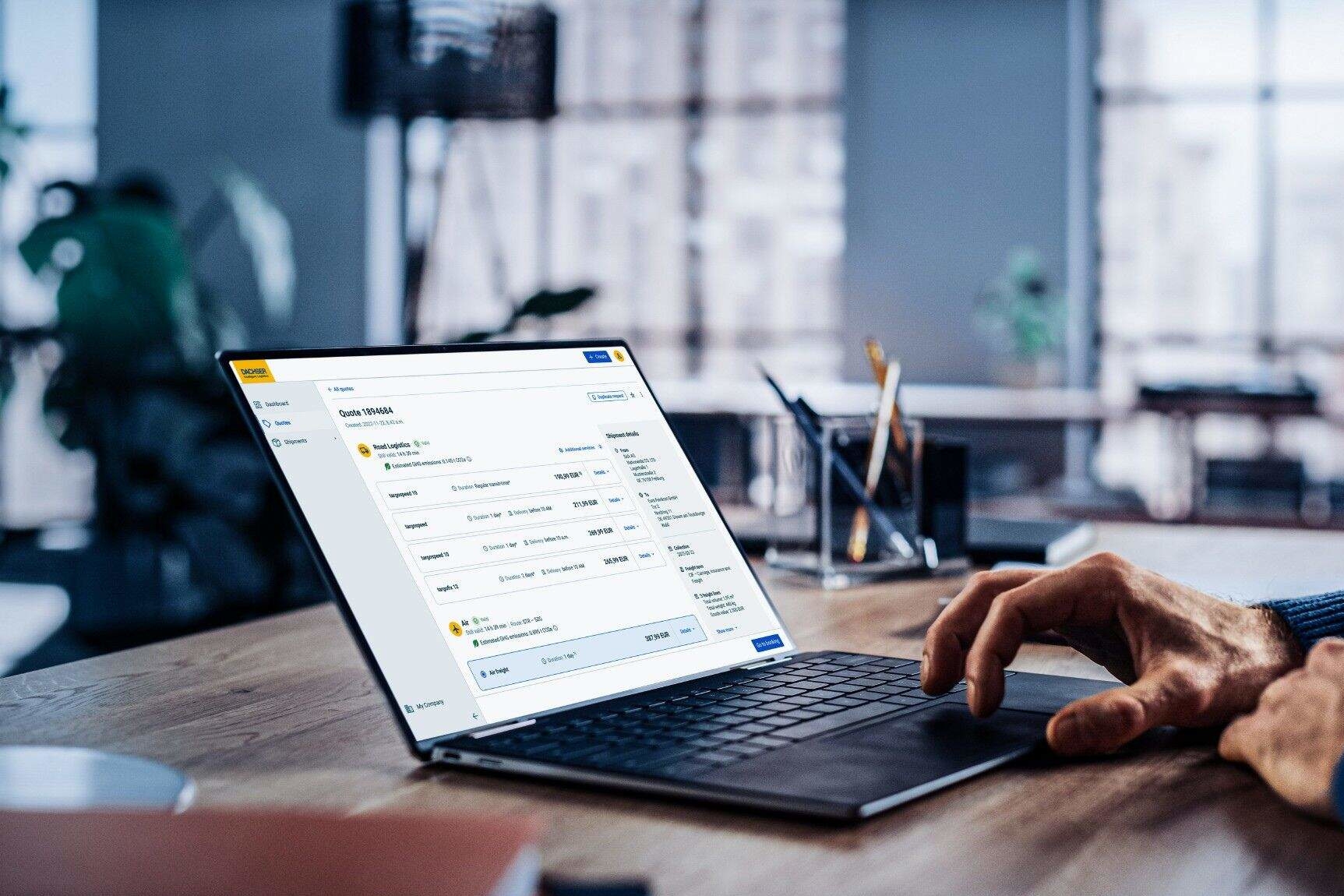
For years, DACHSER has viewed logistics not merely as the transport of goods, but as a complex ecosystem where process transparency, rapid access to information, and system integration play a key role. In response to dynamic market changes and new customer demands, the company has developed its own digital platform – the DACHSER Platform – which combines all key processes into one intuitive ecosystem.
Functionality and role of the platform
The DACHSER platform was built entirely as a single digital environment, integrating processes related to road, air, and sea transport. It was created to increase the resilience of supply chains to geopolitical and operational changes, enabling real-time decision-making based on up-to-date data. The platform offers, among other things, the ability to submit quote requests, book shipments, and track parcels via a track & trace system. Customers also have constant online access to transport documents, which can facilitate daily work and improve service transparency. In the near future, plans include adding features such as: inventory insights, business and environmental reports (including CO₂ emission analyses), invoice downloads, and additional communication functions.
Responding to customer needs
One of the first users of the new DACHSER platform was the Swiss company Adolf Kühner AG. The enterprise uses the platform to handle air, sea, and road transport, currently managing all orders within a single digital system. During the implementation, the company noted the simplicity of the interface, fast loading times, and ease of use, which reduced the need for employee training. Users are also actively involved in the platform’s development process, providing feedback on practical aspects of usage – including adjustments to forms for specific Asian address formats.
Development process and methodology
The project is being carried out using the Scrum methodology – an iterative method that allows for rapid response to market and user needs. More than 50 specialists are involved in its implementation, working in four teams and incorporating customer feedback. The key metric for progress is primarily the acceptance and satisfaction of end users.
Reach
The platform was launched in 2023, initially covering air logistics. Currently, it is used by customers in 32 countries, including in the areas of sea and road transport. By the end of 2025, DACHSER plans to migrate approximately 13,000 existing customers to the new platform. From January 2026, new customers will no longer be connected to the older eLogistics system.
Direction of development
DACHSER is systematically developing the platform by adding new languages, mobile applications, analytical modules, and environmental reports. The goal is to create a digital logistics environment that enables efficient supply chain management in a more transparent way. For the company, this is a step toward the logistics of the future.
Source: Dachser