









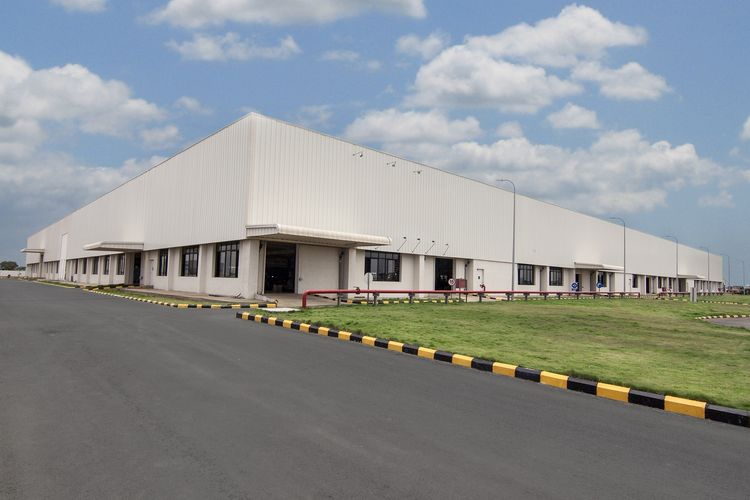
The warehouse space market is currently the most dynamically developing sector of commercial real estate. The very good results recorded on the demand side were driven by factors such as the need for companies to maintain higher inventory levels to ensure supply chain continuity, as well as the continued growth of the e-commerce industry and omnichannel sales strategies, which are gaining importance under conditions of restricted stationary retail. This is confirmed by the volume of leasing transactions, which reached a record 3.5 million sq m since the beginning of the year, of which, it is worth noting, as much as 71% consisted of new leases and expansions. Experts from the international advisory firm Cushman & Wakefield have summarized the third quarter of 2020 in the warehouse market in Poland.
– Poland is gaining importance as a production and logistics hub for Western Europe. Companies, both those already present in this market and those planning investments in the Central and Eastern European region, will secure additional space to prepare for the risks of potential future supply chain disruptions – says Joanna Sinkiewicz, Head of Industrial and Logistics Agency, Cushman & Wakefield.
Demand
In the July-September period, the total volume of leasing transactions amounted to 1.28 million sq m, which is the second-highest quarterly demand result in history. The largest amount of space was leased by logistics operators, accounting for 29% of all transactions, and retail chains (23%), among which grocery and discount stores were the most active. Companies from the light manufacturing (7%), automotive (7%), food (7%), and e-commerce (7%) sectors were also active. In regional terms, approximately 46% of total demand consisted of agreements concluded in Upper Silesia, where a record volume for this market of 387,000 sq m was recorded, and in the Warsaw area (221,000 sq m). High demand was also observed in Wrocław, Central Poland, Poznań, and the Tri-City. In each of these markets, leasing transactions exceeding 100,000 sq m were concluded, and their combined share in total demand amounted to 40%.
Supply
In the third quarter, developers delivered 676,000 sq m, and nearly 1.7 million sq m since the beginning of the year. At the end of September 2020, the total stock of modern warehouse space in Poland amounted to 20.4 million sq m. The largest supply volumes were recorded in the following markets: Warsaw and its surroundings, Upper Silesia, and Wrocław, where a total of nearly 1.14 million sq m was delivered. Warehouse space stock also increased significantly in the Tri-City, which quickly advanced to 6th place among the largest markets in Poland. Temporarily weaker developer activity concerns the Central Poland region, which is related to the very strong supply observed in recent years and the relocation of some major tenants to larger facilities built in the BTS formula, which together led to an increase in vacancies. At the end of Q3, nearly 1.54 million sq m of warehouse space was under construction (-18% y/y). Smaller regional markets are also active thanks to investments in transport infrastructure and suitable locations for shortening supply chains to foreign markets. This is confirmed by new projects being implemented in Eastern Poland, Bydgoszcz, as well as in Western Poland, where a large project for an international e-commerce company is being carried out.
Rents
In the third quarter, there was no significant change in rent levels. Base rates range from 2.50-3.80 EUR/sq m/month for BIG-BOX modules to 4.00-5.25 EUR/sq m/month for SBU (Small Business Units) modules in urban areas of the largest agglomerations. Effective rents are 2.00-3.20 EUR/sq m/month for BIG-BOX modules and 3.00-4.50 EUR/sq m/month for SBUs. Due to the temporary state of oversupply in some markets such as Warsaw, Upper Silesia, Central Poland, or the Tri-City, the scale of financial incentives offered to tenants may increase slightly, which may mean a temporary reduction in effective rent levels.
Vacancy rate
At the end of Q3, nearly 1.7 million sq m of warehouse space remained unleased, which accounts for 8.5% of the total stock in Poland. The vacancy rate increased by 1.5 pp compared to the previous quarter and by 1.9 pp year-on-year. Among the main regional markets, the largest increase in this indicator over the last three months was recorded in Upper Silesia (from 6.7% to 10.8%) and in the Warsaw-surroundings market (from 6.8% to 8.8%), in both cases mainly due to new supply, and in Central Poland (from 6.8% to 9.6%), where the key factor for the increase in availability was the release of space by tenants who decided to relocate to new investments. Decreases were recorded in Wrocław (from 10.4% to 8.4%) and in Poznań (from 8.0% to 7.1%).
Forecast
– Despite the second wave of the Covid-19 pandemic, we continue to observe high tenant activity, which proves the good condition of the warehouse market. Increased availability of warehouse space is beneficial in conditions of high demand, especially for those tenants who are looking for warehouse space available for lease shortly after making a decision. Furthermore, companies looking for new projects and BTS investments tailored to individual needs remain active on the market, which will have a positive impact on the further development of the industrial sector in Poland – adds Joanna Sinkiewicz.
The full report is available below in PDF format.
The report comes from the website: https://media.pl.cushmanwakefield.com.pl/pr/595732/c-w-sektor-magazynowy-odporny-na-pandemie