









Over 80% of tenants inquire about eco-friendly solutions in warehouses, with 60% wishing for the facility to have an eco-certificate, according to a study conducted by the international firm Cushman & Wakefield, which has published a report titled “Industrial Goes Green” entirely dedicated to ecological solutions in the warehouse sector.
The warehouse market, especially recently, has been developing extremely dynamically. Warehouses and factories are increasing at a rapid pace and are increasingly aligning with the trend of sustainable construction, which places particular emphasis on environmental protection. You can read about how ecology has become part of the warehouse market in the Cushman & Wakefield report titled “Industrial Goes Green”. The report analyzes the most effective eco-solutions and estimates the costs and return on investment for a sample warehouse building.
The path to ecology
As noted by Joanna Sinkiewicz, Head of Industrial & Logistics Agency at Cushman & Wakefield, until recently, the use of environmentally friendly solutions was not very popular because it meant additional expenses: – The unfavorable relationship between cost and the potential benefits resulting from the use of the space could not convince tenants focused on short-term leases. Developers, on the other hand – given the immense market competition – were definitely more focused on price competition. Environmentally friendly facilities with specifications exceeding the market standard were not popular for many years. Fortunately, over time, such solutions have gained importance. The reasons are primarily real savings for tenants and developers and significantly lower operating costs for such facilities. Eco-solutions simply pay off.
A breakthrough regarding eco-solutions occurred thanks to “pre-let” projects, which provide the opportunity to modify the design and negotiate the technical specifications of the facility before the investment is built. Such facilities are also leased for longer periods, which further favors this situation. Some developers are already deciding to bear the cost of certain investments in ecological solutions.
According to the report’s authors, until recently, the decision on the scale of a developer’s investment in eco-solutions depended mainly on whether a given solution could be considered as increasing the building’s value and whether it helped build an image. The latter element has particularly intensified over the last several months. This is also influenced by international investment funds acquiring industrial facilities in Poland.
For foreign capital, pro-ecological solutions and green certificates are a benchmark of quality, and consequently, of the project’s value. This is therefore an additional motivation for developers active on the Polish market to prepare their facilities in accordance with the standards required by international certification systems.
Green certificates
Good confirmation that a warehouse is “eco” are certificates such as BREEAM or LEED, which prove that an industrial building has been designed and built in accordance with the principles of sustainable development. The total number of facilities certified with the BREEAM and LEED systems in Poland is 139, which accounts for 16% of all warehouse buildings in the country. This is not yet a standard, but according to experts, it soon will be. Ecology already appears in the case of every large project implemented in the “pre-let” formula. A similar phenomenon occurred earlier in the office space market. Large market players are increasingly deciding to implement facilities in the BREEAM system. This is one of the most significant trends in the industrial real estate market in the last year.
Eco-technologies of the future
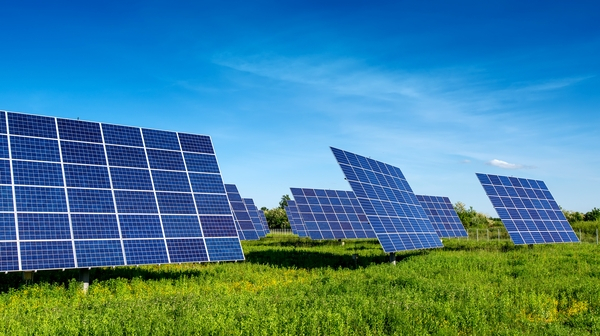
The Cushman & Wakefield report is not just a description of eco-warehouses. The authors presented the results of their pioneering, comprehensive study of the warehouse space market in terms of ecological solutions used in industrial buildings. All leading warehouse developers operating in Poland were invited to participate in the study. Issues such as the use of heat recovery from air compressors, LED lighting, photovoltaics, ground heat exchangers, heat pumps, air destratifiers, and wall and roof insulation were analyzed. The use of greywater and CO2 as a refrigerant, as well as the use of rainwater, were also checked.
Additionally, the report contains a short introduction to the mentioned issues, the advantages and disadvantages of individual solutions, and proposals for further improvements. The analysis and results of the study have been enriched with examples of the practical application of ecological solutions in warehouses in Poland.
A fragment of the report is available below in PDF format.
The full report is available at: https://info.cushmanwakefield.com