









Cross-border e-commerce has become one of the most dynamically developing segments of online sales. Growing globalization and the availability of online trading platforms are making geographical barriers increasingly irrelevant. For many companies, expanding beyond national borders is not only an opportunity to increase revenue but also a way to stabilize and diversify income sources.
Consumers decide to shop abroad mainly for three reasons [Eurostat]:
- Lower prices – 50% of respondents.
- Greater product selection – 33% of respondents.
- Brands and goods unavailable on the domestic market – 32% of respondents.
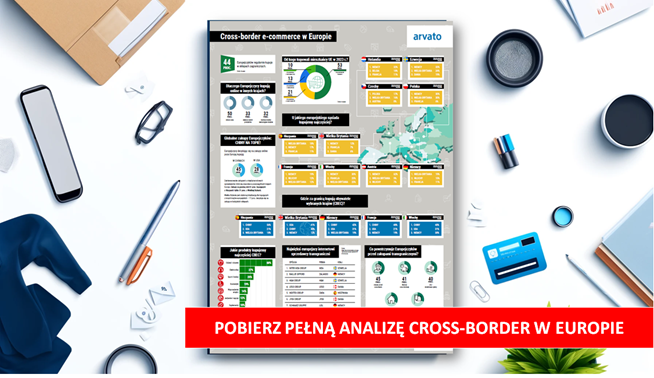
While a decade or even a few years ago, companies were considering whether it was worth bearing the costs of entering into CBEC sales, this topic has changed dramatically, and companies are now thinking about the effectiveness of specific strategies, choosing a given market, expanding outside of Europe, or the assumed growth rate. In short – online sales abroad are happening, developing dynamically, and no one is asking anymore if it pays off. And that it pays off – is obvious.
Data from the Chamber of Electronic Economy indicates that cross-border sales are more profitable than domestic e-sales and provide more stable revenues. The report “Cross-border e-commerce. A brand without borders” shows that 17% of companies record sales growth of over 20% per year thanks to CBEC. AI supports marketing and customer service, making foreign sales simpler and more effective.
53% of Europeans prefer shopping in local e-shops, however, 21% shop in other EU countries, and 13% outside the EU [Eurostat]. Despite this preference for domestic stores, we are open to foreign shopping, which is confirmed by the fact that 54% of consumers plan to increase international online shopping. This trend is strengthening, showing that consumers are increasingly interested in access to a wider selection of products and better price offers in foreign markets. Globally, China and the United States dominate cross-border e-commerce, having led for years thanks to competitive prices, innovative products, and effective e-commerce logistics. In Europe, Germany and the United Kingdom are the leaders.
When planning a cross-border strategy, it is worth considering logistics outsourcing with a trusted partner, such as Arvato.