








Online sales in Poland grow by up to about 20% every year. The market size is estimated at PLN 50 billion, but that is not all. According to PMR, 2022 will be a record-breaking year – forecasts indicate that e-commerce will grow to PLN 72 billion.
The e-commerce sector is one of the fastest-growing in Poland. Currently, there are about 50,000 e-shops operating in our country, which translates into an increase in the share of e-commerce in retail trade. However, we still lag behind the mature e-commerce market. World Economic Forum predictions suggest that the share of e-commerce in all retail transactions will reach 40% by 2026.
Dynamic growth in e-commerce is driving the courier services market in terms of the number of parcels delivered, as well as the growing expectations of the customers themselves. Higher turnover and potential profits, combined with the evolution of market needs, determine investments in new tools. Parcels cannot be delivered faster without appropriate expenditure on process optimization or automation. Service flexibility is not possible without innovation, especially since online stores have become a key and active group of business clients for courier companies. They build their competitive advantage based on even better goods delivery options.
Challenge and opportunity
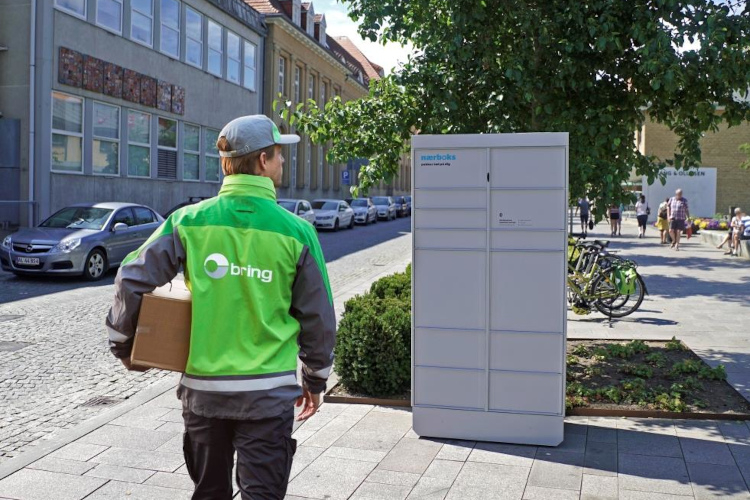
Growth in the courier parcel market, as well as the increasing expectations and needs of end-users, require courier companies to introduce additional services at the price of a standard shipment. This poses a challenge for all entities in the CEP industry, but on the other hand, it is also an opportunity to stand out in a still highly crowded market. Technological progress means that optimization possibilities increase almost every year, and previously expensive tools are becoming more affordable. Furthermore, the increase in turnover and demand does not require an immediate return on investments made. Automated parcel sorting systems or parcel collection points are supported by advanced parcel lockers, which do not require additional infrastructure, have a modular design, and do not even need to be connected to electricity because they operate based on a built-in battery.
The entire logistics industry benefits from the development of e-commerce. On the other hand, competition has never been stronger. The rivalry is for consumers, volumes, market shares, or new locations. A large scale of operations does not necessarily translate into the profitability of the business itself, especially if there is an increase in operational efficiency. Market pressure forces CEP companies to offer low fees for domestic shipments. The average price of a standard parcel is less than PLN 12. On the other hand, last-mile delivery in the B2C segment is up to 50% more expensive compared to B2B. This is influenced by the specifics of deliveries, such as the absence of the recipient at the indicated address, delivering single parcels, or multiple trips.
The human aspect matters
Parcel lockers directly reduce the costs of the courier’s last mile, siding with comfort and convenience. It is the customer who decides when and where to pick up the parcel. From the perspective of the CEP industry, however, one must remember other important areas, such as the increase in operating costs due to expensive fuel or rising wages. The human aspect is of paramount importance, which is why any issues related to employee turnover and shipment load can affect the quality of service.
The expectations of consumers and business partners towards courier companies are constantly growing. E-commerce will not hit a wall for a long time, which requires direct deliveries, parcel collection points, or parcel lockers. The courier market is becoming increasingly competitive, and the pandemic has further accelerated its development. Those entities that fell into economic stagnation, which was the result of the pandemic crisis, may not have managed to find their way in the new reality. The time of intense competition for customers has only just begun. There are many indications that one wins not only with price but above all with the widest possible range of services.