









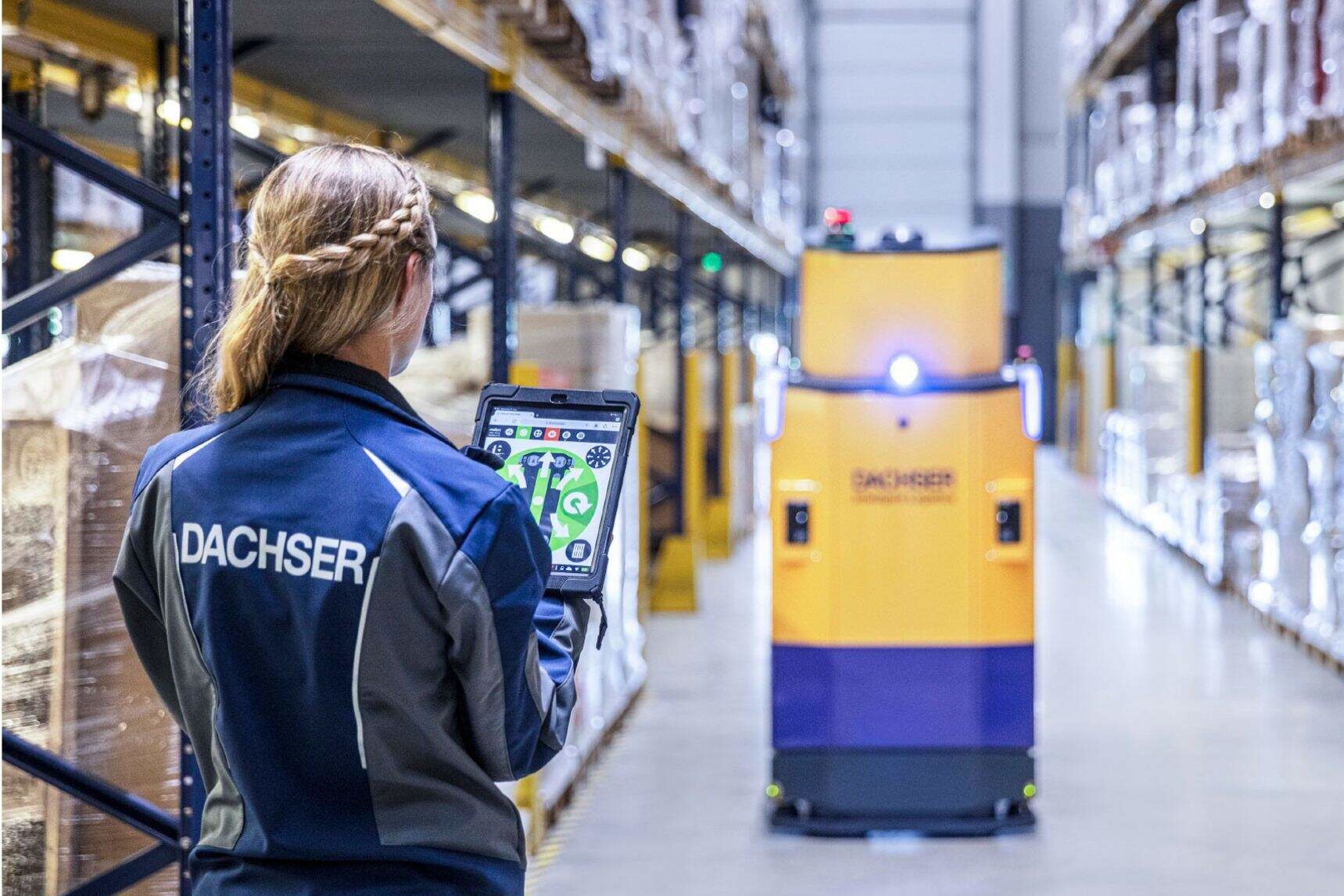
The world of contract logistics is changing faster than ever before. Automation, which was once merely a futuristic vision, is now helping to meet growing market demands and face new challenges. It is not just a matter of keeping up with changes, but of staying ahead of them, which ensures operational efficiency as well as the ability to create entirely new standards of customer service.
Imagine a warehouse of the future where robots primarily carry out warehouse operations and automated order picking systems eliminate human error. This is no longer a distant vision of the future, but a reality that has arrived and will redefine the possibilities of contract logistics.
According to data from the Polish Institute of Road Transport, in recent years (2021-2023), the share of companies using automation has increased from 4.6% to 6%, which shows the growing awareness and adoption of modern technologies in the Polish industry [report “Automation and robotization in contract logistics. Trends and application of specific technologies”, Polish Institute of Road Transport, July 2024]. Furthermore, according to the “World Robotics 2024” report by the International Federation of Robotics (IFR), Poland currently ranks 18th in terms of the number of new industrial robot installations.
– Market data shows that although we are still far from the forefront of the global automation and robotization race, this process is progressing, with a focus on the TSL (transport, shipping, logistics) industry. Companies are increasingly aware that this is the best way to optimize warehouse processes, effectively use space, and manage resources – says Paweł Skarzyński, Operations Manager European Logistics & CL Operations at DACHSER Poland.
What is driving the revolution?
Contract logistics is not standing still. Automation is becoming the key to meeting the challenges of the future – from rising customer expectations to dynamically changing market conditions.
Companies that are already investing in modern warehouse solutions have the chance to get ahead of the competition and become leaders in innovation.
The improvements being implemented are based on automation, autonomization, mechanization, and robotization, all with increasing support from artificial intelligence. Such solutions are becoming a key element in areas such as receiving and storing goods, order fulfillment, sorting, cross-docking, picking, shipping, and internal transport, finding wide application in various zones of the warehouse.
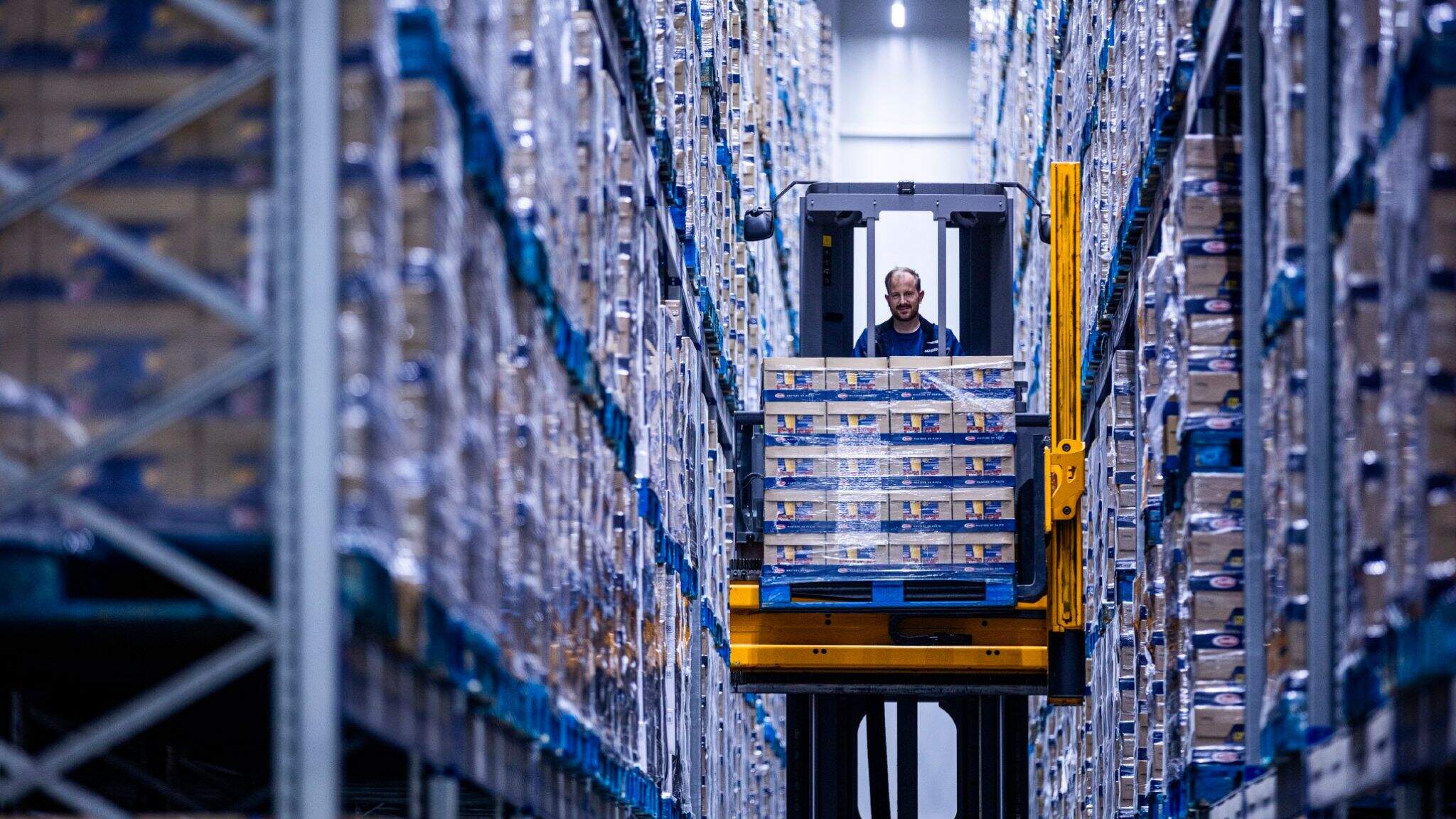
Key technologies changing the face of warehouses
- Rack handling: Implementing automated storage systems, such as AutoStore, as well as pallet and bin stacker cranes, allows for increased warehouse space efficiency.
- Goods transport: The use of automated guided vehicles (AGVs) and autonomous mobile robots (AMRs) minimizes the risk of errors and increases operational efficiency.
- Order picking: Robotic systems, voice picking, and pick-to-light systems support employees in fast and error-free order fulfillment.
- Quality control: Automated quality verification systems allow for ongoing monitoring of product parameters, such as weight and dimensions.
- Inventory management: Modern warehouse management systems (WMS) enable precise monitoring and optimization of stock levels.
A warehouse with a future
At DACHSER, automation is a reality implemented on a large scale. The fully automated warehouse in Memmingen (Germany) is an example of a vision that has transformed into a perfectly functioning facility. This warehouse has over 52,000 pallet spaces and an operational capacity exceeding 400 pallet movements per hour. This is all thanks to, among other things, an automatic loading and unloading system specially adapted for trailers, as well as solutions successfully used in other branches, such as automated guided vehicles (AGVs) transporting goods to and from the receiving area. These devices, equipped with lithium-ion batteries and supporting inductive charging, are fully integrated with DACHSER’s proprietary MIKADO warehouse management system, which allows for automatic task assignment and route planning. Additionally, cobots support processes such as palletizing, packing, order picking, and quality control. Their use relieves employees of monotonous tasks while increasing work efficiency.
Behind the implemented innovations is the Dachser Enterprise LAB, a research and development center co-created with the Fraunhofer Institute for Material Flow and Logistics, whose task is to develop technologies that will increase the efficiency and flexibility of logistics processes. Furthermore, the CL Technology Solutions team is responsible for continuously monitoring the market to identify new solutions that can be implemented in contract logistics processes.
The key to increased efficiency and flexibility
Automation is slowly becoming a necessity, the implementation of which brings tangible benefits to logistics operators, but above all to their customers.
– Innovative solutions in warehouses allow for not only faster but also more precise task execution, which translates into better customer service and lower operating costs. According to various industry studies, the introduction of such solutions can increase productivity by as much as 20-30%. Moreover, automation in warehouses increases process flexibility, enabling them to be quickly adapted to changing market requirements and ensures higher service quality by minimizing the risk of errors. It is also worth remembering that effective resource management and reduction of energy consumption are key elements that influence the minimization of the carbon footprint, which is important for customers focusing on sustainable development – explains Paweł Skarzyński.
The future of logistics is full of challenges, but thanks to modern technologies, it is also full of exciting opportunities. From the perspective of e-commerce companies, manufacturers, or retailers, automation is the key to faster, more accurate, and more flexible supply chain management. In the context of future challenges, such as changing consumer expectations, supply chain instability, or the emphasis on sustainable development, automation provides them with a market advantage through access to greener, faster, and more flexible services. By working with a technologically advanced operator, entrepreneurs can increase their efficiency, flexibility, and scale operations while reducing costs and improving service quality.
Source: Dachser