








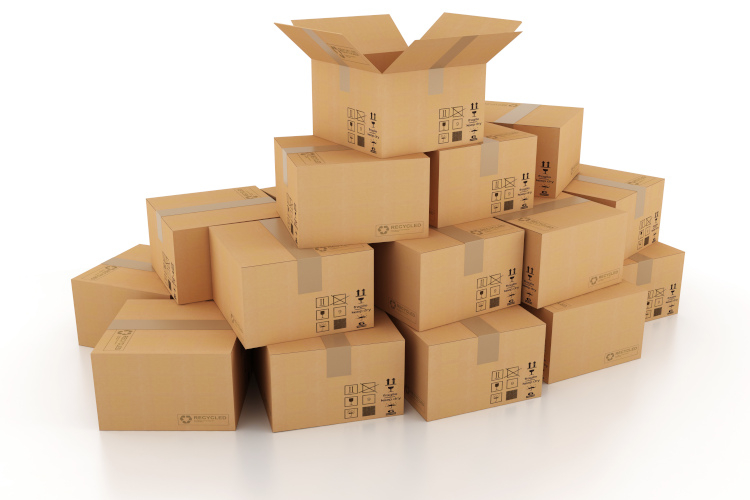
Despite growing awareness, packaging waste remains a massive environmental problem, and its volume is increasing along with rising consumption and the popularity of online shopping. According to UKE data, more than 2.5 million parcels were delivered to Polish consumers every day in 2022.
– On one hand, packaging consumption is growing, but on the other, a trend of choosing environmentally neutral packaging is becoming increasingly clear. This is visible among manufacturers – both global and smaller, locally operating ones – says Kamila Koźbiał from DS Smith. As experts point out on the occasion of Packaging Day, celebrated on September 15, new regulations currently being processed at the EU level and the implementation of the deposit-refund system will also have a huge impact on the shape of this market.
– The average European produces about 170–180 kg of packaging waste annually; this shows the scale we are talking about. Of course, it is necessary to emphasize the enormous amount of work that has already been done in terms of eliminating problematic plastic; for example, we no longer use plastic disposable bags in supermarkets, and when ordering a latte, we get a paper straw instead of a plastic one. However, still standing in front of a store shelf – regardless of whether it is a shelf with sweets, drinks, or household chemicals – you can see how much work is still ahead of us to reduce the amount of harmful plastic in packaging – says Kamila Koźbiał, Marketing Director of DS Smith in Central and Eastern Europe, to the Newseria Biznes agency.
According to data from the Polish Economic Institute, in 2020, the average Pole generated 342 kg of municipal waste. Estimates assume that by 2030, the average waste production is expected to rise to 370 kg per person. Annual packaging consumption is over 170 kg per inhabitant. Meanwhile, in 2020, less than 30 percent of all waste was still being recycled.
– Official data shows that about 4 million tons of packaging are produced in Poland every year, so this is a really large part of the waste we generate. And unfortunately, we see an upward trend; the amount of packaging produced is increasing – says Joanna Kądziołka, board member of the Polish Zero Waste Association.
As she points out, this is due, among other things, to the growing popularity of online shopping. According to UKE data, in 2022, more than 2.5 million parcels were delivered to Polish consumers every day (a total of 921.6 million units, an increase of 14.5 percent year-on-year). Research commissioned by DS Smith, a supplier of ecological packaging, shows that 40 percent of them happen to receive parcels that are too large for the product sent.
– The e-commerce market is currently experiencing huge growth. 73 percent of internet users are already shopping online. We expect that this year, the share of e-commerce in total Polish retail will already account for about 20 percent. We still have a lot to do here, because if we look only at the annual consumption of cardboard wasted on packing boxes that are too large, we are talking about as much as 90,000 tons of this raw material, which translates into 43 million PLN that we are simply throwing in the trash – says Kamila Koźbiał. – Consumers themselves are also increasingly unwilling to work with brands that use packaging that does not contribute to sustainable development goals. Already 30 percent of consumers declare that they do not want to buy from brands that do not care about the environment in this area.
According to research commissioned by DS Smith, nearly half (46 percent) of Polish internet users want to receive ordered products in ecological, recycled packaging. The growing emphasis on ecology in e-commerce is also visible in the “Green Generation” report, developed by, among others, Mobile Institute and Allegro. It shows that as many as 77 percent of shoppers pay attention to various non-ecological practices of e-shops when shopping online.
– There is a chance to change the approach to packaging at the business level, which should focus more on how they are designed. There is data showing that the design stage accounts for 80 percent of what happens to that packaging later. This stage therefore determines how the packaging will be managed later – says Joanna Kądziołka.
– Fortunately, we clearly see a trend in the market and huge interest from companies – both global and smaller ones – in changing packaging to be more environmentally neutral – adds the DS Smith marketing director. – In one of the recent projects we carried out with a leader in the carbonated drinks segment, our challenge was to replace the shrink wrap that bundles a four-pack or six-pack of carbonated drinks with a cardboard form. The project was a success, and its consequence will be the elimination of about 200 tons of harmful plastic per year. In another project, where we worked with a client from the “home care” industry to develop what might seem like a minor change, we eliminated 8 tons of plastic per year. It was enough to replace the plastic handle used for carrying laundry detergent with a paper one. Moreover, when we surveyed consumer opinions, it turned out that 70 percent of them would choose this very product thanks to the packaging from which we eliminated plastic – provided that the price and quality did not differ significantly from the competitor’s offer.
The European Union is currently working on the PPWD directive – Packaging and Packaging Waste Directive, the goal of which is to reduce the amount of packaging waste. The new regulations are intended, among other things, to impose restrictions on online sellers regarding packing products in poorly fitted boxes, as well as to promote reusable packaging.
– Work on this directive is extremely important and concerns, first, reducing the amount of packaging in general, second, the possibility of reusing it, and third, recycling – says Kamila Koźbiał. – Here, however, an important issue must be pointed out. If we are talking about paper or cardboard packaging, they should be excluded from reuse targets due to the nature of the raw material from which they are made. Otherwise, the imposed requirements, e.g., in e-commerce, may cause the market to be flooded with plastic again. That is why the final shape of these regulations will be so important.
– In Poland, a very important step will also be the introduction of a deposit-refund system. Here we are already on the final stretch, because the draft law has been signed by the president, and on September 11 this year, it is to return from notification at the European Commission level. We hope that there will be no comments from member states and that this system will finally come into force in 2025 – adds the board member of the Polish Zero Waste Association.
Source: Newseria