









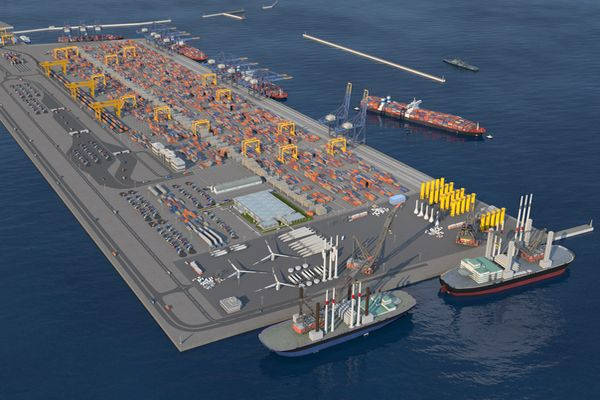
The Gdynia Port Authority, together with the Ministry of Investment and Economic Development, has selected a transaction advisor to provide consulting services to the company in project areas, primarily covering economic-financial, legal, and technical issues.
The most advantageous offer submitted by the consortium of contractors was selected: Ernst & Young Corporate Finance sp. k., Domański Zakrzewski Palinka sp. k., and WYG INTERNATIONAL Sp. z o.o.
The PPP formula allows for the use of private sector capital, knowledge, and experience in financing public investments and services. In accordance with the “Policy for the Development of Public-Private Partnership” adopted by the Council of Ministers, the Gdynia Port Authority intends to implement this strategic investment, which is crucial for further development and will increase the port’s handling capacity and competitive position in the Baltic Sea region, using this formula. Cooperation with an experienced advisor guarantees the selection of the best private partner for the implementation of this project.
Port Gdynia operates in accordance with the Strategy for Responsible Development, one of the goals of which is the indicator of a 25 percent share of investment in GDP. To achieve the set goal, the Polish economy needs various sources and methods of financing, and the PPP formula is one of them.
Subsequent stages of the investment could not take place without legislative support in port-related matters. On August 9th of this year, the Sejm adopted a special act on investments in the construction of outer ports. It aims to introduce facilitations that enable the efficient implementation of port expansion projects. According to ministry estimates, without the new act, the investment preparation process would take 7 years, but thanks to the act, it will be shortened to 3-4 years.
On artificial land, based on the existing Silesian and Swedish quays, a deep-water Outer Port will be built, extending beyond the current breakwater, increasing the port area by 151 hectares and handling capacity by 2.5 million TEU.