








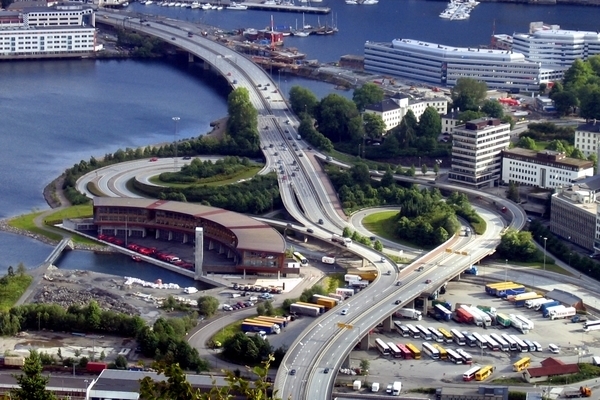
A prerequisite for maintaining the competitiveness of urban areas has long been the appropriate quality related to meeting transport needs. Transport congestion is not a phenomenon specific only to modern cities. Traffic jams were a characteristic feature of central London long before the invention of the car, and in Rome long before London was founded.
Modeling urban structures in the context of the problems that urban logistics is trying to tackle today is an essential part of urban transport system management policy. The challenges that cities pose to logistics in terms of congestion management result in the development of simulation models and effectively support urbanized areas in increasing the efficiency of their transport systems and improving the quality of life. The rapid development recently observed in the area of tools for modeling and simulation of transport systems is a natural consequence of technical and technological progress in this sphere. Simulation models are more accessible and increasingly easier to use.
Logistics in the concept of urban transport system design
Analysis of transport infrastructure management shows that the key to the success of implementing and operating an urban transport model that will take into account the current and potential future needs of all city users is the integration of all stakeholders around the concept of “logistical transport system management” from the beginning of the process of building such a model. In the hierarchy of the functional structure of urban logistics systems, transport infrastructure management occupies a position that conditions the functioning of the layer of transport means, traffic, and services. However, in conditions of limited financial resources, imperfect law, and lack of competition, adjusting transport capacity to the level of current demand is very difficult. Simulation models can be an important instrument supporting the analysis, planning, management, integration, and coordination of physical, information, and decision-making flows within urban logistics. (…)
The article contains 18,280 characters.
Source: Logistyka Magazine
Computer simulation of road systems in urban logistics – PDF file for download