








According to data from the end of December 2024, a total of 80,699 passenger and commercial fully electric vehicles (BEVs) were registered in Poland. Over the twelve months of last year, their number increased by 24,223 units, which is 2% more than in 2023, according to the Electromobility Meter launched by PZPM and PSNM.
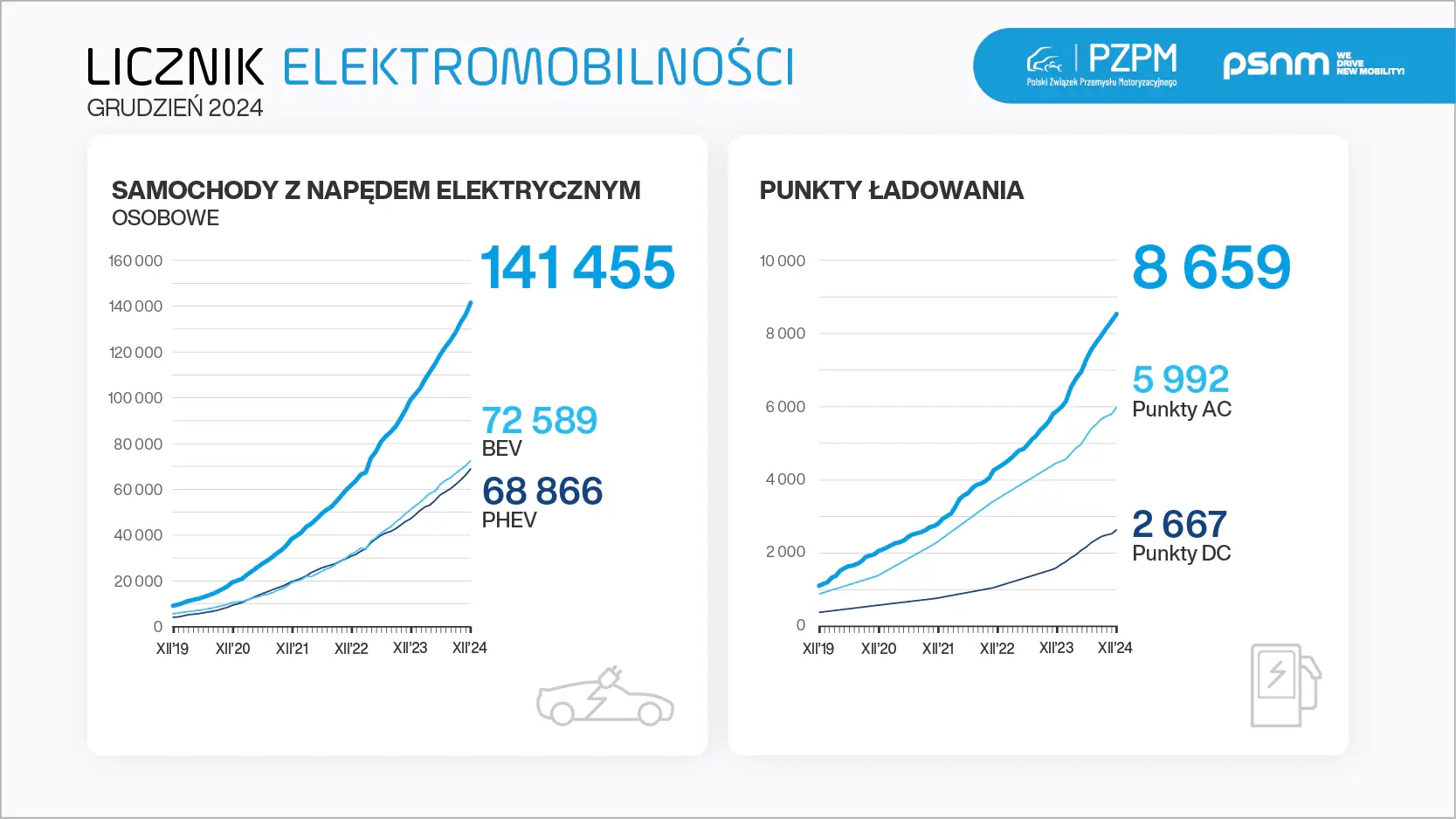
At the end of December 2024, there were 141,455 electric passenger cars on Polish roads. The fleet of fully electric passenger cars (BEVs) numbered 72,589 units, and the fleet of plug-in hybrid electric vehicles (PHEVs) totaled 68,866 units. The number of electric delivery and heavy-duty vehicles amounted to 8,143 units. The fleet of electric mopeds and motorcycles is also steadily growing, consisting of 23,456 units at the end of December, as is the number of hybrid passenger and delivery cars, which increased to 954,340 units. By the end of last month, the zero-emission bus fleet in Poland grew to 1,422 units (of which fully electric vehicles accounted for 1,385 units, and hydrogen vehicles for 87 units).
Parallel to the fleet of electric vehicles, the charging infrastructure is developing. At the end of December, there were a total of 8,659 publicly accessible electric vehicle charging points in Poland. 31% of them were fast DC charging points, and 69% were slow AC charging points with a power of 22 kW or less.
– The sudden suspension of the leasing path of the “My Electrician” program had very negative consequences for Polish electromobility in 2024. If we look only at new vehicles, a several-percent drop in registrations of electric passenger cars and a drop of as much as approx. 1/4 in the BEV delivery segment are results that significantly deviate from expectations. Paradoxically, we recorded more positives in the difficult infrastructure market. Operators launched over 1,100 DC points, which is twice as many as in 2023. However, we must remember that such a significant jump is the result of decisions often made even 2 years earlier. In the first weeks of 2025, the industry is waiting, among other things, for the launch of NFOŚiGW programs covering subsidies for electric trucks, the infrastructure intended for them, and power connections. The calls for proposals should be launched at the turn of February and March. The total budget allocated for subsidies, i.e., PLN 6 billion, could bring very positive market results, but proper coordination of infrastructure programs is key. This is a major challenge, given the complexity and multi-stage nature of the procedures and the fact that many beneficiaries are counting on receiving subsidies for both connections and charging stations. There is nothing strange about this – launching individual hubs that meet AFIR requirements involves capital expenditures counted in millions of zlotys – says Jan Wiśniewski, Director of the PSNM Research and Analysis Center.
– The second half of the year brought some bad news for the development of the zero-emission vehicle market in Poland. First of all, the suspension of the leasing path of the “My Electrician” program and the announcement that this program will not be resumed in the near future. This will cause companies in Poland, which purchase over 80% of zero-emission vehicles, to revise their purchasing plans, and the new BEV vehicle market in 2025 will be smaller. While waiting for the launch of subsidy programs for heavy-duty vehicles and infrastructure, we must keep in mind that they will be implemented at a time of a serious crisis in the transport industry, and a lot of work will have to be done to achieve success. And finally, the information about launching a subsidy program for electric cars using European funds from the KPO only for individuals. In the opinion of experts, it will not bring the expected results because companies were omitted, and the possibility for enterprises to use the program would significantly increase the number of zero-emission cars on Polish roads – says Jakub Faryś, President of PZPM.
Source: Polish Alternative Fuels Association (PSNM)