








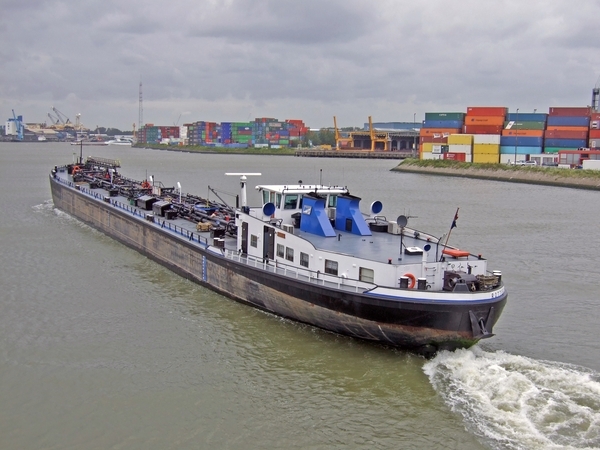
The development of global supply chains, focusing on huge, ever-increasing flows of goods, has necessitated research to improve throughput and timeliness in such networks. In many places, the efficiency of seaports cannot increase, most often due to limited space, which is why the possibility of shifting some functions to inland ports has become an element of new strategies for many logistics operators. The transfer of certain logistics functions to inland ports has led to their development, expansion, and transformation into modern terminals operating on the basis of inland navigation.
Diversity of definitions of the term – inland port
Seaports are undeniably the most important places where international trade flows are handled in terms of goods distribution. Historically, seaports were so-called ports of entry and were located along land and sea borders between countries. Nowadays, a border location for places associated with the coordination of distribution or international transport of goods is not necessary. More important than a border location is the location of such a place in a way that facilitates distribution and transport, in an area with a climate conducive to entrepreneurship and the development of logistics services, along with well-developed, appropriate infrastructure.
Economic practice in Western Europe and the United States indicates that the transfer of international trade handling to places far from traditional seaports is becoming a reality. Inland ports are able to provide the infrastructural capabilities to move international trade turnover to places far from traditional seaports. Existing ports have a significant impact on flows in traditional supply chains, but their transport and storage capabilities are often already exhausted. Hence the concept of moving trade turnover to places such as airports, intermodal hubs, or inland waterway ports. Establishing a definition of these types of places is important for understanding the operational effects they perform in the transport system. A port was usually defined in the simplest way as a place equipped with infrastructure enabling merchant ships to moor, load, or unload, and passengers to embark or disembark. The above definition can apply to both seaports and river ports.
Another definition emphasizes that an inland port is a structure built at the junction of land and inland waters, equipped with facilities and structures and organized for the transshipment of passengers and cargo. These transshipments can be carried out within a single structure, i.e., within a passenger-cargo port, or in separate structures, where a passenger port is intended exclusively for passenger service and a commercial port exclusively for cargo handling.
Inland waterway commercial ports, due to their purpose of serving both water and land transport means, are located near linear elements of land transport infrastructure, e.g., near railway lines, roads, and transmission systems.
The change in the role of river ports is visible in the evolution of the definition itself. It is increasingly pointed out that a river port is also a center for trade turnover, combining elements of various branches of transport, storage, distribution, production logistics, and logistics management services. Consolidating services in one place makes an inland port more attractive to shippers and logistics managers involved in creating and using efficient supply chains. In today’s global market, the lowest possible costs and ensuring the smooth and reliable flow of goods are important for logistics organizers. In some supply chains, this can be achieved through well-organized and comprehensive logistics services provided at an inland port.
The article contains 24,990 characters.
Source: Logistyka Magazine