








The contract logistics market is experiencing rapid growth, with e-commerce playing a key role. Its development is primarily driven by cross-border operations, personalization, and sustainability. How are logistics operators adapting to market changes and new trends? CEVA Logistics, a global 3PL leader managing over 800 fulfillment and multi-user warehouses worldwide, including 35 in Poland, shares its experience.
Statista forecasts that European e-commerce market revenue will reach USD 721.30 billion this year, with a compound annual growth rate (CAGR) of 7.89% expected to increase the market value to USD 977.40 billion by 2029. The number of users is projected to rise to 446.1 million, with the user penetration rate reaching 47.6% in 2025 and 55.8% in 2029 [1]. Meanwhile, the “Quo vadis e-commerce” report prepared by Cushman & Wakefield indicates that Central and Eastern Europe, led by Poland, is one of the most promising regions for e-commerce operations. It is worth noting that Poland accounts for more than half of the e-commerce turnover generated in the region, which is due to the dynamically growing number of online consumers and competitive operating costs. These prospects and trends, on one hand, favor the development of contract logistics dedicated to e-commerce, while on the other, they place even greater demands on operators regarding cost efficiency, delivery timeliness, and flexible operational adjustments.
Even faster, even more technology
Robotization, automation, and artificial intelligence are indispensable tools in logistics. Faced with growing customer expectations for fast order fulfillment and delivery, especially during peak sales periods, ensuring timely delivery is crucial for customer satisfaction. What will become increasingly important in managing operations is the use of technologies that facilitate access to data, forecasting, and simulations, based on, among other things, computer vision, machine learning, or Data Lakes. CEVA experts also point to the growing importance of using AI-based technology. AI significantly increases the efficiency of warehouse operations through real-time data analysis, ensuring full supply chain visibility. It also enables precise demand forecasting, inventory level optimization, and the identification of bottlenecks in logistics processes. This translates into faster order fulfillment and reduced operating costs. Among the benefits of implementing AI-based supply chain management, the authors of the McKinsey report point to a 15% cost reduction, a 35% decrease in inventory levels, and a 65% improvement in service quality [2]. Furthermore, according to Meticulous Research, the demand for AI technologies in supply chain management is expected to grow at a rate of 40% annually between 2024 and 2031, reaching a market value of nearly USD 60 billion [3].
The eco-ecommerce direction
The growing environmental awareness of e-store customers, the emphasis on ESG reporting, and ambitious climate goals make the decarbonization of supply chains one of the greatest challenges for contract logistics in e-commerce today. Reducing emissions requires operators to implement low-emission technologies, such as photovoltaic installations or LED lighting, while simultaneously optimizing warehouse processes and minimizing operating costs. For example, CEVA has committed to ensuring that all its warehouses and contract logistics services will use low-emission electricity by 2026. The plan includes purchasing renewable and nuclear energy from local suppliers and tripling the surface area of solar panels. Additionally, all warehouse facilities are to be equipped with LED lighting. Equally important is the transformation in the area of packaging and reverse logistics. Implementing modern solutions, such as reusable packaging or return systems, will allow not only for the reduction of waste but also for the limitation of emissions associated with the production and transport of packaging materials.
Preparing teams
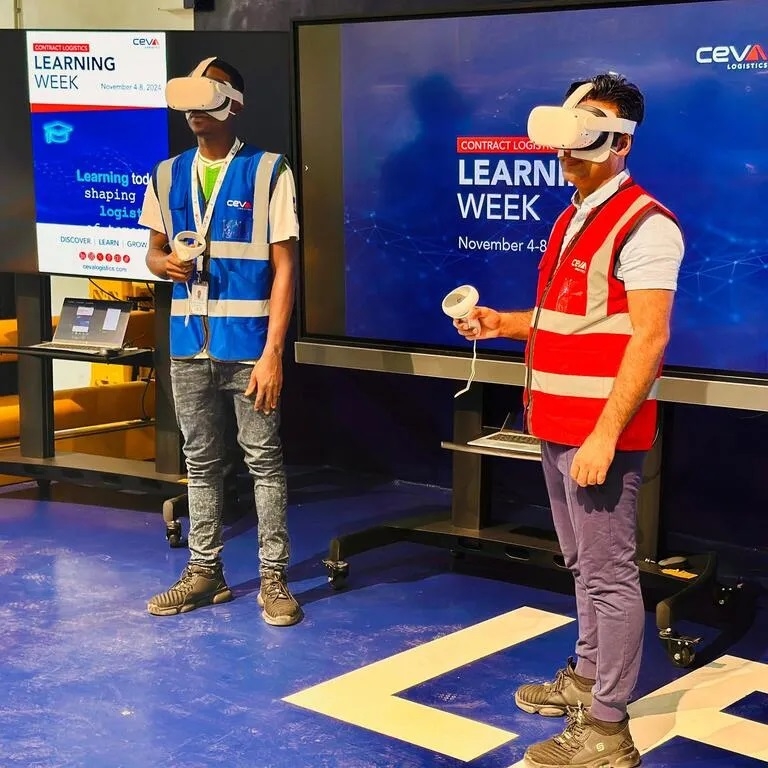
Building a culture of continuous improvement within teams is key to the further development of warehouse services. This approach requires investment in initiatives and training programs that develop the skills of employees and managers, as well as ensure their readiness to introduce innovative solutions. Currently, more and more positions are being filled by specialists with technical, engineering, and new technology implementation knowledge, which underscores the importance of a comprehensive approach to competence development. An example of this approach is the global training program by CEVA Logistics – Contract Logistics Learning Week, in which 25,000 employees and managers from over 100 branches worldwide, including Poland, participated last year. The program, focused on innovation and collaboration, used modern teaching methods, showing the direction in which competencies in contract logistics need to be developed.
[1] https://www.statista.com/outlook/emo/ecommerce/europe
[3] https://www.meticulousresearch.com/pressrelease/272/ai-in-supply-chain-market-2031Source: CEVA Logistics