









In times of rapid industrial transformation, progress is increasingly the result not of single breakthrough solutions, but of the consistent implementation of innovations in daily operations. An example of this are the road transport decarbonization projects carried out by CEVA Logistics, a global 3PL leader, in Central European countries. In Poland, the Czech Republic, and Hungary, CEVA is developing solutions using alternative fuels and electric vehicles, thereby supporting the construction of a low-emission road transport corridor in the region.
From alternative fuels to electrification
CEVA Logistics began its efforts to develop more sustainable road transport in Central Europe by changing the power sources of its existing fleet. Over the last few years, it has gradually expanded the use of HVO100 fuel—a sustainable alternative to traditional diesel—in line-haul transport in Poland and the Czech Republic. Trucks running on HVO100 have been carrying out international deliveries on routes between Hungary, the Czech Republic, and Poland for over a year now.
The next step in implementing the strategy in the region is the development of heavy transport using electric vehicles (EVs). Here, CEVA will leverage the experience gained during the implementation of similar operations in other parts of the world, including Asia, North America, and Western Europe.
Pilots in Hungary, the Czech Republic, and Poland
In road transport, the transition to electric propulsion is not limited to purchasing new vehicles. For a logistics operator, it also means the need to comprehensively redesign operational processes, prepare new schedules, and develop infrastructure. Therefore, pilot projects carried out by CEVA in Hungary and the Czech Republic played an important role, enabling the verification of solutions in practice and the collection of data necessary for the implementation of subsequent projects.
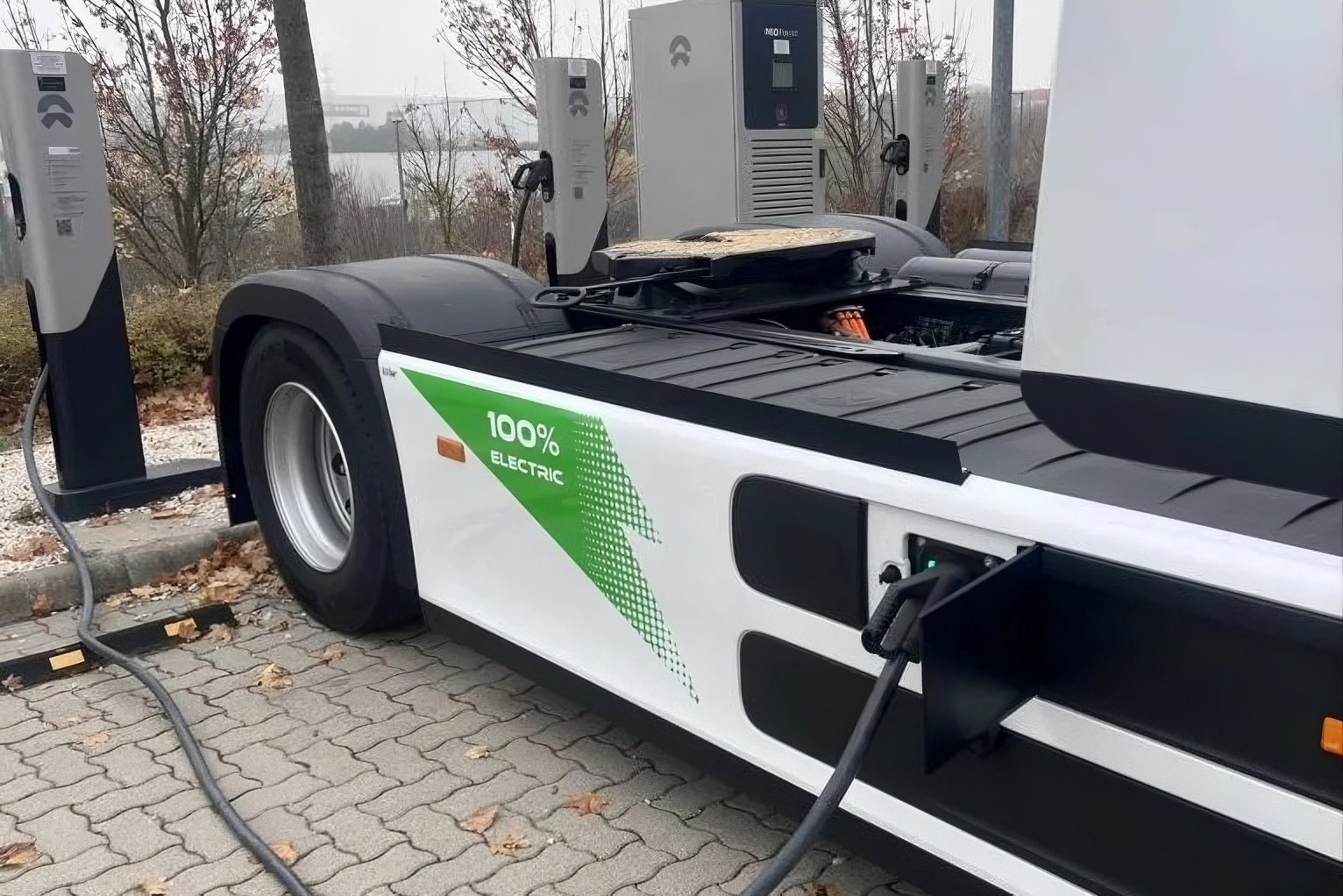
In Hungary, after eight months of preparations conducted jointly with partners, an electric truck test was successfully carried out. CEVA, in cooperation with the carrier Transhungaria, carried out transport between the client’s production plants and its distributor. Despite challenges related to, among other things, loading delays, the electric vehicle proved itself in daily operation, confirming that such solutions can meet real operational requirements. Thanks to a range of up to 500 kilometers in winter conditions and fast-charging capabilities, the next stage of cooperation is to launch regular transport services using electric vehicles between the client’s production plants in Hungary.
A similar project was carried out in the Czech Republic, where CEVA tested a MAN Low Deck electric tractor unit as part of a domestic goods collection project for one of its clients. Over 15 days, the vehicle covered 5,000 kilometers, transporting 24 tons of cargo without any delays related to charging. By using publicly available charging infrastructure and making deliveries according to the required schedule, the project helped reduce emissions by 2 tons of CO₂ equivalent (CO₂e). At the same time, it confirmed that electric tractor units can successfully serve as an alternative to diesel-powered vehicles in daily transport operations.
Meanwhile, in Poland, after completing the pilot phase, CEVA is executing a two-year contract for a client on the Września–Poznań route. Two electric trucks will operate on a 24/5 system, with charging taking place on-site at the client’s premises. It is estimated that their use will reduce emissions by approximately 280 tons of CO₂e per year. The implementation is the result of over a year of rigorous testing, conducted under various conditions and in close cooperation with local subcontractors.
Preparing for 2050
The projects implemented by CEVA in Central European countries show that it is already possible to effectively implement electric heavy transport, even where charging infrastructure is still in the development phase. As part of its broader decarbonization strategy, CEVA is expanding its fleet of electric vehicles, which supports the goal of achieving net-zero emissions by 2050, set jointly with the CMA CGM Group. Despite high investment costs and limited availability of charging infrastructure, CEVA will continue to implement further projects, relying on strategic partnerships and long-term commitment.
The regionally implemented projects are for CEVA not only a test of specific solutions but also an element of building a low-emission future and a more sustainable value chain.
Source: CEVA Logistics