








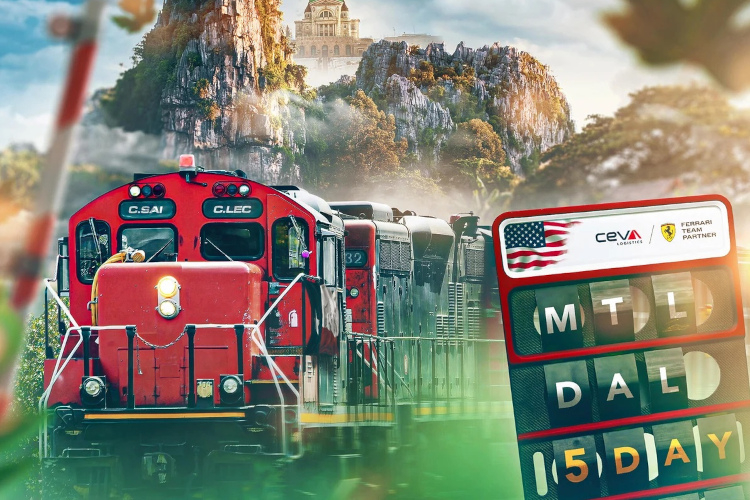
CEVA Logistics has prepared an innovative rail transport solution for the Scuderia Ferrari Formula 1 team. This is the first time in F1 history that trains have been used to transport Ferrari equipment to three Grand Prix events in North America. The project is being carried out as part of the collaboration between CEVA and Scuderia Ferrari, with the goal of reducing CO2 emissions.
As the logistics partner for the Scuderia Ferrari racing team since 2022, CEVA provides equipment delivery to each of the 23 Grand Prix race tracks. Since the beginning of the partnership, CEVA has been working to transform the Scuderia Ferrari logistics program. Air transport, previously used to move six sets of equipment weighing 45 tons to various locations around the world, has been replaced by a combination of sea and road transport.
In the 2023 season, the logistics operator proposed a new solution: delivering equipment to race locations in North America by rail to reduce CO2 emissions. The parts, loaded into six 16-meter containers, were transported over a distance of approximately 3,218 km from Montreal (Canada) to Austin (USA, Texas), with the next stage being the more than 3,200 km route from Austin to Las Vegas, Nevada.
The CEVA project team calculated that the solution, utilizing rail connections between the three cities hosting F1 races, reduced CO2 emissions by 90 percent compared to equivalent air transport and by 32 percent compared to solutions based on truck delivery.
– The partnership with Scuderia Ferrari highlights the trust that major brands place in us to deliver leading solutions. This experience shows how sustainable logistics can significantly reduce carbon emissions in Formula 1 and beyond. We are committed to preparing the best logistics solutions for Ferrari, which means both finding better ways to transport equipment and reducing its environmental impact. This initiative is in line with our long-term vision and demonstrates our commitment to working closely with clients to develop more sustainable and efficient transport solutions – says Mathieu Friedberg, CEO of CEVA Logistics.
Experts in comprehensive logistics services
Choosing the right route connecting the locations where F1 races are held is a complex logistics task. In the case of the United States, it was facilitated by an extensive rail network. The CEVA project team works closely with rail carriers, synchronizing deliveries with the F1 Grand Prix schedule.
Rail transport for Scuderia Ferrari is combined with road transport (from rail terminals), which requires managing transshipment between different modes of transport. The CEVA project team also provides specialized handling, coordination, and proactive planning for emergency situations to ensure timely deliveries.
For example, equipment delivered from Montreal to Las Vegas via Austin required storage and road transport between the CEVA transshipment center in Dallas and the Austin Grand Prix track. A similar approach will be used for the delivery of equipment between the CEVA branch in Los Angeles and the track hosting the Las Vegas GP.
– Reducing CO2 emissions in the motorsport logistics chain and beyond involves many challenges. The pilot project with CEVA Logistics is very interesting in terms of transport decarbonization, and we do not intend to stop here: we will continue to research new sustainable solutions. To achieve climate goals, constant dialogue with partners and experimentation are more important than ever before – emphasizes Frédéric Vasseur, Team Principal & General Manager of Scuderia Ferrari.
A chosen logistics service provider
CEVA forecasts that in 2023, various sets of F1 equipment will cover a distance of over 209,000 km. By choosing more sustainable transport options, CEVA supports Ferrari’s efforts to reduce emissions and promotes more sustainable business practices. As part of the CMA CGM Group, it has committed to achieving net-zero emissions by 2050. Ferrari aims to achieve carbon neutrality by 2030.