









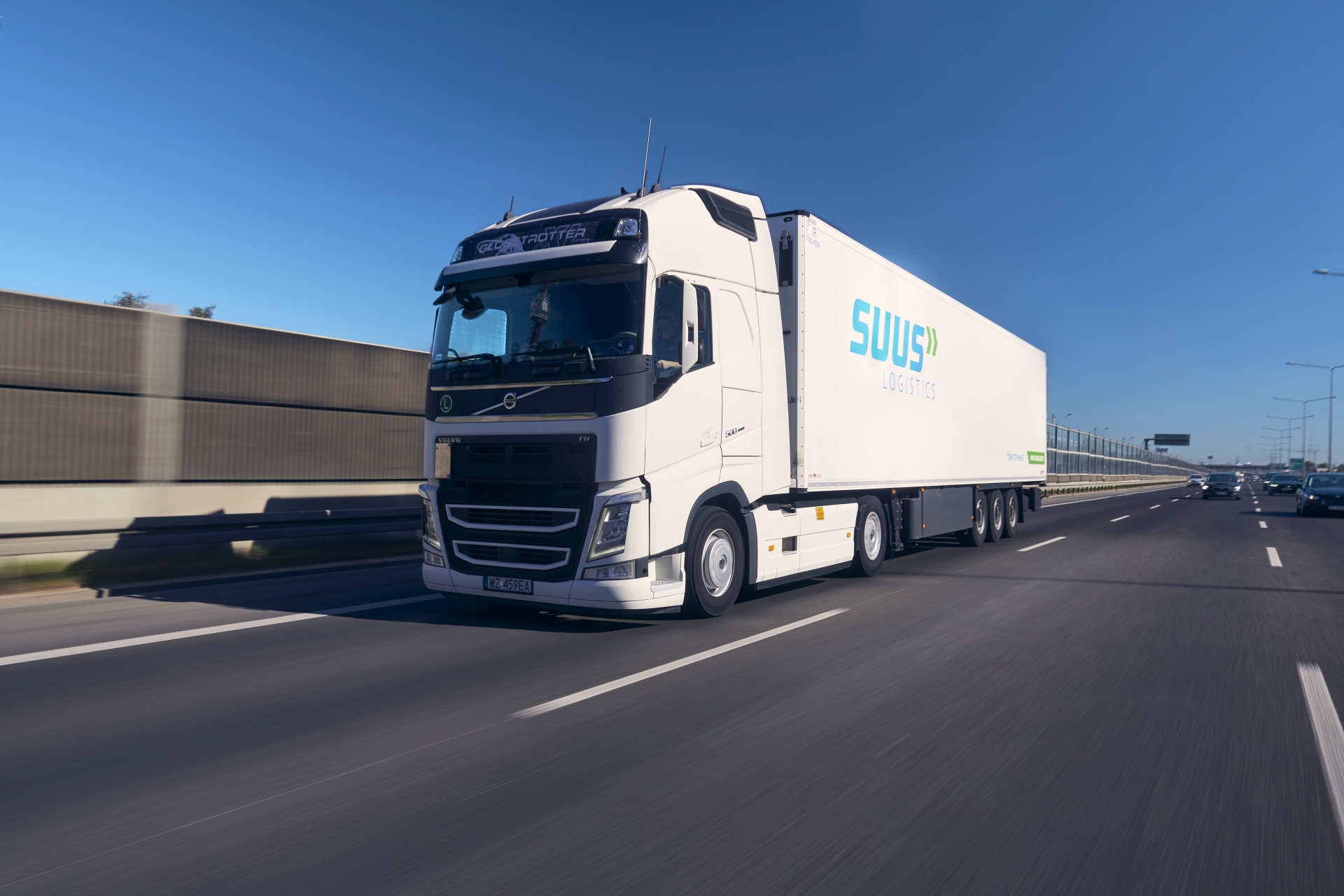
Central and Eastern Europe is strengthening its position as one of the continent’s key logistics hubs. More and more companies from Asia are treating CEE as a natural gateway to the European market, using the region for both transshipment and distribution of goods, as well as a location for factories, warehouses, and logistics centers. The result is the growing importance of Central and Eastern Europe in European supply chains, which is particularly evident through the lens of road transport, which remains the primary means of distributing goods on the continent.
These trends represent a major business opportunity for our region, especially for the logistics sector. Global players are looking for partners with local know-how, developed infrastructure, and the competencies to effectively manage complex supply chains across multiple markets simultaneously.
Asia as Europe’s key economic partner
Europe remains strongly economically linked to Asia. China continues to be the European Union’s key trading partner, and imports from this country grew by 6.4% y/y in 2025. At the same time, ASEAN countries such as Vietnam, Thailand, Malaysia, and Indonesia are playing an increasingly important role – EU trade with this region has grown by 67% over the last decade.
Central Asia also holds great potential – a region that is developing dynamically. As a company present in Kazakhstan and Uzbekistan, we observe not only an influx of European investments but also the development of local enterprises, which over time may increasingly develop their foreign operations, including in European markets.
It is the countries of Central and Eastern Europe that are becoming a natural gateway for these cargo flows. Regardless of whether shipments reach Europe by sea, e.g., through Baltic and North Sea ports, or by land – via trains and trucks, further distribution is based primarily on road transport. Thanks to its strategic location, developed logistics infrastructure, and a dense network of connections, the CEE region today serves as a continental distribution hub, enabling efficient delivery service across the entire market – from Scandinavia and Western Europe to Southern Europe and the Balkans.
CEE as the factory and warehouse of Europe
The CEE region also serves as a production and warehousing base for all of Europe, which is becoming increasingly apparent. In response to the need to diversify supplies and shorten supply chains, companies are increasingly willing to locate new investments here, making Central and Eastern Europe one of the main beneficiaries of the nearshoring trend. This also drives demand for road transport services – both in terms of delivering raw materials and components to production plants and distributing finished goods to customers throughout Europe.
Investment data confirms this. Poland is currently the most frequently indicated investment location in the region – 56% of companies planning new investments in CEE point to our country, which means an increase of 11 percentage points year-on-year. Romania is also developing dynamically, having attracted 16% more foreign direct investment projects in 2025 than the year before.
Distribution directions from CEE
Cargo flows from the CEE region show how strongly Central and Eastern Europe is integrated with the economy of the entire continent today. Western Europe remains the main export destination for countries in the region, with Germany playing a special role as the largest trading partner for virtually all major CEE economies. It accounts for about 28% of Poland’s exports, nearly 30% of the Czech Republic’s exports, about 22% of Slovakia’s exports, and about 25% of Hungary’s exports.
Other Western and Southern European countries, such as France, the Netherlands, Italy, and Spain, are also of significant importance. We also observe stable transport volumes in the British direction – despite Brexit, the UK remains one of the more important markets for exporters from the region, and efficient customs handling plays a key role in operational liquidity. Scandinavia also remains an important direction, for which Poland serves as a natural logistics hub for serving the entire continent. Meanwhile, Romania and Slovenia are strengthening their position as gateways to the Balkans, where growing consumption is driving demand for road transport, especially in the FMCG, electronics, and consumer goods sectors.
At the same time, the scale of trade within the region itself is growing. The Czech Republic is the second or third largest export market for Poland, and Slovakia, Hungary, and Romania are also among the most important trading partners. This shows that CEE functions as an increasingly integrated internal market of over 100 million consumers.
Local know-how and international experience
At Rohlig SUUS Logistics, we see huge business potential resulting from these trends and are consistently strengthening our presence in the region. We support clients in designing and operating supply chains tailored to the specifics of their business, carrying out FTL, PTL, and LTL transport both on the domestic and international markets.
In international transport, a wide operational reach is crucial, which is why we handle over 350 regular international groupage connections per week. Our strategy is based on close cooperation with local partners. Based on our logistics centers, we are also developing our own distribution network in the V4 region, covering Poland, the Czech Republic, Slovakia, and Hungary. A key element of our offer is also customs handling, which ensures operational liquidity both in imports from Asia and distribution to markets requiring customs procedures, such as the UK or Ukraine, where efficient customs handling is crucial for the continuity and efficiency of supply chains.
Source: Rohlig SUUS Logistics