









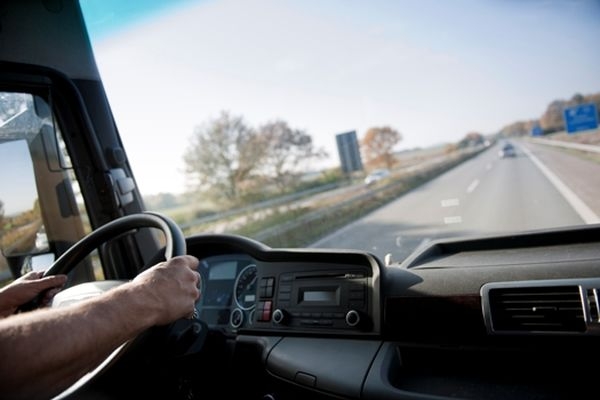
According to transport company estimates, fuel still accounts for the largest share of total transport costs, although driver wages and road tolls are also becoming a significant part. Experts from WebEye claim that more organized vehicle usage and the choice of the right fleet tracking service can reduce incurred costs by 20 percent.
In road transport, fuel consumed by vehicles still accounts for the largest share of costs. Although fuel prices have recently fallen, transport company estimates suggest it still generates half of their incurred costs. Other significant expenses include road tolls, as well as inefficient use of driving time and fines for violating permitted driver working hours. Fuel expenses can be significantly reduced through load optimization. Furthermore, a modern telematics system helps detect poor driving styles or improper use of driving time, which enables a significant reduction in additional costs, such as service fees.
Enterprises conducting transport operations must account for road tolls, but the way they pay them has a major impact on the potential for savings. For example, route-specific tickets in Hungary do not allow for route changes, so if a driver has to deviate from the route, a new ticket must be purchased. The need to incur an additional fee is eliminated if an On-Board Unit (OBU) with a GPS receiver is installed in the vehicle. If someone has an OBU installed, in the event of deviating from the route or taking a wrong turn, the device will record that segment and charge the appropriate fee – payment is made on a prepaid basis.
– Transport companies often pay for their lack of knowledge as well. For example, Polish drivers moving around Hungary using route-specific tickets often do not receive invoices for them. This means that companies have no way to settle VAT, which in Hungary is as high as 27 percent. Conversely, drivers who settle tolls electronically enable their companies to generate invoices and deduct VAT – notes Paweł Wloczek, Country Manager at WebEye Poland.
An advanced telematics solution, in addition to regulating road tolls, offers many additional options that bring large savings in the long term. Among them, it is worth noting, for example, fuel level measurement, flexible route planning, or the electronic tachograph function available in the WebEye solution, which is used to manage driving time.
– Our experience shows that the installation of a telematics system reduces fuel costs by 10 to 30 percent, although in specific cases we have observed even a 40 percent drop in fuel consumption across the entire fleet. This is due to many factors, including the elimination of private use, detection of poor driving styles, and, of course, the reduction of fuel-related abuse – adds Paweł Wloczek.
Ways to optimize transport costs:
1. Fuel consumption measurement. It is recommended to regularly measure the amount of fuel consumed and record the locations and exact times of refueling. It is also worth creating a map of reliable gas stations along the route. Complete telematics services, covering both fuel level measurement and route planning, support companies in gathering the necessary data faster and more effectively.
2. Choosing the right method for settling road tolls. Another important aspect is the frequency of transport. For companies that regularly transport loads, payments based on a GPS system are not only more convenient but also more economical: they allow for flexible route changes, so users pay only for the distance actually traveled.
3. Maximizing driving time. When planning transport, it must be taken into account that unused driving time means a loss of revenue in the long term. It is therefore worth fully utilizing the permitted working hours of drivers.
4. Compliance with driver working hours. Fines for violating driver working hours can be a significant component of costs. Exceeding permitted driving time endangers other road users, so it is subject to increased inspections. Therefore, it pays to use an on-board device that not only records the driver’s working hours but also alerts them that the permitted driving time has passed.
5. Optimal route planning. Pre-planning a route allows for avoiding unnecessary detours and empty runs, which also contribute to fuel consumption. If circumstances allow, it is worth setting off outside peak hours and remembering that the shortest route does not always mean the lowest fuel consumption.
6. Regular servicing. Properly maintained, mechanically sound vehicles consume less fuel and last longer. It is worth regularly checking vehicle diagnostic data, as this helps in more effective and precise servicing.
7. Optimal driving style. Avoiding excessive speed and adapting the driving style to road conditions contributes to increased driving safety. This prevents unnecessary braking and acceleration, and consequently, increased fuel consumption.