









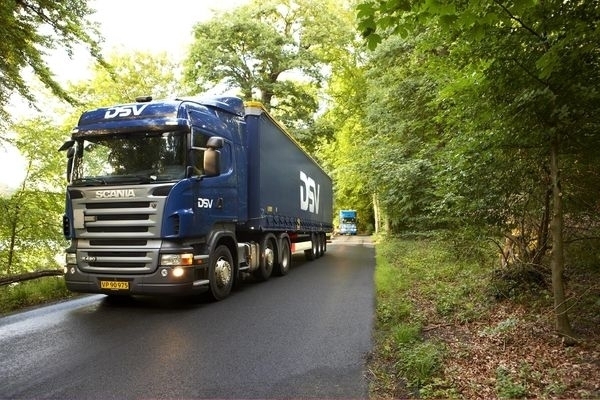
At the beginning of the year, the DSV Group launched a new intermodal connection between Turkey and the UK. The service is a joint venture between two DSV divisions: Air & Sea and Road.
The new DSV container service between Turkey and the UK complements the existing road-sea connection, the so-called DSV Short Sea, operating between the port of Cesme in Turkey and Trieste in Italy. The road-rail system is based on the transport of goods in 45-foot containers. The transit time for deliveries within the new road-rail system is slightly longer than direct road deliveries, taking 10-12 days. At the same time, it is more predictable and reliable, and additionally offers high efficiency and cost stability, allowing for savings of up to 10-15 percent. Additional advantages of the new service include higher punctuality, fixed departure schedules, and the absence of seasonal fluctuations in equipment supply. The intermodal service is also environmentally friendly, which is a key factor for some of the DSV Group’s clients.
– We have noticed that interest in the intermodal freight transport system is growing year by year as a way to transport products more cheaply – says Morten Joergensen, Managing Director of DSV Road Turkey. – Increasingly modern rail traction between the UK and Turkey has become a real alternative to road and sea freight transport systems.
Since the beginning of 2014, it has been possible to transport containers from Istanbul to the British Isles in two ways: either by sea to Trieste (Italy), and from there by rail to Zeebrugge (Belgium) or Rotterdam (Netherlands), or directly by train from Turkey to Belgium or the Netherlands. In both cases, transport is carried out using containers with a load capacity identical to those used in road trailers.
– The dimensions of 45-foot containers are similar to the volume of a standard trailer, i.e., 33 Euro-pallets. Their advantage is a higher weight limit – up to 27 tons. Additionally, 45-foot containers are equipped with special locks and anti-theft reinforcements, which increases the security of the transported goods – says Paweł Osiak, Business Development Manager at DSV Road Poland. – The intermodal transport system itself is enjoying increasing popularity in Poland, although it currently accounts for only about 2 percent of the total value of cargo. For comparison, in Western European countries, this share is about 10 percent. Therefore, as experience from other countries shows, intermodal transport can be one of the directions for development and optimization with support and further investment in rail infrastructure.