









Zebra Technologies Corporation (NASDAQ: ZBRA), a company specializing in mobile computers, scanners, and barcode printers, offering software and services that provide real-time visibility into company assets, has conducted the “Future of Fulfillment Vision Study.” This is a global analysis of how manufacturers, transport and logistics companies, and retail enterprises are preparing to meet the growing needs of the so-called on-demand economy.
The study found that in response to the expectations of modern consumers who shop online, use smartphones, and expect seamless and faster order fulfillment – 78 percent of logistics companies plan to offer same-day delivery by 2023, while 40 percent plan to offer two-hour delivery by 2028. Furthermore, 87 percent of respondents expect that by 2028 they will begin implementing crowdsourced deliveries or using networks of drivers who will sign up to fulfill specific orders.
Key study findings
• Only 39 percent of supply chain respondents declared omnichannel operations. The study found that for one-third of respondents, the biggest challenge on the path to omnichannel sales will be reducing the number of backorders; closely followed by resource allocation and transport costs.
• 76 percent of surveyed retailers use store inventory to fulfill online orders, and 86 percent plan to introduce an online purchase with in-store pickup option next year. Retail enterprises are investing in store modernization (to double their role as online fulfillment centers) and in reducing sales floor space (to increase the area dedicated to handling online order pickups and returns).
• Globally, 87 percent of respondents agreed that accepting and managing product returns is a challenge. The increase in free and fast product deliveries means an increase in the volume of product returns – retail enterprises are struggling to effectively manage this costly issue across many diverse shopping models. Seven out of ten surveyed executives believe that more retailers will transform their stores into fulfillment centers that handle product returns. More than 60 percent of retail enterprises that do not currently offer free shipping, free returns, or same-day delivery plan to offer such services in the future, while 44 percent intend to outsource return management to a third party.
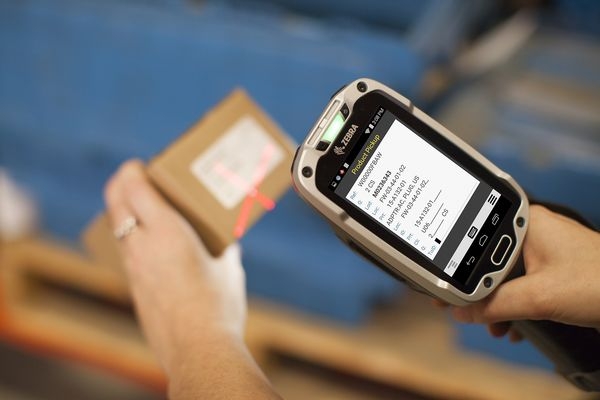
• Although 72 percent of organizations currently use barcodes, 55 percent still use inefficient, manual, paper-based processes in omnichannel logistics. By 2021, 94 percent of logistics respondents plan to start using handheld mobile computers with barcode scanners. Moving from manually filled paper sheets to computers equipped with barcode scanners or tablets will streamline omnichannel logistics by enabling near real-time access to warehouse management systems.
• In the coming years, a 49 percent growth in radio frequency identification (RFID) technology and inventory management platforms is expected. RFID-based software, hardware, and item-tagging solutions offer the ability to perform modern inventory searches at the individual item level, increasing inventory accuracy and shopper satisfaction, while reducing stockouts, overstocks, and replenishment errors.
• Forward-thinking decision-makers revealed that next-generation supply chains will reflect connected, analytics-driven, and automated solutions that will give transport and labor a whole new level of speed, precision, and cost-effectiveness. The surveyed executives expect the biggest breakthroughs to come from drones (39 percent), unmanned/autonomous vehicles (38 percent), wearable and mobile technology (37 percent), and robotics (37 percent).
Regional study findings
• In North America, the need for inventory accuracy will continue to grow. Manufacturers, logistics companies, and retailers rated current inventory accuracy at 74 percent, stating it should be 83 percent for them to meet the growing importance of omnichannel logistics.
• Retail enterprises in Europe and the Middle East are fulfilling electronic orders directly from brick-and-mortar stores. Retailers and operational leaders calculate that a store network can fulfill electronic orders faster and more effectively than a handful of centralized warehouses. More than 80 percent of stores use their inventory to fulfill orders, and 29 percent expect such inventory usage to grow by more than 10 percent over the next five years.
• 95 percent of respondents from the Asia-Pacific region believe that e-commerce contributes to the demand for faster deliveries. It is predicted that same-day delivery will be implemented faster in this region than in any other; 42 percent of respondents identified drones as one of the most important technologies driving industry breakthroughs.
• In Latin America, changes are taking place regarding shipping and return costs. About 40 percent of respondents plan to stop offering free shipping, 55 percent intend to stop offering free returns, and 61 percent anticipate eliminating separate, third-party-managed return facilities.
Study assumptions and methodology
• The Zebra “Future of Fulfillment Vision Study” involved over 2,700 professionals from the transport and logistics, retail, and manufacturing sectors. They answered questions about their plans, implementation levels, history, and approaches to omnichannel logistics.
• The research was conducted in 2017 in collaboration with partner research firm Qualtrics in the United States, Canada, Brazil, Mexico, Colombia, Chile, France, Germany, the United Kingdom, Italy, Russia, Spain, China, India, Australia, and New Zealand.
Quote
– Driven by the needs of the tech-savvy, always-online customer, retailers, manufacturers, and logistics companies are collaborating and swapping roles in unconventional ways to meet shopper expectations for omnichannel fulfillment and delivery. The Zebra “Future of Fulfillment Vision Study” found that 89 percent of respondents believe e-commerce is driving the need for faster deliveries. Therefore, companies are turning to digital technology and analytics to increase automation, asset visibility, and business intelligence in the context of the supply chain. This is intended to help them compete in the pro-consumer on-demand economy market – said Jim Hilton, Manufacturing and Transportation and Logistics Global Principal, Zebra Technologies.