









Freight transport is the foundation of the economy. The success of the green transition depends on equipping commercial vehicles with alternative powertrains. Consequently, the industry is undergoing changes, led by Bosch, which is expanding its product and solution portfolio with a focus on technological diversity. Reorganization of the commercial vehicle division is planned for 2025.
– The transformation of commercial vehicles towards alternative powertrains requires technological neutrality and continuous improvement of all types of drives – stated Markus Heyn, member of the Bosch board of management and chairman of the Mobility sector, during this year’s IAA Transportation trade fair in Hanover – In the coming years, we expect dynamic growth in global freight transport and a shift to alternative powertrains in commercial vehicles. This will be a significant factor driving the development of our business. The truck sector is of immense importance to us – it generates 1/4 of sales in the Mobility division – added Heyn.
According to forecasts, global vehicle production in 2024 will remain at a level similar to the previous year. Assuming a strong performance in the final quarter, Bosch Mobility expects a slight increase in sales this year, despite the difficult market situation. By 2029, Bosch Mobility aims to achieve global sales of over 80 billion euros.
New structure of the commercial vehicle division
Bosch intends to leverage the potential associated with the development of global freight transport and the transition to alternative powertrains. To this end, the company is planning a reorganization of the commercial vehicle division within the Mobility sector. In January 2025, under the leadership of Jan-Oliver Röhrl, executive vice president for commercial and off-road vehicles, Bosch will begin consolidating key competencies into a new business unit, combining system development with product and portfolio management for trucks and off-road vehicles.
– We are convinced that the new structure will benefit our customers and enable even more fruitful cooperation. Together, we want to increase the efficiency and safety of commercial vehicles – said Röhrl during IAA Transportation 2024.
Bosch is committed to powertrain diversity and technological neutrality. According to the company’s forecasts, by 2030, about 20% of newly registered commercial vehicles weighing over six tons will be battery-electric, and fuel cell vehicles will account for about 3% of the market. By 2035, one in three trucks will be equipped with an electric drive, and one in ten with a hydrogen drive. During this time, hydrogen-powered internal combustion engines will also appear on the roads (though they will be a distinct minority). One thing is certain: electric drive can only appear in freight transport with the appropriate infrastructure.
– We need consistent and faster development of electric vehicle charging networks and hydrogen stations in Germany and Europe – emphasized Heyn.
According to Bosch, different powertrains do not compete with each other. On the contrary – their diversity allows manufacturers to choose the optimal solution for specific applications. Therefore, the company is not only developing battery-electric, fuel cell, and hydrogen engine drives, but is also striving to increase the efficiency of modern internal combustion engines. Due to the huge number of vehicles already on the roads, synthetic fuels can also play an important role in mitigating climate change.
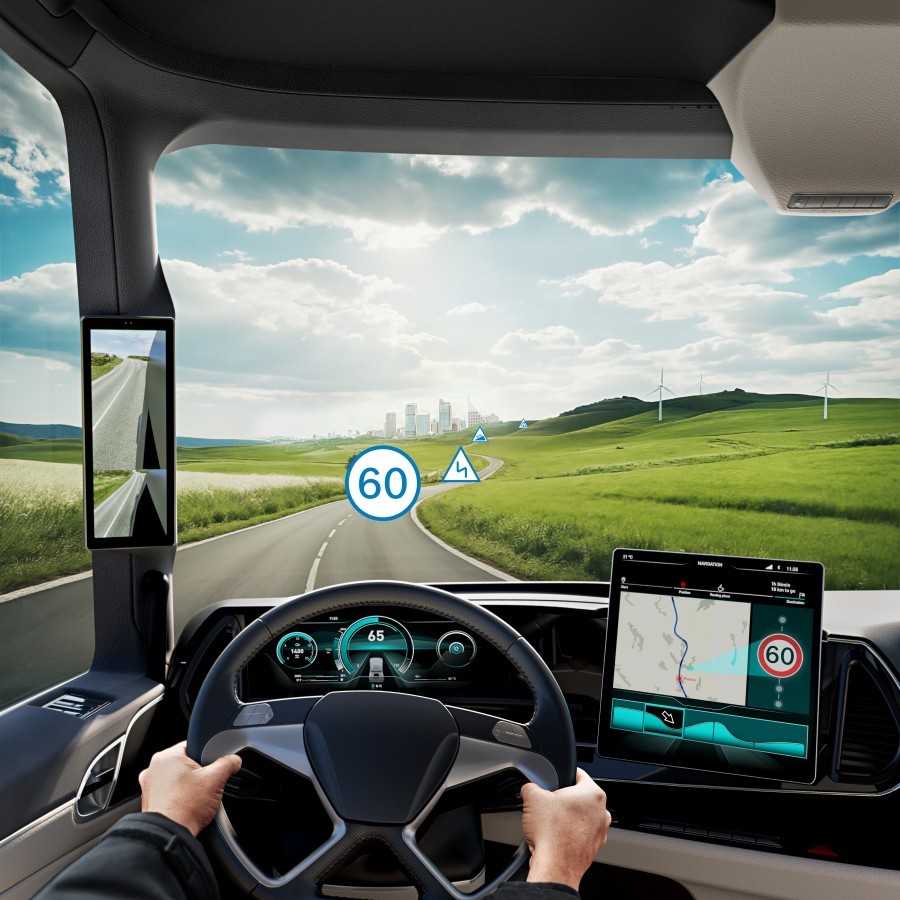
Rapid development of assistance systems in commercial vehicles
At the IAA Transportation 2024 trade fair, Bosch presented its ideas, innovations, and solutions for modern freight transport. However, the company’s solutions already extend beyond Hanover, revolutionizing the transport industry. For example, mass production of Bosch e-axles for heavy commercial vehicles weighing between 18 and 49 tons has begun in China. This solution includes a fully integrated electric motor, transmission, clutch actuator, inverter, and differential, and will work in both electric and hydrogen vehicles. In India, tests are underway for vehicles with H2 engines, for which Bosch supplies key components: injection systems, sensors, tank valves, and control units along with software. Meanwhile, in the United States, Bosch and the company FirstElement Fuel are working on a so-called cryogenic pump, which is expected to enter service in California for the first time in 2025. The new pump will enable hydrogen refueling for a range of 1,000 kilometers in just 10 minutes!
Driver assistance systems are an important element of the Bosch strategy for commercial vehicles. Research conducted by the company shows that 1/8 of accidents involving trucks can be avoided thanks to lane-keeping assistants. This solution not only saves lives but also reduces costs associated with vehicle damage. Another important solution is the electronic horizon, which enables more economical and ecological truck driving. This system collects data on terrain topography, curve radii, or road signs, and then adjusts the vehicle’s speed, for example, by utilizing its kinetic energy. It works on both highways and in urban traffic. In internal combustion vehicles, it allows for fuel consumption reduction of up to 5%, thereby reducing CO2 emissions. In electric vehicles, it improves energy efficiency, which increases their range. Currently, over a million vehicles are already using the Bosch electronic horizon system.
Software updates in commercial vehicles
The transformation of the automotive industry towards software-defined mobility poses new challenges for the commercial vehicle sector. The growing number of connected services and fleet management solutions makes the ability to update software in trucks and delivery vehicles as important as it is in passenger cars. A key trend here is the reduction in the number of onboard computers, which leads to the simplification of the vehicle’s electrical/electronic architecture. Currently, information is located in many different units, whereas in the future, it will be concentrated in just a few modern computers. Bosch supports manufacturers in this transformation by offering a wide range of solutions and services tailored to the specifics of commercial vehicles.
Bosch is developing a digital logistics service platform called L.OS, which addresses specific challenges in the transport and logistics industry. In this regard, the company is collaborating with Amazon Web Services, among others. The central element of this software ecosystem for shipping companies and carriers is a marketplace offering centralized access to digital solutions from various providers, ensuring full support in managing drivers, transport, and fleets, route and parking space planning, financial services, and supply chain transparency.
Furthermore, Bosch’s innovations in connectivity help mobility and logistics service providers optimize vehicle utilization and reduce downtime. The technical foundation of these solutions is the universal Bosch control module, which can be installed in any vehicle (regardless of the manufacturer). Thanks to it, fleet operators gain access to operational and diagnostic vehicle data, and thus to a whole range of data-based services. For example, the Retrofit Efficiency Module (remodul) recognizes the route taken by the truck and adjusts the vehicle’s speed based on historical data stored in a central database. This can reduce fuel consumption by up to 4%, which translates into significant savings for fleet operators. In turn, Vehicle Health records standard and manufacturer-specific error codes in the vehicle and analyzes them in the cloud, detecting potential problems at an early stage. It presents the analysis results in an accessible form, which allows for proactive maintenance planning, which in turn significantly reduces the number of unexpected breakdowns.
Source: Bosch Group