








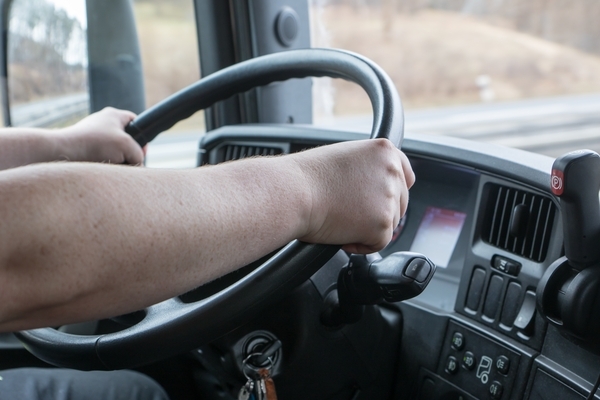
Inspectors can now penalize drivers for spending their 45-hour rest period in a truck cabin not only when caught in the act, but for up to 28 days retrospectively. Beware of the new approach taken by inspections in European Union countries. Joining restrictive France are the Netherlands, Belgium, England, Germany, and even Italy, where drivers often traveled to rest in their vehicles. The highest penalties can reach as much as 30,000 euros. OCRK experts emphasize that Polish carriers should pay special attention to the new practices of foreign officials.
Regulations
Since December 2017, by virtue of a ruling by the Court of Justice of the European Union, there has been an absolute ban in EU countries on spending regular weekly rest periods in a vehicle. Such a break from work, lasting a minimum of 45 hours, should take place in a location that provides social conditions equivalent to those of a hotel. The CJEU noted at the time that there was an ambiguity in Regulation 561/2006, Article 8(8), as this regulation contained no provision explicitly indicating how and where a truck driver should spend their long rest period. Until now, practices have varied, and carriers have been creative in finding solutions to this troublesome mandate.
Carrier practice
– One of the first countries to strictly apply financial sanctions against transport companies is France. Under the law of July 10, 2014, which is also an act to combat unfair social competition, inspectors could impose fines on carriers ranging from 1,000 to 1,500 euros. This was quickly deemed too low, as entrepreneurs preferred to pay the fine and not follow the designated rules. Therefore, penalties were increased to 30,000 euros or a prison sentence for the owner. Currently, inspectors issue fines ranging from 2,000 to 4,000 euros, and drivers are not held responsible for sleeping in the cabin – says Jakub Ordon, an OCRK expert.
Carriers have had several ways to circumvent the regulations until now. One of them was, for example, “interrupting the rest” by recording so-called other work or performing short movements in parking lots. If, after checking the data from the tachograph (card), it turned out that a reduced weekly rest could have been taken at that time, it did not involve any violation. A trick used by transport companies was also simulating leaving the vehicle, e.g., for a hotel. Drivers would remove digital cards from the recording devices to break the continuity of data recording. After 45 hours, by inserting the card into the “tacho,” they would make manual entries to confirm in the digital record that the rest was taken outside the vehicle.
– Such methods of circumventing the applicable law were used by transporters quite often. Moreover, the regulations were treated by the drivers themselves as a significant hindrance rather than a convenience in their daily work. By spending the required rest in the cabin, the truck driver saved money from the so-called overnight allowances, for which they would otherwise have to pay for hotel stays – comments the OCRK expert.
A third way to ignore the regulations was also found. Drivers simply left France to take their 45-hour break from work. The most frequently chosen places were German and Italian parking lots, but also the Netherlands, Belgium, or England—countries that had not yet introduced local sanctions for violating the principle of Article 8(8) of Regulation 561/2006 into their laws. For a long time, this technique worked 100%. French officials did not determine how a driver spent their rest if the place of starting and ending work was outside of France.
No longer just in flagranti
The problem arose when Germany, Belgium, the Netherlands, and even Italy joined the European Union countries enforcing regulations that impose penalties for sleeping in a cabin during a regular weekly rest. On April 30, 2018, Italian authorities launched local regulations, authorizing inspectors to eliminate the bad habits of drivers.
– The Belgians are now issuing 1,800 euro fines, offering a discount for immediate payment. However, if a carrier does not agree with the penalty and takes the case to court, they could pay up to 60,000 euros if they lose. Recently, German inspectors have also become active, deciding to charge the driver as well – they received a 500 euro fine, and the carrier nearly 1,500 euros – comments Jakub Ordon from OCRK. – Until recently, the “caught in the act” rule still applied, meaning the driver was actually taking their rest hours in the cabin during the inspection. This rule was broken in March of this year by a French official. They demanded that the driver show documents confirming their presence in a hotel in February and March, during the time they were taking rest outside of France. According to the tachograph data, the 45-hour breaks took place in Luxembourg and the Netherlands, but without receipts for a hotel – the expert adds.
The 28-day retrospective rule has also been adopted by the German BAG. An example of a recent unpleasant event for a Polish carrier is being penalized for failing to present a document showing that the driver actually spent their regular weekly rest in a hotel in Italy. The employee will pay 275 euros, and the owner of the transport company 1,575 euros.
What can Polish carriers do?
– It turns out that currently, the only solution is close cooperation with freight forwarders and planning returns to Poland in two-week periods (or nearly 3-week periods in a 3/1 system). Otherwise, booking a place in a hotel is necessary. Even though the regulations are treated by drivers themselves as a work hindrance, let us remember that such solutions are intended to increase road safety. Camping for several days in a cabin in the heat or cold, in a parking lot, without proper social conditions, is not equivalent to rest taken in a hotel – concludes Jakub Ordon.
Source: OCRK