









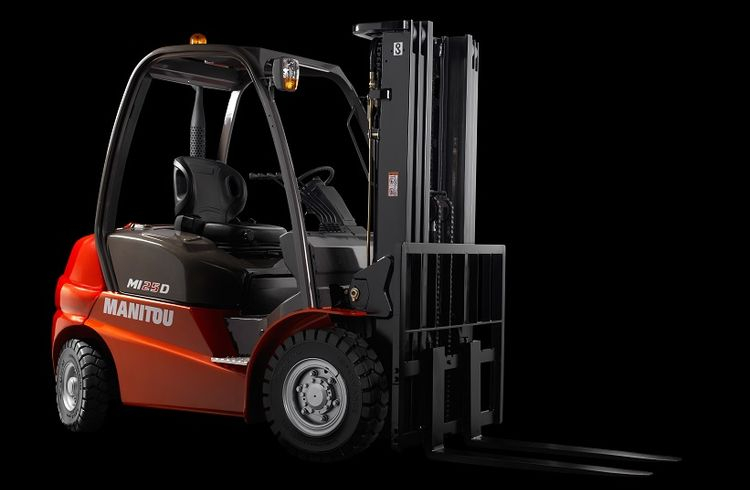
Are you curious which forklifts can be battery-powered? What distinguishes this type of power supply and is it cost-effective? How does warehousing change when using electrically powered devices? It is worth knowing the answers to these questions, which is why we present them in the text below, hoping that they will help you manage logistics in your company even better!
Before we characterize battery-powered forklifts, let’s consider what batteries are. According to the popular definition, a battery is a secondary galvanic cell that can be used multiple times thanks to charging with electric current. This means that batteries store energy, release it, and can then store it again (in the charging process) so that they are ready for use again. This is how the two main cycles of battery operation function, namely:
– charging
– battery operation.
Batteries for forklifts are traction batteries using:
– electrolyte in the form of gel
– or electrolyte in the form of liquid.
The voltage in a traction battery is determined by the number of cells placed in it:
– a battery with 12 cells has a voltage of 24 V;
– a battery with 40 cells has a voltage of 80 V.
Between them, on the market, there is also a 48 V battery available.
What parameters are important for batteries?
The most important parameter to consider regarding batteries is their capacity (given in ampere-hours). Obviously, the greater the capacity, the longer the forklift can operate before the battery discharges and needs to be recharged.
The battery charging time is also important. Especially in the case of multi-shift work – when the device must be used by employees for most of the day. A good solution is then to purchase a second battery for the shift, which will charge while its replacement is working, or to choose an electric forklift with a fast-charging battery.
Where are batteries most often used?
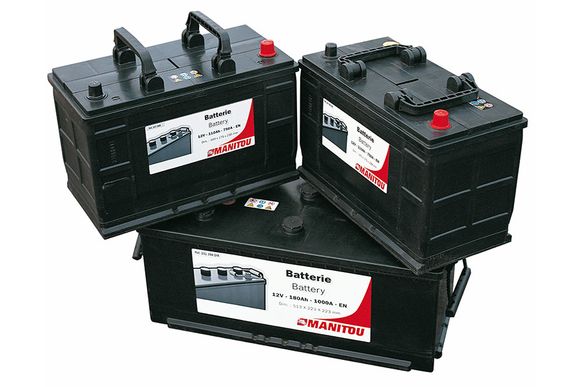 Battery-powered forklifts are not the only vehicles that use traction batteries to set the device in motion. Other machines using similar technologies include:
– warehouse lifts (e.g., electric pallet trucks, pallet stackers, but also reach trucks);
– golf carts;
– cleaning machines, such as polishers, scrubbers;
– work platforms: scissor lifts and boom lifts.
The use of efficient batteries in various types of forklifts is becoming increasingly popular due to the numerous benefits of electric drive.
What are the benefits of using an electric drive?
As we mentioned in the title of this article – the use of a specific (in this case – electric) drive in forklifts is of great importance and plays a significant role. First of all, it is worth remembering that battery-powered devices have an advantage over internal combustion ones in that they can be successfully and safely used even when performing operations in closed spaces. Due to the lack of exhaust emissions, they do not pose a threat to the air that other employees breathe or to the natural environment (in a broader sense).
The second important argument is the fact that charging electric forklift batteries is practically maintenance-free – we will say more about this later. On the other hand, electric forklifts are both very easy to operate and low-maintenance. A properly maintained battery can work effectively for a good dozen or so years. Thanks to these types of factors, purchasing an electric forklift is highly profitable and is a very good decision from an economic point of view.
Another undeniable advantage of battery-powered devices is the fact that the sound of their operation is much quieter than in the case of internal combustion forklifts. The noise level emitted by electric forklifts is comparable to the sounds reaching people inside a closed car or the sounds of a restaurant. Meanwhile, designers of industrial trucks are constantly trying to reduce noise levels to better meet the needs and expectations of their customers.
How to charge a battery in an electric forklift?
Charging a battery is a very simple and uncomplicated activity. First of all, the basic rule is not to allow the battery to fully discharge and to start the process when the battery still has a few percent of power left.
The battery should be connected to a switched-off charger, and only then turned on. The length of the activity itself depends on the component’s operating manual and may have a different duration. After the battery is fully charged, turn off the charger, and only then disconnect it from the charger.
What if the battery is not used for a long period? Even then, you should ensure that it does not remain discharged by charging it at least once every 30 days (or more often if necessary). Proper battery storage is also very important. It should be properly secured and stored in a cool and dry place to reduce its self-discharge and protect it from the adverse effects of external factors.
What else to remember in the case of battery-powered forklifts?
It is worth mentioning that electric forklifts, due to their power supply, do not have problems working outdoors even in weather conditions where there is a negative temperature. In this respect, electric devices even surpass other types of forklifts (e.g., gas-powered), which cannot always be used.
However, it should be added that working outside buildings, especially in autumn and winter, requires providing operators with additional protection against cold and precipitation in the form of an enclosed cabin (preferably heated).
It may also be necessary to take care of additional elements protecting forklift tires from slipping, such as chains or spikes mounted to solid tires.
It is very important, however, that even in the case of electric forklifts – the vehicle, after finishing work, should be provided with a dry parking space.
To ensure the good condition of an electric forklift, it is essential to remember to regularly top up the electrolyte level with distilled water, as well as to desulfate the batteries every few years.
What can be worrying?
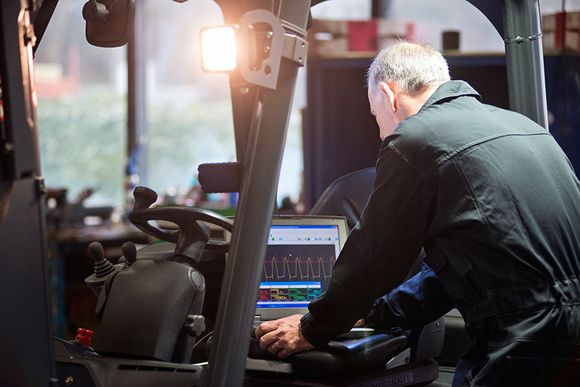
An electric forklift subjected to constant operation should also be under the constant supervision of a professional service and control by a maintenance technician. Any failure or defect noticed by an employee should be immediately reported and recorded for repair and removal.
What can also worry the operator during the operation of an electric forklift is, for example:
– the battery discharging too quickly;
– problems with power supply, the engine stalling during operation;
– an increase in battery temperature;
– sediment appearing on the battery surface.
In each of these cases, you should contact your supervisor or directly the forklift maintenance technician, as the listed factors may be a sign of excessive battery sulfation.
Battery-powered electric forklift – power, efficiency, and innovation
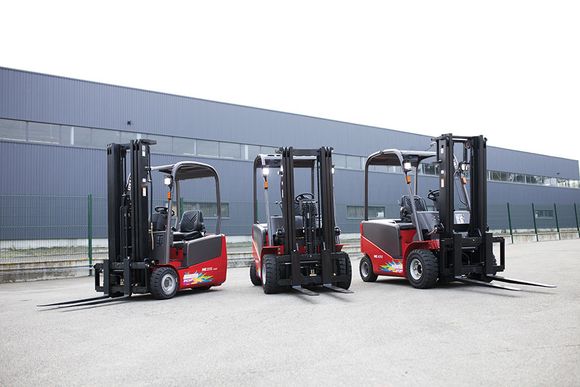
Efficient electric forklifts have already permanently become part of logistics processes and the fleet of devices responsible for transport in many companies and enterprises. Their popularity stems from easy operation, high availability on the market, and efficient work.
Thanks to the ecological drive, electric forklifts can be used without worrying about the adverse impact on the health of employees or the environment. And the offer, from which you can choose the perfect vehicle for your company, is long and contains many interesting items of solid and durable devices.