








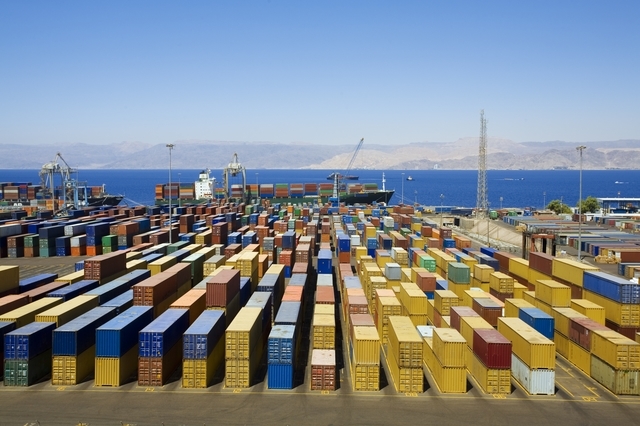
Multimodal transport is considered the most appropriate form of sustainable transport. Linking different modes of transport into an efficient chain allows for multiple effects to be achieved. In addition to economic efficiency, the most important result of multimodal transport is the reduction of the negative impact on the natural environment.
The European Commission places great emphasis on the development of intermodal transport, which has been reflected in the White Paper as well as in other documents. In Poland, too, provisions regarding the development of multimodal transport have been included in government documents. Despite this, progress in the field of intermodal transport has been limited so far. This applies to the entire European Union and, to an even greater extent, to Poland. In a study published in 2009 by the Directorate-General for Energy and Transport, preceded by a foreword from the Commissioner for Transport and Energy Antonio Tajani, the results achieved so far are assessed very critically.
In Poland, progress in the development of multimodal transport is even more meager. A study completed at the Maritime Institute at the end of 2010 attempted to identify the obstacles standing in the way of better intermodal integration in Polish freight transport.
POTENTIAL OF MARITIME CONTAINER TERMINALS IN SERVICING MULTIMODAL TRANSPORT
The development of intermodal integration within the transport process depends on a number of factors. One of the important factors is the quality of cargo handling in ports. This quality is determined by the state of the infrastructure and superstructure of port terminals. The progress in intermodal integration is also influenced by efficient, comprehensive logistics services provided by other entities (freight forwarders, customs services, quality control, phytosanitary, veterinary, IT) participating in the transport process.
Analyzing the state of port infrastructure from the point of view of the possibility of expanding intermodal integration, one can only consider container and ferry terminals adapted to handle unitized cargo (in containers, on semi-trailers, and trucks).
All Polish seaports are adapted to handle unitized cargo, although the scope and quality of equipment vary. (…)
The article contains 17,751 characters.
Source: Logistyka Magazine 4/2012