








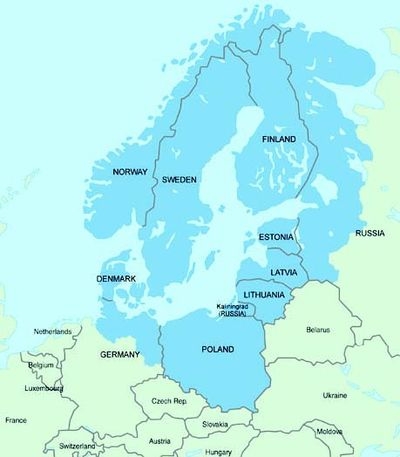
In December 2011, the Baltic Transport Outlook (BTO) project was completed. It was a priority project funded by the EU, of key importance to the Baltic Sea Strategy. This project was adopted by the Council of Europe in October 2009. The overall goal of the project was to achieve better conditions for long-term infrastructure planning in individual countries of the Baltic Sea Region (BSR), so that the region would ultimately become more accessible and competitive.
The Baltic Transport Outlook project set the following goals:
-
developing a common position regarding the development of the Region in the field of transport and economic growth
-
creating a shared awareness of future challenges and development opportunities for the region
-
better knowledge exchange between national and regional transport systems.
The core of the project is a study that will allow for the spatial planning of transport infrastructure in the Region and define areas of the highest intensity of goods and passenger flows between BSR countries. The scenarios will concern the development of the region until 2030 and will serve as a basis for discussion. They will also include recommendations for infrastructure planners and other decision-makers.
In the Baltic Sea Region, trade is constantly growing, covering directions both to and from the Baltic Sea. This development must be matched by appropriate infrastructure and an efficient transport system. Bottlenecks must be eliminated in order to facilitate market mechanisms for increasing territorial cohesion. By improving accessibility and reducing disparities between the countries of the Region, the Baltic Transport Outlook project will help increase the competitiveness of the Baltic Sea Region.
Currently, each country is developing its own economy. The BTO program is intended to expand cooperation between infrastructure planners in the Region and facilitate their access to knowledge about the planning of other countries’ systems. This shared knowledge and awareness of future challenges can contribute to ensuring the sustainable movement of people and goods to and from the Baltic Sea. In order to ensure development in the right direction, an important part of the program is recommendations regarding the effective management of future Baltic transport systems. Throughout the study, emphasis was placed on conducting a strategic dialogue between key partners and on disseminating the results. A series of workshops was held in various parts of the Region.
The project undertakes research consisting of:
-
a description of current cargo and passenger flows, the state of infrastructure, and infrastructure and administrative bottlenecks,
-
a description of the functioning transport system,
-
an analysis of all modes of transport: road, rail, maritime, air, and pipeline for both goods and passengers,
-
creating forecasts/scenarios for the years 2016-2030,
-
recommending short- and long-term tools for managers of the Baltic transport system,
-
ensuring that the results obtained based on high-quality data can be used in various countries and their national transport policy strategies,
-
achieving synergy effects with other EU projects.
The idea behind the policy of the Baltic Sea countries is to create an integrated transnational European strategy that will facilitate the prosperity of the regions and contribute to better implementation of cross-border challenges. This should be a strategy that takes into account the conditions of the Baltic Sea Region as a geographical macro-region. The strategy has four goals:
1. improving the state of the Baltic Sea waters,
2. strengthening economic growth and competitiveness in the region,
3. improving accessibility and attractiveness,
4. improving safety.
The article comes from the magazine “Logistyka” 2/2012.