








More and more clusters created in Poland are achieving great success. The Baltic Sea & Space Cluster (BSSC) is a good example of this. What is the recipe for effective operation? Comments Prof. em. Gdynia Maritime University, PhD, DSc, Marek Grzybowski, Chairman of the Board of the Baltic Sea & Space Cluster, head of the BSSC team for smart specializations.
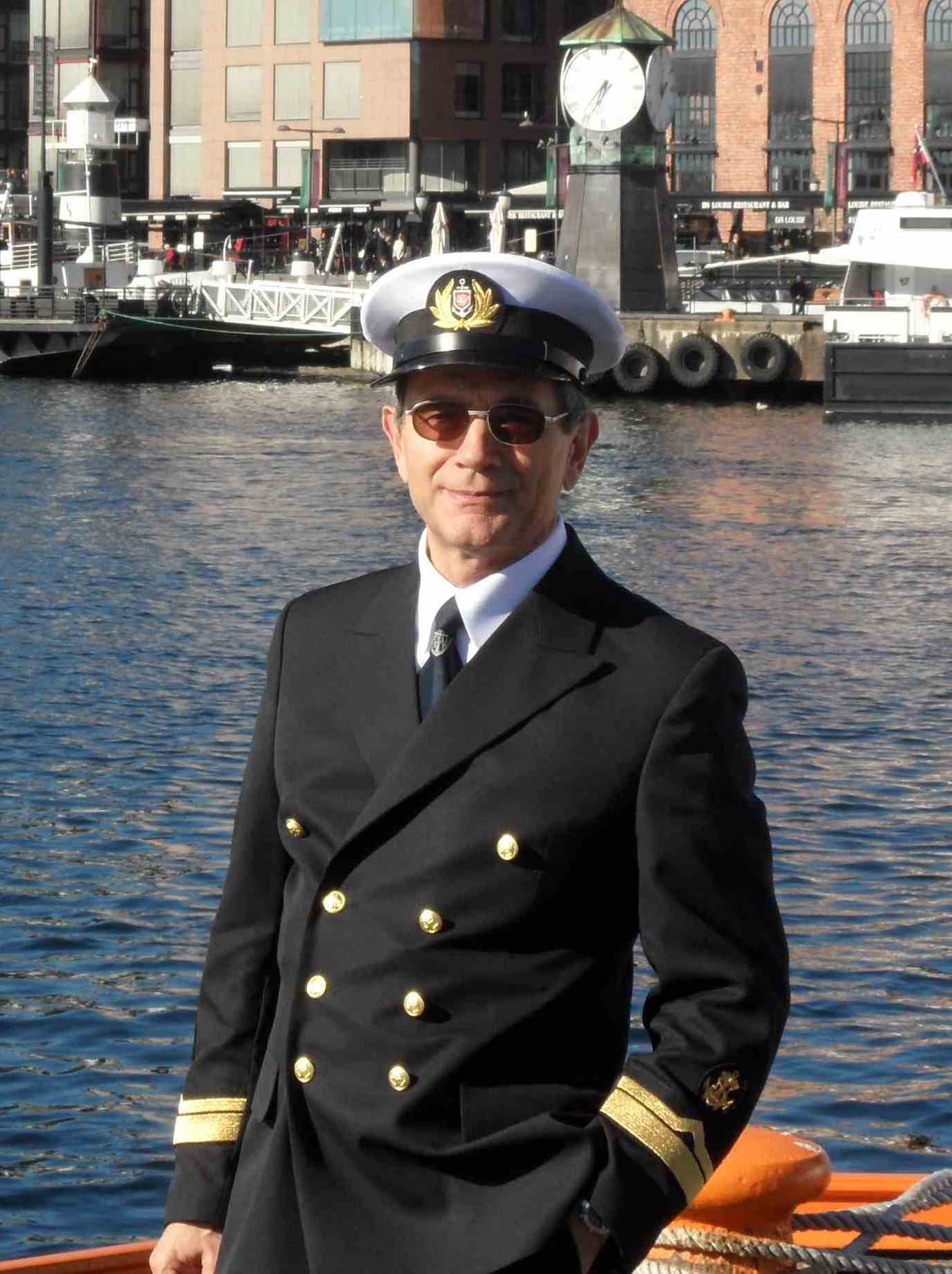 After an incubation period, the Baltic Sea & Space Cluster (well known on the international market as the Baltic Sea & Space Cluster – BSSC) has transformed into a cluster of hubs. The hubs are focused on implementing joint business projects, including those financed by Horizon programs, Norwegian funds, and those implemented under Interreg programs.
The cluster develops in the Pentagon Helix formula, integrating knowledge transfer between science and business, supporting social, local government, and administration initiatives, and developing investor relations. The cluster’s activity is characterized by a holistic, integrative, and global approach, incorporating the activity of maritime industries into Industry 4.0 with a large load of ICT systems and tools as well as space technologies.
Participation in international projects GALATEA, ZEVInnovation, INTERMARE, and the expansion of the cluster’s areas of activity to include space technologies was a successful decision by the cluster members, and the conferences organized by the Cluster and the Committee on Space Research of the Polish Academy of Sciences contributed to the integration of young scientists and representatives of startups, practitioners, and the scientific community of the Baltic Sea Region.
The cluster is actively involved in the development of smart specializations. It is active in KIS: Innovative maritime technologies in the field of specialized vessels, offshore and coastal structures, and logistics based on maritime and inland transport. In the Pomeranian region, it participates in ISP1 – Offshore and port-logistics technologies; the “maritime” specialization, which includes: shipbuilding and offshore (e.g., offshore installation of wind farms, etc.), logistics in ports and their hinterland, the use of biological resources of the sea, as well as ISP 2 – Interactive technologies in an information-saturated environment.
During the Cluster’s project meetings, discussions are no longer held at the level of company CEOs, but among experts with experience and competence in creating new market solutions, products, and services with high innovation potential. Our goal is to develop joint projects ensuring the use of our hubs’ potential to strengthen the position of Polish maritime economy companies on the market. The meetings aim to integrate competencies and knowledge from various fields. The idea is to offer a complete product on the market, supported by knowledge in the field of IT, new fuels and energy sources, as well as legal, financial, and marketing knowledge at the highest level.
We want to transform our design and production potential into concrete business. The hubs are tasked with supporting each other with knowledge and complementing each other’s competencies, as well as promoting themselves together on the international market. Cluster members possess competencies that are highly valued in the global maritime economy.
During the meetings, expert discussions focus on the potential of companies and opportunities for cooperation. The point is to use the demand for new knowledge in developing maritime industries, including the dynamically growing demand for IT technologies, the use of alternative fuels, environmental protection activities, the development of energy obtained from ecological sources, and education for the needs of developing new maritime industries.
The selection of members for the cluster and hubs is not accidental
Participation in the Galatea project helps our small and medium-sized enterprises to obtain funds for development and the internationalization of Polish products and services. The funds obtained in the Galatea project, together with foreign partners, are used by our companies to develop systems that can be used in maritime logistics, transport, and seaports.
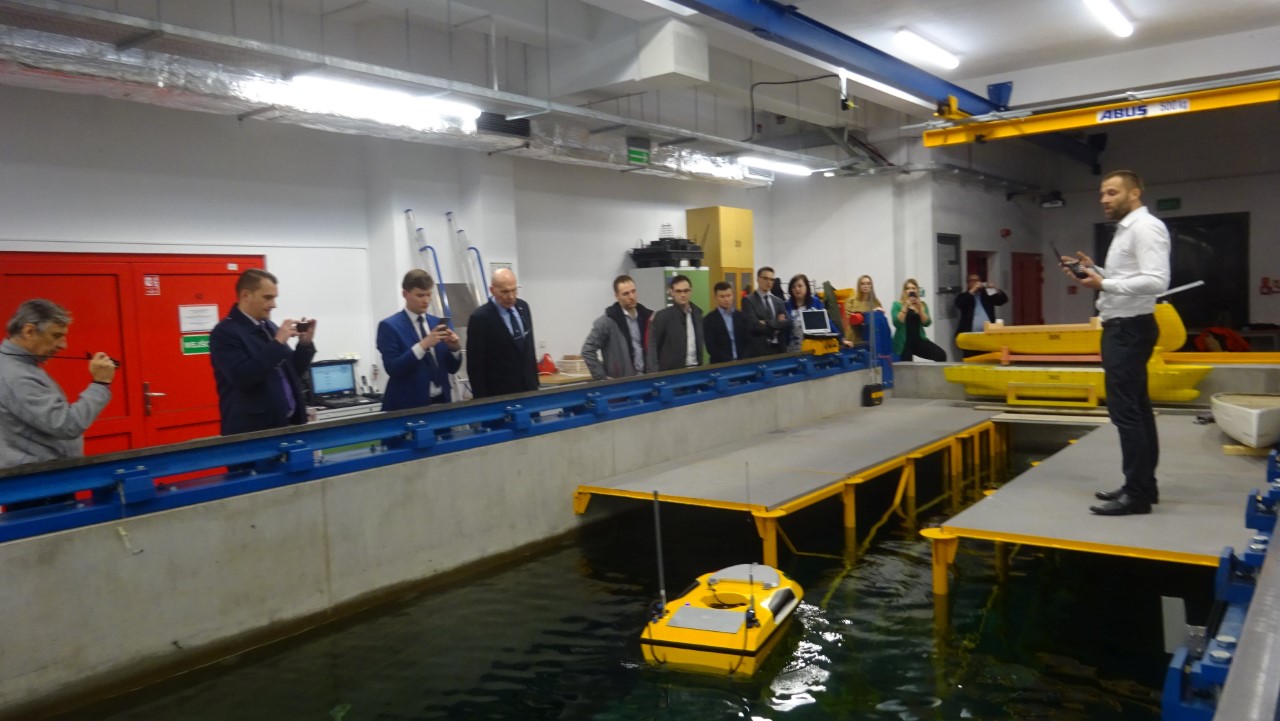
The Center for New Competencies (CNK) and Flint Systems also operate in the BSSC Cluster’s ICT & AI hub. The latter company produces various types of simulators using VR, and one of these systems is used by the Center for New Competencies (CNK). Thanks to the tools developed by Flint Systems, CNK conducts world-class courses and training for the port, construction, logistics, transport, and offshore industries. These are courses using VR+AR technologies.
Comprehensive solutions
The zero-emission ship hub is also the result of an international project implemented by the BSSC cluster. The ZEV Innovation HUB has developed as a support and continuation of the project implemented by BSSC together with partners from Norway and Croatia. Its coordinator is Jacek Milewski, CFO and member of the board of Crist, and it includes Polish companies with knowledge and potential in designing and manufacturing equipment for this type of vessel.
But that’s not all, because in addition to designing zero-emission ships, we are also able to design and build installations for powering them from the shore. Members of the Baltic Sea & Space Cluster can get involved in constructing land-based systems ensuring energy or alternative fuel storage and powering electric ships with energy from the shore or bunkering with alternative fuels.
Hubs support each other
A valuable initiative is the willingness of TSG Solutions Polska to join the activities in the ZEV Hub and the Hydrogen Hub. TSG Solutions has experience in building fuel stations, which can also be used in maritime practice. It is a company that cooperates on an ongoing basis with another BSSC member, the ASE Technological Group, which can build energy storage for ships and stationary equipment.