








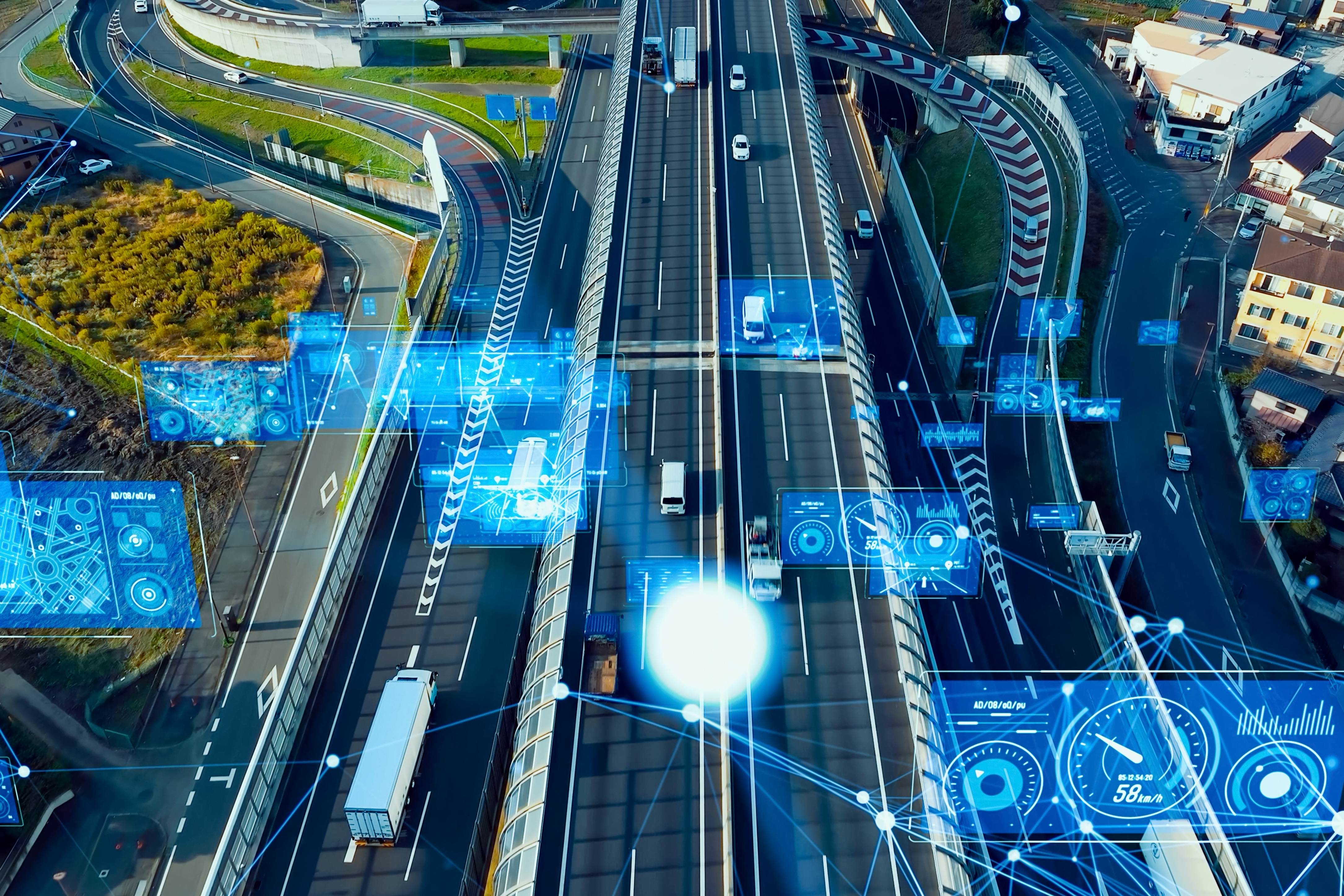
According to a new global study conducted to mark the 25th anniversary of Webfleet, the majority (58%) of fleet managers anticipate using artificial intelligence within the next five years.
The study, commissioned by Webfleet, Bridgestone’s globally trusted fleet management solution, was conducted among 1,800 fleet decision-makers in 15 countries to provide insight into the current and future landscape of fleet digitalization[1]. The results show that fleets plan to increase their investments in digital fleet solutions in the future and point to expanding plans related to the application of artificial intelligence and electric vehicle technology.
– The transition to digital solutions, including artificial intelligence, is no surprise to us and is a clear indicator of where the future of fleet management is heading – said Jan-Maarten de Vries, President Fleet Management Solutions at Bridgestone Mobility Solutions – Our study highlights the key role that digital fleet solutions play in increasing fleet efficiency, reducing costs, and enhancing the safety of drivers and vehicles. It is clear that investments in these technologies will continue to grow.
The vast majority of fleet managers want to invest more in digitalization
- 91% of fleet managers expect to increase investment in digital fleet technologies over the next five years.
- More than half of fleet managers (52%) identified improving efficiency and reducing operating costs as the most compelling reason for investing in digital solutions.
- 49% of fleet managers cited increased driver and vehicle safety as a primary reason for investing in fleet management technology.
Artificial intelligence and electric vehicles are expected to have the greatest impact on fleet management in the future
Artificial intelligence, machine learning, and electric vehicles are seen as the technologies that will have the greatest impact on the future of fleet management.
- 32% of fleet managers stated that artificial intelligence and machine learning will have the greatest impact on fleet management in the coming years, with electric vehicles in second place (30%).
- 23% of fleet managers are already using artificial intelligence today, and 35% plan to do so within the next five years. Almost all respondents confirm that AI will have a significant impact on fleet management in the future, with 62% of respondents expecting AI to optimize route planning and logistics, 56% believing it will improve driver safety, and 55% that it will streamline predictive maintenance and asset management.
- Only 21% of fleet managers expressed concerns about how artificial intelligence will change their workday, with the main concerns being process integration (53%) and data privacy and security (49%).
Fleet managers confirm that electric vehicles are the future for commercial fleets, and their popularity will grow in the coming years:
- 85% of fleet managers expect the number of electric and hybrid vehicles in their fleet to change within the next five years.
- Among those who declare that their fleet composition will change, the number of electric and hybrid vehicles is expected to nearly double – from 37% currently to 63% of the fleet by 2029.

The ongoing digitalization of the industry is also being noticed by Polish managers. In Poland, the study covered 150 decision-makers who took part in the analysis. 91% expect higher investments in digital solutions over the next five years. Poles also indicated the same most compelling reasons for focusing on digitalization: reducing operating costs (57%), increased driver and vehicle safety (51%), and gaining greater visibility and control over fleet assets (49%). According to Polish decision-makers, technologies related to artificial intelligence (29%) will have the greatest impact on fleet management. 13% of fleet managers currently use AI solutions in fleet management, 41% plan to introduce them in the future, and 37% plan to do so within the next five years. 61% of respondents expect artificial intelligence to optimize route planning and logistics, 58% believe it will reduce operating costs, and 54% that it will improve driver safety and driving style analysis. Beyond artificial intelligence, electric vehicles (19%) and autonomous driving (14%) could also have a high impact on fleet management for Poles. The majority of managers (83%) expect their fleet composition to change within the next five years, while 39% expect to have a fully autonomous vehicle in their fleet in 5-10 years[2].
– Artificial intelligence and electric vehicles are transformative technologies that will continue to support fleet management. At Webfleet, we are pioneers of these technologies to facilitate their implementation in fleets, always ensuring improvements in safety, sustainability, productivity, and efficiency – concludes De Vries.
Webfleet will celebrate 25 years of telematics innovation at the IAA Transportation trade fair, which will take place from September 17-22 in Hanover, Germany, showcasing the new AI Assistant at the Bridgestone Fleet Care booth in Hall 12, C54, and at the Webfleet booth in Hall 25, B60. As part of Bridgestone Fleet Care, Webfleet will demonstrate how integrating a comprehensive fleet management solution with Bridgestone tires, tire technologies, and service solutions enables smarter, more connected fleet decisions to increase sustainability, safety, efficiency, and productivity.
The full research report can be found at the link.
[1] The study was conducted by the market research agency OnePoll on a sample of 1,800 fleet decision-makers and business owners overseeing fleets consisting of seven or more vehicles. 40% of respondents have mainly vans in their fleet, 40% trucks, 20% passenger cars, and 1% other vehicles. The study was conducted online from April 18 to May 2, 2024, in Australia, France, Germany, Italy, Poland, Spain, the Netherlands, the USA, the UK, Belgium, Mexico, South Africa, Chile, Colombia, and the United Arab Emirates.
[2] Data comes from a survey conducted by Webfleet together with the market research agency OnePoll among 150 fleet decision-makers in Poland. A fleet decision-maker was defined as a fleet manager or business owner with seven or more vehicles.
Source: Webfleet