








Internal combustion engine vehicles will only be allowed to travel through city centers if they meet specific emission standards – this is one of the key provisions of the amendment to the Act on Electromobility and Alternative Fuels, signed by the President of Poland in December. These changes introduce the obligation to create Clean Transport Zones (SCT), which are intended to improve air quality and the health of residents. For local governments, this also means the necessity to invest in zero-emission vehicles for public transport. Will Polish cities cope with such a major challenge? The new regulations are a step toward the future, but also a test of readiness for change.
What are Clean Transport Zones?
According to the signed amendment, cities with a population of over 100,000 where nitrogen dioxide (NO₂) standards have been exceeded are required to introduce SCTs. As the regulations state, they must be established no later than January 1st of the year following the confirmation of results by the Chief Inspectorate of Environmental Protection (GIOŚ). The Act provides that entry into such zones will be permitted only for vehicles meeting Euro 6 emission standards or higher (i.e., manufactured from 2014 onwards) and zero-emission vehicles — electric or hydrogen-powered.
How many drivers might be affected by the changes?
Statistical data show the scale of the challenge facing both residents and cities. According to data from the Samar Automotive Market Research Institute, at the end of 2023, there were approximately 20 million active passenger cars registered in Poland[1]. While various sources provide conflicting data regarding the number of cars meeting Euro 6 criteria, it can be assumed that at least 60 percent of vehicles on Polish roads are ten years old or older.
The introduction of SCTs will therefore force many car owners to consider purchasing newer models, switching to an electric vehicle, or using public transport.
Challenges for cities
The introduction of SCTs also involves a number of challenges for cities. One of the key ones is the need to modernize public transport. Polish municipalities must invest in electric or hydrogen buses so that their fleets meet zero-emission requirements. For example, in Krakow, where the development of green public transport is very intensive, electric buses account for only 24%[2] of the municipal fleet. This shows that even the most developed cities still have a lot to do to achieve full compliance with the new regulations. The costs of such investments are enormous, so financial support from the government or EU funds will be essential.
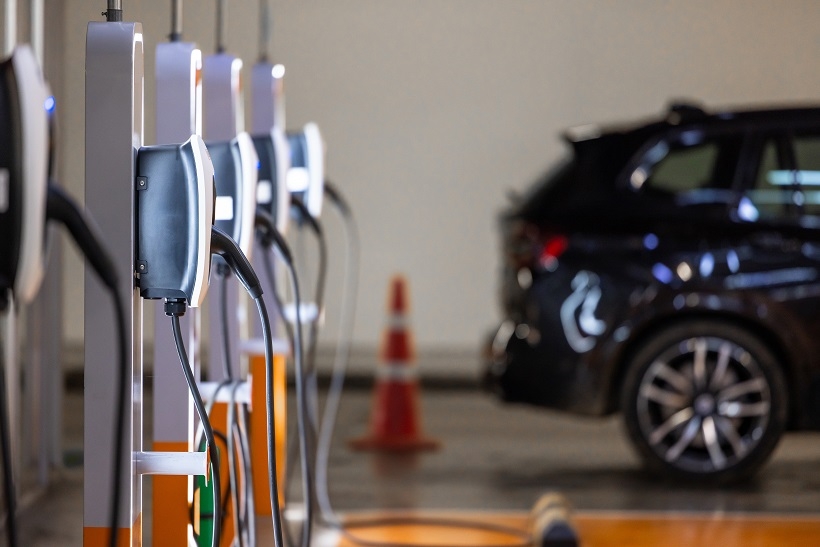
Equally important is creating appropriate infrastructure, such as electric vehicle charging stations or systems monitoring vehicle traffic for compliance with emission standards. Cities must also conduct information campaigns that explain the purpose and rules of SCT operation and encourage the use of public transport or other forms of mobility, such as city bikes, electric scooters, or light electric vehicles.
Are Polish cities ready for the changes?
The question of whether Polish cities are ready for the introduction of SCTs remains open. Electromobility in Poland is becoming increasingly popular, and this applies not only to electric cars but also to micromobility. The number of users of such vehicles is constantly growing, so the problem of restrictions will diminish. However, the insufficient number of charging stations remains a challenge. According to the Polish Alternative Fuels Association[3], at the end of October 2024, there were 8,184 publicly accessible electric vehicle charging points in Poland – a number insufficient to meet user needs. Another problem is the lack of access to simple power sources, such as 230 V sockets, which makes charging smaller vehicles difficult.
Future prospects
Clean Transport Zones are undoubtedly a step in the right direction when it comes to improving air quality and public health. However, their success depends on the cooperation of many entities: local governments, the government, and residents. Cities must modernize public transport, develop infrastructure, and conduct educational activities so that these changes are effective and socially accepted.
[1] https://inwestycje.pl/biznes/liczba-zarejestrowanych-pojazdow-osob-wzrosla-o-25-do-2735-mln-na-koniec-2023/?utm_source=chatgpt.com
[2] https://www.mpk.krakow.pl/pl/aktualnosci/news%2C11735%2Cmpk-w-krakowie-oglasza-przetarg-na-200-nowych-autobusow.html?utm_source=chatgpt.co
[3] https://psnm.org/2024/informacja/licznik-elektromobilnosci-polski-rynek-samochodow-elektrycznych-wciaz-na-plusie/
Source: Electroride / GoodOne PR