









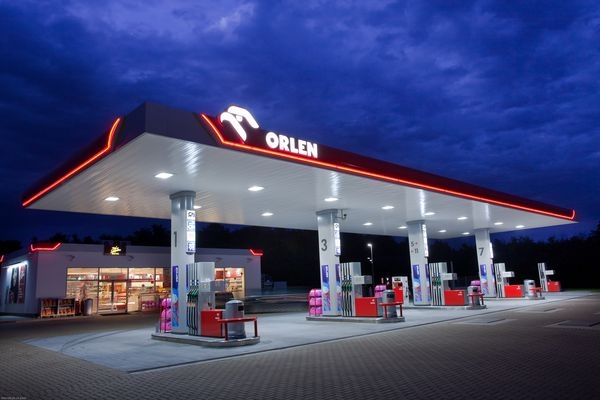
PKN ORLEN’s opening to carsharing services is the result of long-term observation of the fuel station market, changes in how people move around cities, and demographic conditions.
– We have partnered with Traficar, a carsharing operator, to get closer to the next generation of customers, especially people finishing their studies and gaining their first professional experience, who already need a very fast and universal way to move around the city, and for whom investing in their own car is inefficient or financially out of reach – explains Krzysztof Łagowski, Executive Director for Retail Sales at PKN ORLEN.
Ensuring the availability of carsharing services in the ORLEN network stems from the company’s desire to successively develop its offer for customers at fuel stations. As part of the partnership with Traficar, from June 1st of this year, it will be possible to leave and rent a car at selected ORLEN-branded stations in cities where the service is available (Kraków, Warsaw). Dedicated parking spaces have been designated at individual company facilities. At the same time, PKN ORLEN provides a number of special offers and promotions for customers from the rich Stop Cafe and Stop Cafe Bistro offer. There are also plans to expand the cooperation to other large Polish cities.
– We view our cooperation in two dimensions. Firstly, it allows us to increase the utilization of our stations’ potential – a business where we actually come into contact with our end customer – the driver. Additionally, we are meeting the expectations of potential new customers – we want to convince them that the ORLEN brand is premium not only in terms of fuels, but also gastronomy, convenience stores, or new services such as carsharing. In this way, we can present our rich offer of Stop Cafe 2.0 fast-service restaurants and O!Shop stores, ideal for busy customers in cities, to an even wider group of recipients. The pro-environmental aspect of the entire undertaking, which will result from the use of our high-quality fuels by low-emission vehicles, is also of significant importance – emphasized Krzysztof Łagowski.
According to Frost & Sullivan, by 2025, the global carsharing vehicle fleet will grow nearly fourfold, and the number of users of this service will increase from 7.9 million to 36.0 million. In the context of progressing digitalization, urbanization, and personalization of offers, fuel stations will play the role of a service center for residents in the future. The initiated cooperation in the field of carsharing is PKN ORLEN’s response to the changing balance of power in the market. The actions taken are part of the Company’s strategy, in which modern services, a well-thought-out offer prepared for the customer, or the energy self-sufficiency of facilities will be key to the development of the retail segment.
PKN ORLEN’s decision is also another example of PKN ORLEN’s readiness to actively participate in trends shaping the market – the promotion of modern, efficient, and low-emission fuels, or pro-ecological solutions using fuel stations. Issues of promoting pro-environmental projects are of great importance, especially in urban spaces, where the problem of pollution is constantly emerging. According to estimates from the University of California, Berkeley (2011), which are still the best in terms of methodology, one car in a carsharing fleet replaces 9-13 cars of individual users.