








In recent years, the Polish e-commerce market in the fashion industry has been experiencing dynamic growth. According to data from statista.com, the number of online orders in this sector increased by 27 percent in 2022, while globally this growth was only 6 percent. It is worth noting that Polish e-shops are successful not only locally but also in Central and Eastern European (CEE) markets. They owe this to the high quality of the products offered and effective marketing strategies. Increasing budgets allocated to foreign expansion show that domestic companies are ready to compete in the global market.
Challenges for the fashion industry in e-commerce
Despite the successes, the fashion industry also faces a number of challenges in the e-commerce area. Competition is immense, and consumers have a wide choice of stores offering clothing, footwear, and accessories at various prices and styles. Dynamically changing fashion trends force flexibility and quick reactions from online sellers, who must constantly adapt their offerings to customer expectations. Innovations and infrastructure development are becoming key factors in this industry, improving the shopping experience and increasing competitiveness. The use of augmented reality (AR) and virtual reality (VR) is also revolutionizing the shopping experience. AR allows customers to virtually “try on” products such as clothes or shoes using mobile applications or dedicated devices, which allows them to better evaluate them and potentially reduce the number of returns. VR, on the other hand, provides more engaging experiences, enabling virtual store tours, product presentations, and participation in shopping-related events, which can be particularly attractive for the tourism and entertainment industries.
One must also remember the issues related to logistics and goods delivery. Customers expect fast delivery and convenient options for picking up their shipments. Therefore, it is worth verifying a given market in advance in terms of the courier companies operating there—and enjoying trust. Relying on a single international logistics operator is often a mistake that can lead to problems with fast delivery and a lack of shipment pickup methods preferred by consumers. This is also important from the buyers’ perspective—it is crucial that when choosing a delivery method at the checkout, they see their trusted provider, whose pickup point or parcel locker is located near their home or workplace.
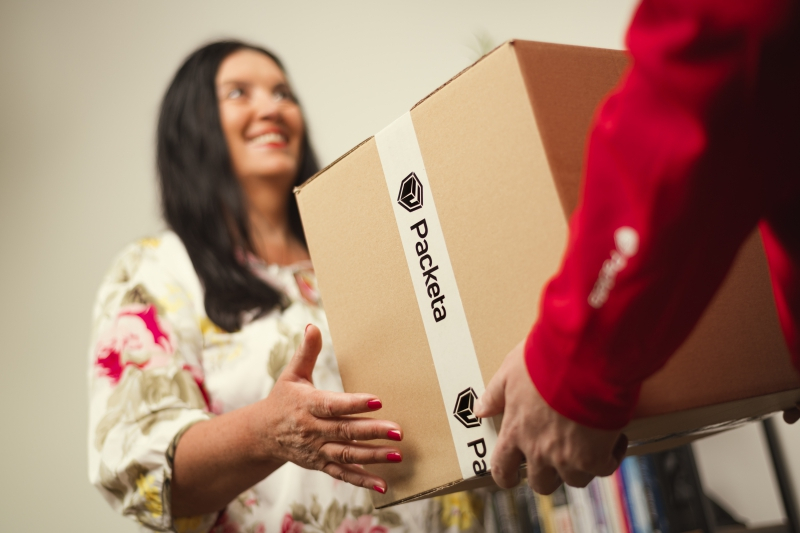
More and more Polish fashion e-shops are realizing these nuances and seeing the benefits of cooperating with e-commerce platforms offering diverse delivery options—such as Packeta, which provides its logistics network in the Czech Republic, Slovakia, Hungary, and Romania, and cooperates with partner networks in another 29 local markets. Thanks to this, online stores can take advantage of a wide range of delivery options tailored to the needs of their customers in different markets.
Forecasts for foreign online sales
I optimistically forecast that in 2024 there will be further growth in foreign online sales among fashion e-commerce businesses. The growing availability of products online, high consumer demand, and the popularity of cross-border trade are the main factors driving this growth. Polish e-shops are increasingly boldly exploring new markets, and today this trend is focusing on the Baltic and Balkan countries. Although these are smaller markets, the fashion category is developing dynamically there, which attracts the attention of Polish brands, increases their competitiveness, and their willingness to explore new, often non-obvious markets. The growth in the popularity of these directions is followed by changes in the logistics network from Poland. For example, last year Packeta opened direct logistics connections to these regions, which allows for fast delivery of shipments even in 2-3 days, without the need for time-consuming and costly transshipment. I am convinced that the development of infrastructure and marketing strategies of Polish e-commerce businesses will allow them to compete effectively on the international stage, bringing further sales growth and increasing their share in the global fashion market.
The impact of e-commerce market changes on service companies
Changes in the e-commerce market have a significant impact on the development of service companies such as Packeta. With the dynamic development of the e-commerce sector, we face the necessity of constantly adapting our services to the growing expectations of online stores and their customers, as well as changing trends. One of the key elements of our strategy is the development of a network of parcel lockers and effective returns logistics, which aims to make online shopping even more convenient and ecological. We also focus on speed, effectiveness, and sustainable development of our services, which allows us to strengthen our position in the logistics industry. Our specialization in Central and Eastern European (CEE) markets enables customers to ship not only to popular countries but also to less obvious locations, which supports the development of e-commerce in the region and contributes to the economic growth of the entire industry.
In summary, the dynamics of the Polish e-commerce market in the fashion industry and the forecasts for 2024 seem promising, due to growing consumer demand, the availability of products online, and the popularity of cross-border trade. The cooperation of logistics companies, such as Packeta, with e-commerce businesses plays a key role in responding to these challenges and opportunities through an innovative approach to logistics, the development of a parcel locker network, and specialization in Central and Eastern European markets. I believe that this partnership supports the economic development of the e-commerce industry and makes cross-border e-commerce an increasingly important segment of the Polish economy.
Commentary provided by Adam Zając, Head of Business Development at Packeta Poland.