








The “DHL Omni-Channel Logistics Trend Report” reveals that logistics is an industry playing a key role in the process of implementing the omnichannel model.
Markets and consumers are increasingly aware of the fact that methods based on traditional sales channels are not synchronized with consumer expectations regarding behavior and delivery. This stimulates the latest multi-channel sales method, in which all channels, such as brick-and-mortar, e-commerce, or mobile devices, are integrated into a single, coherent channel of organized product flow.
– Within the next three years, the majority of the global population (90%) will have a mobile internet connection, and already today, more and more people are using the Internet to browse its resources and make purchases. In the USA, 70% – 80% of consumers already use multi-channel strategies before making a purchase decision, and we expect this trend to grow in the case of most global markets – explains Matthias Heutger, Senior Vice President of Marketing and Innovation, DHL Customer Solutions and Innovation.
The report reveals that despite the advanced implementation of the omnichannel strategy, most companies are not yet prepared for it, clinging to methods based on traditional sales channels that are unable to meet the latest consumer needs.
– Consumers expect constant access to information, faster delivery, and personalized shopping. Companies cannot meet these expectations using methods based on traditional sales channels. An omnichannel strategy is needed to succeed in the future – adds Heutger.
There is a significant difference between the two methods. The goal of the previous multi-channel sales strategy is to optimize consumer experiences in individual sales channels, while the omnichannel strategy is characterized by a holistic and channel-agnostic approach focused on the customer.
Omnichannel strategy as a competitive advantage
The report states that companies that perfect their omnichannel strategy will gain a significant competitive advantage. Despite the complexity of the processes of coordinating and integrating all sales channels and the outlays required for their successful implementation, retailers who are early adopters of the omnichannel strategy reveal a significant increase in their customer base, higher levels of loyalty, greater profits, and more efficient inventory turnover.
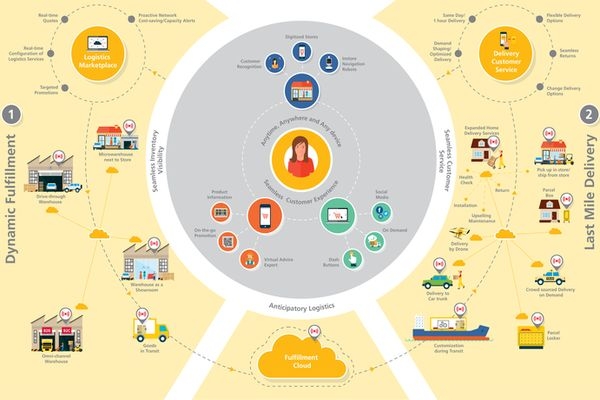
The report also emphasizes the fact that the supply chain and logistics services are a key driving force for a successful omnichannel strategy and the process of meeting customer expectations. While companies restructure and transform their own processes and IT systems as part of implementing an omnichannel strategy, logistics service providers can simplify personalized, consistent options that unlock new levels of operational efficiency and customer satisfaction.
An omnichannel strategy begins with investing in systems to enable full inventory transparency across all channels. This requires analytical potential that enables proactive, predictive decision-making to meet customer expectations. Flexible networks and logistics services ensure a consistent flow of products between online and brick-and-mortar supply chains.
Physical research involving warehouses and stores will continue to provide added value, but with changing roles. To enable flexible and responsive options across all sales channels, warehouses are taking on more activities to meet customer expectations, while stores are improving their small-scale warehousing capabilities. The last stage of the delivery process is equally important for the omnichannel strategy. It provides an opportunity to optimize the customer experience and reduce delivery costs.
Investments in an omnichannel strategy may prove unprofitable for small and local retailers, but cities and logistics service providers can cooperate to provide access to shared platforms. As an example, the report cites the Online City Wuppertal project.
Omnichannel trends in the Asia-Pacific region
Although the Asia-Pacific region is the fastest-growing B2C services region in the world, it is also the area least analyzed in terms of omnichannel trends. The published report contains conclusions from an in-depth analysis conducted by DHL and IDC, covering 56 companies operating in the region. It turns out that according to Asian consumers, delivery speed is more important than flexibility. Meanwhile, markets and e-commerce stores will be the fastest-growing industry over the next 2-5 years, and Asian companies will invest most frequently in logistics services, distribution center automation, mobile-based shopping, “click & collect” models, store digitization, and same-day delivery. The report also draws attention to the significant variation in levels of preparation for an omnichannel strategy and market maturity in Asia.
– Our role at the DHL Innovation Center is to support companies in recognizing their differences, adopting best practices, and implementing innovative activities as part of the company’s development in the region – says Mei Yee Pang, Vice President of the DHL Asia Pacific Innovation Center.