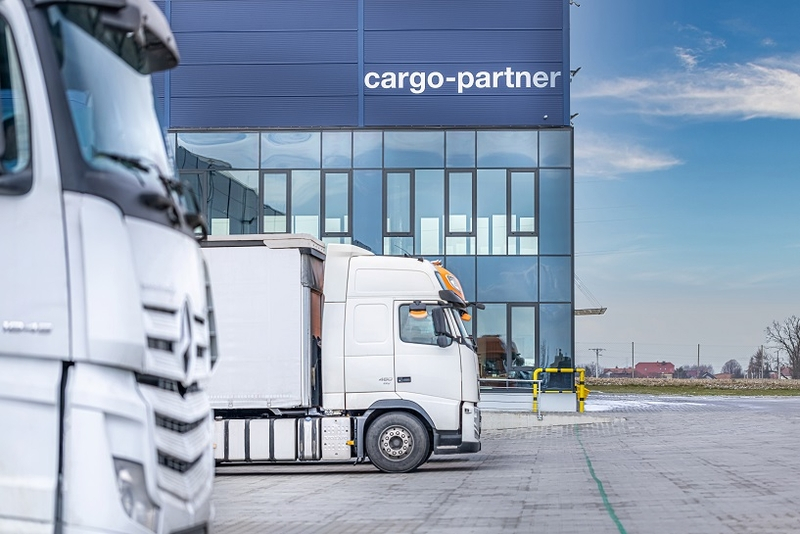
Transport has already awakened from the crisis caused by broken supply chains, which was perhaps the most distinct consequence of the COVID-19 pandemic. We talk about the experiences of transport companies from the perspective of the last several months with Stanisław Bochenek, CEO of cargo-partner spedycja sp. z o. o., and Małgorzata Markowska, Marketing Manager at GLS Poland.
Konrad Michalski: How does cargo-partner spedycja sp. z o.o. perceive the impact of the crisis caused by the SARS-CoV-2 virus on its business?
Stanisław Bochenek, CEO of cargo-partner spedycja sp. z o. o.: The crisis brought many unexpected and difficult situations to our company. Especially when we talk about maintaining business continuity and, consequently, jobs. The challenge was changing the work organization, practically overnight, to a work-from-home system. However, we managed to achieve a very smooth transition to remote work where possible – on one hand, learning from the previous experiences of our colleagues in China, and on the other, thanks to our internal IT competencies. Constant monitoring and updating of previously developed business continuity plans helped managers at every level to approach company management differently and react to unexpected situations. Managers of individual units also had to learn internal communication with the team conducted remotely almost immediately. Looking at the results we achieved, through the prism of improvements introduced in the company consisting of the digitization of certain processes or the way of managing personnel, we can unequivocally assess that the crisis brought positive effects to the company, increased turnover, and a continuous increase in the base of regular customers who, finding themselves in a new and difficult situation, were looking for a stable, reliable transport service provider capable of adapting to their new requirements.
K. M.: Did the crisis have a direct impact on the company’s logistics?
S. B.: In terms of organization, the virus forced a decisive and almost immediate change in the work system of all operational departments, especially forwarding, and warehouses were closed to people from outside the company. But more importantly, all this led us to accelerate the already ongoing digitization of many logistics processes, the flow of documents, or information between cargo-partner and the company’s clients or service providers. Obviously, digitization contributed to accelerating the entire logistics process and shipment handling, and thus to increasing the efficiency of the entire company. The events of the last several months also highlighted the importance of transparency and effective communication in the supply chain. Thanks to our SPOT supply chain management platform, we provide an easy-to-use system for managing every aspect of our clients’ transport and logistics operations. Our clients can log in to the platform to book transports, track shipments in real-time, manage inventory, and compare service provider rates. SPOT is available to our clients free of charge as a browser application for desktop or mobile devices. Our operators use the platform to communicate with clients and carriers and ensure high data accuracy.
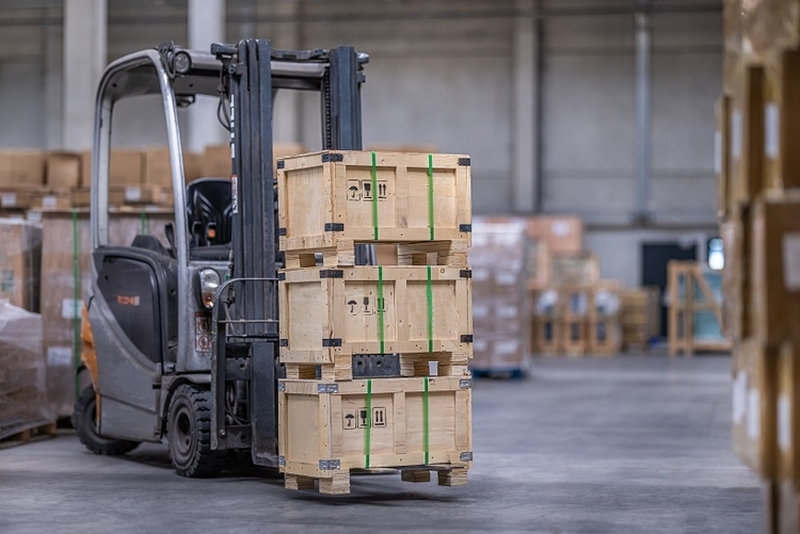
Photo: cargo-partner
K. M.: What do you consider the company’s greatest success during this difficult time?
S. B.: From the perspective of the last several months, I could, of course, focus on the good economic results that the company achieved despite the pandemic. Despite lower total transport volumes, we achieved good results thanks to increased demand for express solutions and flexible alternatives. But we also carried out unprecedented actions directly caused by the crisis. For example, since March 2020, we have been running our own independent cargo charter flight program with regular, weekly flights from major hubs from Asia to Europe. We will continue this program for the foreseeable future because the demand for Far East flights remains high. In several of our offices in Asia and Europe, we also established a 24/7 EMERGENCY Desk to ensure a quick response in case of orders for urgent shipments. Furthermore, our rail transport solutions from Asia to Europe and vice versa, via the New Silk Road, are also enjoying increasing interest. Our company provides rail solutions from all over China. In the case of LCL shipment consolidation, this applies to major hubs: Tianjin, Shanghai, Ningbo, Shenzhen. Containers are loaded in our warehouses and transported to rail terminals in Chongqing, Yiwu, Hefei, Xi’an, from where the train sets off on its journey to Małaszewicze. After transshipment, the containers reach our main warehouse in Brwinów near Warsaw, from where the cargo can be distributed throughout Europe. FCL solutions are handled from all over China to all European countries via rail terminals in Małaszewicze, Dunajská Streda in Slovakia, or Budapest. Rail transport remained relatively insensitive to transport restrictions, which allowed us to provide a stable alternative that is significantly faster than sea transport and cheaper than air transport. Additionally, in response to market needs and the current situation in sea transport, in May we launched a sea/rail offer – consolidation containers from Taiwan via China to Poland.
However, I can responsibly say that I consider the greatest success of the company to be how all employees of cargo-partner spedycja sp. z o.o. adapted to the new working conditions. Without such committed people, capable of adapting almost immediately to the situation and understanding the scale of the problem, the company would certainly not have coped with the crisis we are still in and would not be where it is today. Thanks to efficient and committed management in managing both personnel, processes, and business, I can boldly say that the long-term, appropriate management of the company that preceded 2020 has now brought such positive effects in the era of the crisis and directly showed the commitment of employees to jointly dealing with the crisis the company faced and still faces.
K. M.: And what impact did the crisis caused by the SARS-CoV-2 virus have on the courier business?
Małgorzata Markowska, Marketing Manager at GLS Poland: The most visible effect was a jump in the share of shipment volume in the B2C sector, caused by a rapid increase in e-commerce activity. An important and necessary change was the introduction of new services – contactless deliveries in the form of parcel pickup using a PIN code and BLIK payments for cash-on-delivery parcels. A quick and flexible reaction to changes occurring in the functioning of companies and the habits of private individuals was also necessary. These mainly concerned sanitary and epidemiological issues. We introduced appropriate personal protective equipment and other solutions ensuring safety for customers, couriers, and our employees. This required very efficient management, especially during the first lockdown (spring 2020), which was a shock to the economy and the entire society. It is worth emphasizing here that even during the periods of the most severe restrictions, we maintained the functioning of the entire international network at the high standard expected by customers. Let us add that its potential is very large: it covers almost all countries in Europe, as well as 8 US states and Canada.
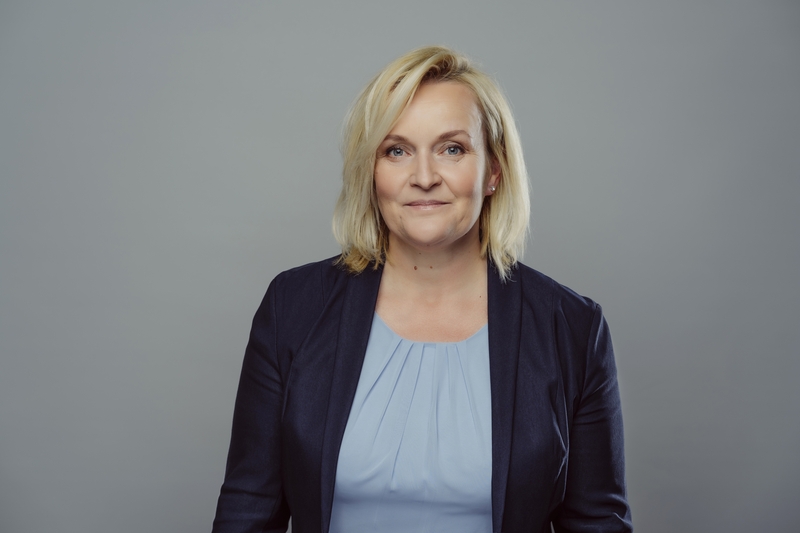
Photo: GLS Poland
K. M.: How does GLS perceive the impact of the crisis caused by the SARS-CoV-2 virus on its processes?
M. M.: Because of the pandemic, we included completely new areas in the safety category, which had a direct impact on the logistics we carry out. With the safety and comfort of customers in mind, we introduced the BLIK payment method for cash-on-delivery parcels. In parallel, we launched the parcel pickup method using a PIN code as part of the InfoCourierService. Both options allow you to pick up a parcel in a safe, contactless way. In this category, there is one more option: delivery to a place chosen by the recipient as part of the FlexDeliveryService. BLIK payment and the possibility of pickup using a PIN code were very well received because they are solutions that are not only safe but also very convenient and fast. They fit perfectly into the expectations of recipients who value the ability to choose from various delivery options. Therefore, we are constantly improving last-mile logistics, just like all elements of logistics processes, with customers always at the center of attention.
To streamline the delivery process, we recently introduced an advanced delivery address geocoding system, thanks to which we quickly update courier routes, which translates into delivery quality, but also into significantly lower exhaust emissions. We also take care of the development of our infrastructure, adapting it to the growing stream of shipments, e-commerce needs, and, above all, customer expectations. In 2020, despite the pandemic, we launched four new branches in important regions, and we also finalized a huge expansion of the GLS branch in Poznań. Its capacity has doubled. Thanks to this, the facility has become an export sorting center for western directions. This action was initiated even before the virus. To sum up, in the context of the pandemic, the most important thing was the introduction of contactless parcel pickup methods. It is worth noting one more effect of the pandemic – the growing role of courier companies and couriers, who are irreplaceable at a time when we stay at home and shop online.
K. M.: What – from the perspective of the experiences of the last several months – does GLS treat as its greatest success?
M. M.: Our greatest success is that we ensured the safety of all our employees and partners despite the prevailing pandemic, thanks to which we avoided mass illnesses. A success is also the rapid introduction of additional service options, the already mentioned BLIK and pickup using a PIN code. Also worthy of distinction is the quick introduction of crisis procedures and the fact that we were able to conduct business and provide high-quality services in an uninterrupted manner. Another great success is the development of investments, including the opening of new branches and additional ParcelShop points, as well as obtaining Great Place To Work and Customer Friendly Company certificates. Despite the pandemic, we also achieved other goals. We introduced a returns portal for online stores as part of the ShopReturnService. Very important in our operations was and is the consistent development of the PUDO point network, of which we currently have over 1600 in Poland. As part of this network, we opened a second company point (in Krakow), with the help of which we carry out deliveries by courier bike in the very center of the city, which has an obvious ecological dimension. We met the challenges of the past year because we focused on development, also in terms of environmental care in all aspects of our operations. We continue to develop the use of LNG-powered trucks. Currently, they serve the longest European routes.
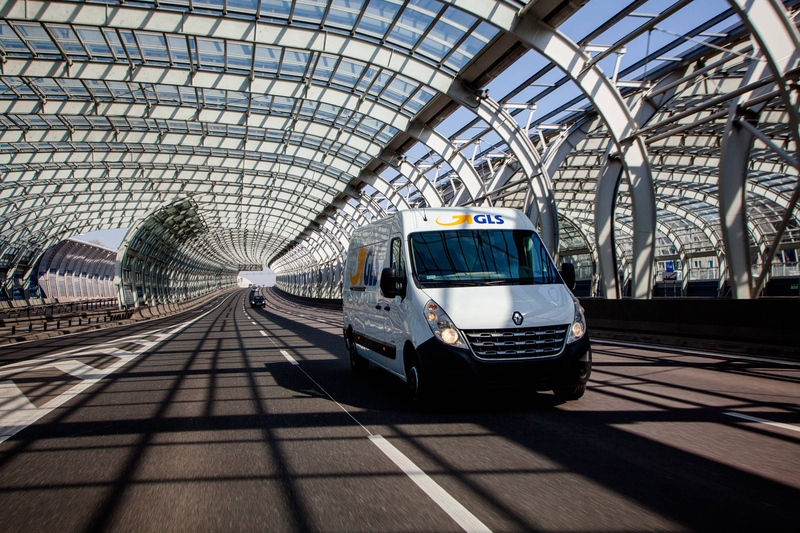
Photo: GLS Poland
K. M.: Did the crisis caused by the SARS-CoV-2 virus accelerate or delay the process of change at GLS?
M. M.: The process of change accelerated and was adapted to the current situation related to the development of e-commerce and greater needs in the area of safety. First of all, the pandemic accelerated the processes of developing and improving our services, in particular with solutions related to safe parcel delivery and new payment methods. Despite many challenges, we achieved all goals regarding strengthening our network and developing ecological and sustainable deliveries.
Regarding current priorities for GLS, in the spring of 2021, we announced the “Accelerate” strategy. This is a response to key market changes, such as the development of online trade and the very rapid growth in the number of international shipments. The central point of reference for all actions carried out as part of the new strategy is the expectations and needs of customers. This also applies to innovations that we will implement using sustainable and digital solutions. The main goal of the strategy is to increase customer satisfaction while simultaneously strengthening GLS’s position in the B2C and B2B areas and in the cross-border shipment segment. Our business model already fits market needs well, but we will continue to improve it and intensify our efforts to strengthen and consolidate the competitive advantage necessary, among other things, to build a strong and lasting market position. This is precisely the reason for the suggestive name of the new strategy: we are accelerating. Its effect will be greater customer satisfaction and better financial results.
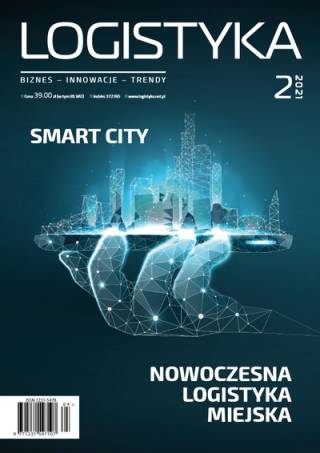
More about how transport companies coped during the coronavirus pandemic can be read in issue 2/2021 of Logistyka magazine.
The e-edition of the magazine is available in our offer!