









This magic acronym has become more popular since Carrefour implemented this solution for cooperation with its suppliers. GDSN (Global Data Synchronisation Network) is a network of certified catalogs allowing for fast and precise exchange of product data among all participants in the supply chain – from manufacturers and suppliers, through warehouses, transport, and logistics, to offline and online stores. GDSN is based on GS1 standards, ensuring secure and continuous synchronization of master data in real time. It is one of the most important GS1 standards affecting the way information is collected, processed, and displayed, to which not only suppliers, but also intermediaries, retail chains, online stores, and even end consumers should have access. GDSN is also an environment of 39 certified catalogs operating on various continents around the globe that provide exactly this kind of data exchange.
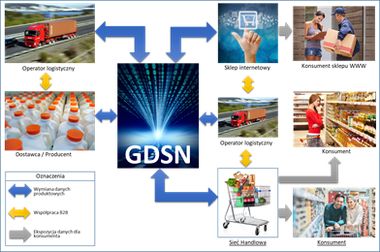 Fig. 1. Modern product data exchange using GDSN standard catalogs – Global Data Synchronisation Network.
(Own elaboration)
Many reports, both domestic and foreign, indicate that this solution, which is both a standard and an IT platform, directly affects the profitability of trade. Why is this so? Because at the foundation of this exchange lie correctly compiled information describing entire packaging hierarchies. This is particularly important in the era of omnichannel sales. Today, the buyer, and thus all entities participating in the sales process, must have access to the trade item identifier, i.e., the GTIN, as well as the name and full description, including dimensional and weight information (see Fig. 1).
Correct data should be entered into GDSN standard catalogs by suppliers, and preferably by brand owners or manufacturers. Data prepared in this way constitutes a trusted source for other participants, through logistics operators and retail chains, ending with consumers.
It should be remembered here that the better and more fully a product is described, the more efficiently its sale proceeds, in line with the principle that a product is complete only when it possesses full (i.e., exhaustive) information.
Looking at global statistics for the Global Data Synchronisation Network over the last few years (Fig. 2), a clear upward trend in the number of connected participants and published product data using this platform can be observed. This fits into the trend of satisfying the hunger for information that allows for the correct identification of products on a global scale.
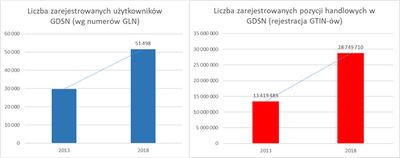 Fig. 2. Global development of GDSN over the last five years
(Own elaboration based on GS1 Global data)
The dynamics of the development of modern trade markets (manufacturer – retail chains) in just the first six months of the current year indicate an increase in the number of entities and, consequently, the number of product data publications in the range of 4-5 percent. (For details, see Fig. 3.)
According to forecasts, due to the currently implemented GDSN deployment at Carrefour Polska, domestic producers will also have a significant share in this statistic. The declaration of the aforementioned chain, stating the gradual withdrawal from product data exchange via Excel sheets in favor of the global catalog by the end of 2019, will certainly contribute to increasing the described dynamics.
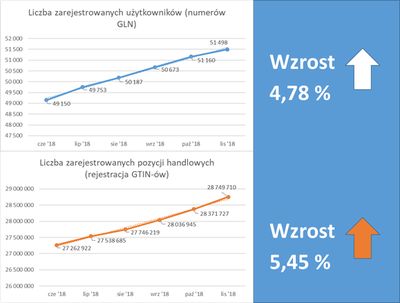 Fig. 3. Dynamics of GDSN development over the last half of 2018
(Own elaboration based on GS1 Global data)
The turn of the year is the right moment for both Polish suppliers and retail chains to make a decision to join the GDSN standard initiative. Numerous benefits flowing from this solution will certainly facilitate this process. Among them, the most important is the standardization of product data exchange. Furthermore, the ability to use a homogeneous environment/platform that will enable the elimination of basic errors. This, in turn, methodically raises the quality of published product data, influencing the reduction of costs for handling business events, and will also indirectly influence the improvement of customer satisfaction.
Suppliers to Carrefour Polska, thanks to the implementation of GDSN and the improvement of product data, have already saved between PLN 384,000 and PLN 4,200,000 annually. Business cases of Carrefour Polska suppliers show savings due to one parameter: Service Level. Poor quality of product data also affects, among others:
– Productivity of teams (suppliers, retail chains, warehouses, transport and logistics, etc.),
– Costs of product returns,
– Costs of re-receiving goods,
– Costs of underestimating orders and lost sales benefits.
Today, when the key challenge in trade is omnichannel, i.e., consistent management of offline and online channels, possessing reliable product data is of key importance. GDSN streamlines cooperation between links in supply chains and also improves the digital exchange of commercial information for the entire industry.
More information about GDSN can be found on the website https://www.gs1pl.org/inne/materialy-do-pobrania
In case of questions, please contact:
Krzysztof.Muszynski@ilim.poznan.pl; tel.: 61-850-48-77